 Pin it
 The first time I tasted muhammara, it was at a small table in Damascus, served on a ceramic plate with olive oil pooling in the center like liquid gold. I watched the cook char peppers over an open flame, their skins blackening and curling, and I knew I had to recreate that smoky magic at home. Years later, this dip has become my answer to every gathering, every "what should I bring?" moment. There's something about the way the walnuts catch against your tongue, the pomegranate molasses cutting through with its tart brightness, that makes people pause mid-conversation to ask for the recipe. Now it's become my thing, the dish people expect when I walk through a door.
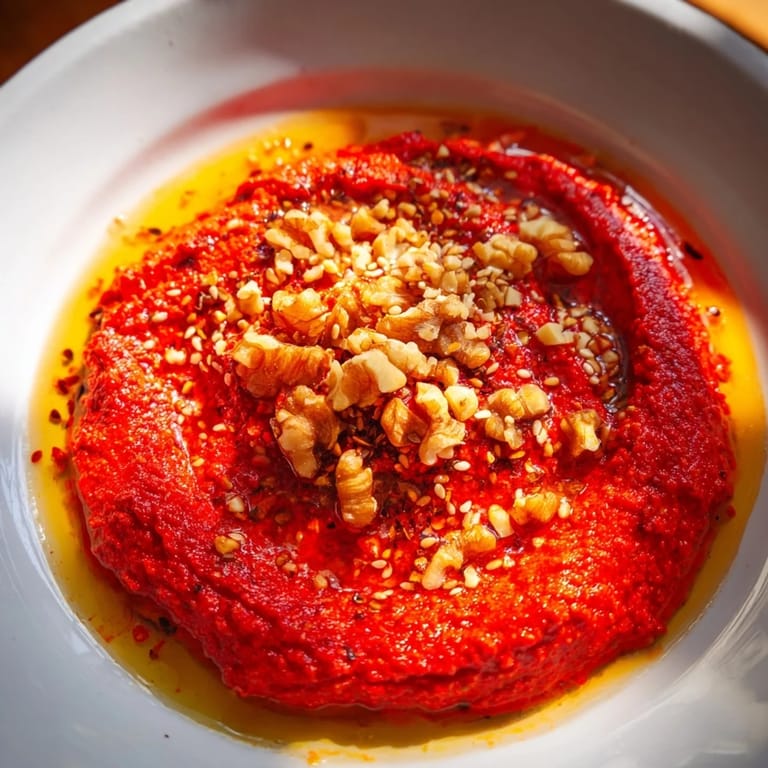
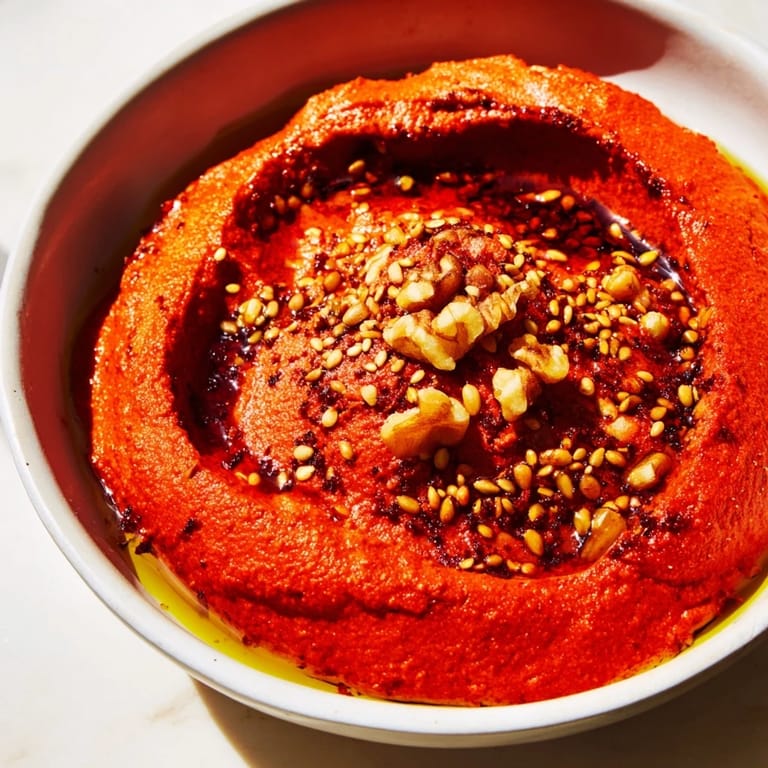
I remember making this for my neighbor's dinner party when I had absolutely nothing prepared, and somehow it became the thing people kept returning to even after the main course. The crimson color in the shallow bowl caught the candlelight, and someone asked if it was store-bought because they'd never seen a dip so vibrant and alive. That moment sealed it for me—this recipe deserves a permanent spot in my kitchen rotation, not just as backup, but as a star.
Ingredients
- Red bell peppers (3 large): These are the backbone, and roasting them concentrates their sweetness while the char adds real depth—don't skip this step or use raw peppers.
- Walnuts (1 cup, lightly toasted): Toasting them first brings out an earthy nuttiness that raw ones can't match, and they give the dip that slight grittiness that feels intentional, not lazy.
- Pomegranate molasses (2 tbsp): This is the secret weapon that makes people say "what is that flavor?"—it's tart and complex, nothing like regular vinegar.
- Garlic (2 cloves): Two cloves is enough to whisper garlic without screaming it; start here and add more if your crowd is bold.
- Breadcrumbs (2 tbsp): They act as a binder and add a subtle texture that keeps the dip from becoming baby food smooth.
- Smoked paprika and Aleppo pepper (1/2 tsp each): These aren't just heat—the Aleppo brings fruity undertones while smoked paprika gives that charred flavor even if you roast indoors.
- Cumin, salt, black pepper, lemon juice, olive oil: These are your tuning tools; taste constantly because every batch of peppers is slightly different.
- Sesame seeds (1 tbsp, optional): Toasted sesame is the finishing touch that elevates presentation and adds a subtle nuttiness that catches people off guard.
Tired of Takeout? 🥡
Get 10 meals you can make faster than delivery arrives. Seriously.
One email. No spam. Unsubscribe anytime.
Instructions
- Char the peppers until their skins blister:
- Set your oven to 220°C (425°F) and lay the whole peppers on a baking tray, turning them every few minutes. You'll watch the red deepen to almost black in patches—that's exactly what you want. After 20–25 minutes, they should look battered and charred, not pretty anymore.
- Steam them to loosen the skins:
- Transfer the hot peppers to a bowl, cover it tightly with plastic wrap, and let them sit for 10 minutes. This step is non-negotiable; the steam makes peeling them almost meditative instead of frustrating.
- Peel and seed with your hands:
- Once they've cooled slightly, the blackened skin slips off easily under cool running water, and the seeds come away with barely any effort. Don't worry about a few scraps of skin; they add character.
- Pulse everything into rough texture:
- Add the peppers, toasted walnuts, garlic, breadcrumbs, and all the spices to your food processor. Pulse—don't blend—until it's coarse and chunky, about 10–15 pulses. This is where most people over-process and end up with paste; resist that urge.
- Add the finishing touches and taste obsessively:
- Pour in the pomegranate molasses, olive oil, and lemon juice, then process until smooth with just a hint of texture. Taste, then adjust—if it's too tangy, add more olive oil; if it's flat, squeeze more lemon. This is your moment to own it.
- Finish and serve with intention:
- Spoon it into a shallow bowl, drizzle extra olive oil in a spiral across the top, and scatter sesame seeds if you have them. Serve it at room temperature with warm pita, crackers, or vegetables.
 Pin it
 I realized this dip transcends being just an appetizer when a guest brought it home in a container and later told me they ate it with a spoon straight from the fridge like it was a snack, not a recipe. That's when I knew I'd created something that bridges tradition and everyday comfort, something that makes people feel like they're tasting the Middle East even in the most ordinary moment.
The Roasting Moment
The smell of charring peppers fills your kitchen with this incredible smoky sweetness that lingers for hours—it's the smell of something being transformed. Some people are intimidated by the blackened appearance, thinking they've burned the peppers, but that char is exactly the point. If you're grilling instead of roasting, stand close enough to feel the heat on your face and listen for the peppers to pop and crackle; that's when you know the skins are truly loosening.
Building Layers of Flavor
What makes muhammara so craveable is how each ingredient plays a different role—the walnuts give earthiness, the pomegranate molasses provides tartness, the smoked paprika whispers smoke, and the roasted peppers tie it all together with natural sweetness. I learned to always taste the components separately before combining them, so you understand what's happening in each bite. Toasting the walnuts and sesame seeds yourself might seem like an extra step, but it fundamentally changes the depth of the finished dip.
Variations and Occasions
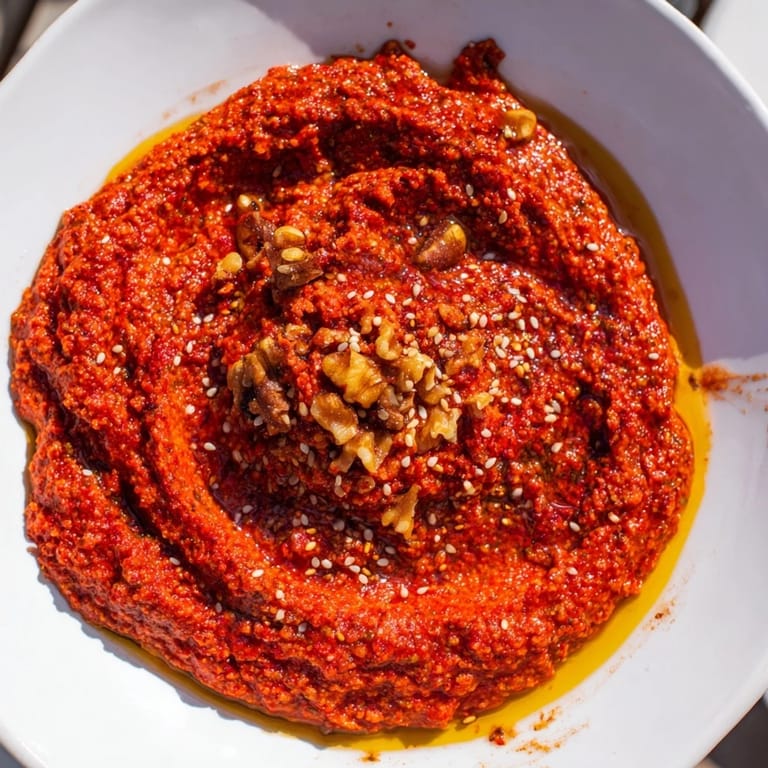
Once you've made this recipe twice, you'll start seeing it as a template rather than a rule. Some days I add pomegranate seeds for bursts of tartness, other times I toast pine nuts alongside the walnuts for a completely different texture. I've served it as part of mezze platters, as a side to grilled fish, and even as a sauce for roasted vegetables. The heat level is entirely in your hands; dial up the Aleppo pepper for someone brave, or leave it mild for a crowd with mixed tastes.
- Try stirring in a spoonful of tahini for creaminess and a more complex walnut flavor.
- Double-roast the peppers for even deeper smokiness, or finish them under a hot broiler for blistering.
- Serve it warm instead of cold for an entirely different experience that surprises people who expect chilled dips.
 Pin it
 Every time I make muhammara, I'm reminded that the best dishes are the ones that taste like a specific place, a specific moment, and a specific person made them with care. This dip carries that same spirit, and it's yours now to make your own.
Recipe Q&A
- → What gives this dip its smoky flavor?
Roasting the red bell peppers until the skins blister adds a natural smoky depth, enhanced by smoked paprika and Aleppo pepper in the mix.
- → Can I substitute walnuts with other nuts?
Walnuts provide a distinctive earthy flavor and texture, but you may experiment with pecans or almonds for a different nutty profile.
- → How can I adjust the dip's spiciness?
Modify the amount of Aleppo pepper or red chili flakes according to your heat preference to keep the balance just right.
- → Is this dip suitable for dietary restrictions?
It is vegan and dairy-free by nature. Use gluten-free breadcrumbs to keep it free from gluten as well.
- → How should I store leftovers?
Store in an airtight container refrigerated for up to five days. Flavors often deepen after resting.