 Pin it
 There was a Tuesday night when my partner came home talking about cutting carbs, and I realized mac and cheese—our comfort food—might disappear from the rotation. Instead of accepting defeat, I grabbed a head of cauliflower from the crisper and thought, why not? The result was so creamy and satisfying that I've made it at least twice a month since. It tastes nothing like a diet compromise and everything like the dish we already loved.
I made this for my sister when she mentioned her new low-carb lifestyle, expecting her to politely eat a bite or two. She asked for seconds, then thirds, and finally wanted the recipe to take home. That moment—when someone stops treating healthy eating as a sacrifice—changed how I approach cooking entirely.
Ingredients
- Cauliflower florets: One large head split into bite-sized pieces becomes the backbone of this dish; cutting them evenly helps them cook at the same rate.
- Unsalted butter: Two tablespoons of good butter is worth the cost because it doesn't water down your sauce.
- Almond flour: This acts as your thickening agent instead of all-purpose flour; it brings a subtle nuttiness and keeps everything keto-friendly.
- Whole milk: One cup creates the creamy base; if you're strict low-carb, swap in unsweetened almond milk without guilt.
- Sharp cheddar cheese: One cup—shredded fresh, not pre-packaged if you can help it, since those come coated to prevent clumping.
- Mozzarella cheese: Half a cup adds stretch and smoothness; it's the secret to that silky texture.
- Parmesan cheese: A quarter cup in the sauce plus more for topping gives you that sharp, savory punch.
- Garlic and onion powder: A half teaspoon each builds depth without adding moisture or carbs.
- Ground mustard: Just a quarter teaspoon if you're using it; this optional ingredient brightens everything.
- Salt and pepper: Taste as you go because cheese is already salty.
Tired of Takeout? 🥡
Get 10 meals you can make faster than delivery arrives. Seriously.
One email. No spam. Unsubscribe anytime.
Instructions
- Set yourself up for success:
- Preheat your oven to 400°F and grease a 9x13-inch baking dish while you work. Having everything ready means you won't panic mid-sauce.
- Cook the cauliflower just enough:
- Boil salted water, add cauliflower florets, and pull them out after 4–5 minutes when they're tender but still hold their shape. Pat them completely dry with paper towels—any moisture becomes watery sauce.
- Build your foundation:
- Arrange the drained cauliflower in your baking dish in a single layer so the sauce reaches everything.
- Make the roux:
- Melt butter over medium heat, whisk in almond flour, and cook for one minute until it smells toasty. This step matters because it removes the raw flour taste.
- Create the sauce:
- Gradually whisk in milk, stirring constantly until the mixture turns smooth and thick—about 2–3 minutes. Don't rush this or you'll have lumps.
- Melt in the cheese:
- Drop the heat to low and add all three cheeses, stirring until completely smooth. Add garlic powder, onion powder, mustard if you're using it, and season with salt and pepper to taste.
- Bring it together:
- Pour the cheese sauce over your cauliflower and gently fold everything together so every piece gets coated. Don't overmix or you'll bruise the florets.
- Top it:
- Sprinkle the remaining Parmesan and cheddar over the top in an even layer.
- Bake until golden:
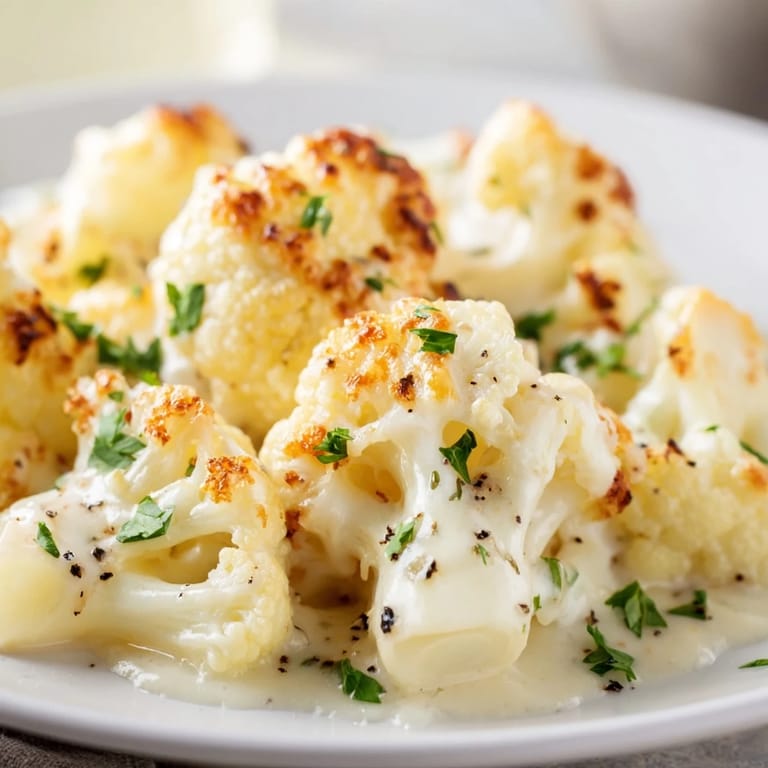
- Slide into the oven for 15–20 minutes until the top bubbles around the edges and turns a light golden brown. You can broil for 2–3 minutes at the end if you want a crispier top, but watch it like a hawk.
- Finish and serve:
- Scatter fresh parsley over top if you have it, and serve while everything is still steaming hot.
 Pin it
 One night my mom tasted this and got quiet for a moment, then said it reminded her why she loved cooking in the first place—not because of restrictions, but because feeding people something delicious is its own kind of magic. That's when I knew this wasn't just a diet recipe.
The Cheese Sauce Matters Most
The sauce is where this dish lives or dies, and the quality of your cheese directly impacts everything. Sharp cheddar brings flavor that mild cheddar simply cannot deliver, and freshly shredded cheese melts infinitely better than the bagged stuff. If you find yourself with a lumpy or broken sauce, you haven't ruined anything—pull it off heat and whisk in cold milk a little at a time until it smooths out again. I've learned that cheese sauces are actually more forgiving than they seem.
Flavor Swaps That Work
Once you understand the foundation, you can play. A pinch of smoked paprika transforms this into something with deeper, almost bacon-like notes. Swap sharp cheddar for Gruyère and it becomes elegant enough for company. Monterey Jack creates a milder, creamier version that works beautifully if you're sensitive to strong cheeses. The base recipe is flexible; the technique is what matters.
Serving and Storage
This dish is at its absolute best served immediately when the sauce is creamy and the top is still crisp. Leftovers keep for three days in the fridge and reheat surprisingly well in a 350°F oven covered loosely with foil—just add a splash of milk to the top to restore moisture. It's equally comfortable as a side dish next to grilled chicken or as a light main course with a crisp salad on the side.
- Don't refrigerate it in the baking dish or the sauce will stick; transfer leftovers to an airtight container instead.
- Serve alongside something acidic like a vinegar-based salad to cut through the richness.
- If you're meal-prepping, this reheats better than most baked dishes because the cauliflower stays tender.
 Pin it
 This recipe proved to me that cooking without restrictions isn't about deprivation—it's about understanding the dish well enough to make it work for your life. Make this when you need comfort that doesn't ask apologies.
Recipe Q&A
- → Can I use regular flour instead of almond flour?
Yes, regular flour can be used but it will increase the carbohydrate content. Almond or coconut flour keeps the dish low-carb.
- → How do I prevent the cauliflower from becoming soggy?
Blanch cauliflower briefly and pat dry thoroughly to remove excess moisture before baking for a firmer texture.
- → What cheeses work best for the sauce?
Sharp cheddar, mozzarella, and Parmesan create a rich, melty sauce with a balance of flavors and creaminess.
- → Can I add spices for extra flavor?
Yes, smoked paprika or ground mustard can add warmth and complexity to the sauce and topping.
- → Is this dish suitable for vegetarians?
Yes, it contains no meat and uses vegetarian-friendly ingredients like cheese and cauliflower.