 Pin it
 There's something almost magical about the smell of vegetables caramelizing in a hot oven, especially on a gray afternoon when the kitchen feels like the warmest room in the house. I discovered this soup by accident, really, when I had a half-empty vegetable drawer and decided roasting everything was better than letting it go to waste. What emerged was this velvety, naturally sweet soup that tasted nothing like the sad vegetable soup I'd made a hundred times before. My partner came home mid-roast and said the aroma was enough to make them want to move dinner up by two hours. That's when I knew I'd stumbled onto something worth repeating.
I made this for my sister the first time she was getting over being sick, and she actually ate a full bowl instead of pushing food around her plate. There's something about handing someone a warm bowl of roasted vegetable soup that feels like an act of care without being fussy about it. She's asked me to make it every time she visits now, and I've started keeping the basic ingredients on hand just in case.
Ingredients
- Carrots: Use medium ones for even cooking, and don't bother peeling too carefully, just a rough scrape is fine and saves time.
- Sweet potato: Adds natural sweetness and creaminess to the broth without any dairy, which became my favorite secret once I realized how much texture it gives.
- Red bell pepper: The brightness here is key, both in color and flavor, so don't swap it for green unless you want a different soup entirely.
- Zucchini: Keep the skin on and chop it into chunks, it breaks down into the soup and adds body without any extra effort.
- Red onion: Quarter it and let it caramelize hard, the sugars that develop in the oven are what make this taste like you've cooked it for hours.
- Garlic: Two whole cloves, unpeeled, roasted until they're soft enough to squeeze out of their skin like butter, that's the real magic.
- Olive oil: Use good oil here because it's prominent in the broth, not buried under other flavors, and it carries everything together.
- Vegetable broth: A decent quality one makes a difference, and I learned the hard way that super salty broth can ruin the balance even before you taste it.
- Dried thyme and rosemary: These two dried herbs survive roasting better than fresh ones would, and they bloom even more when the broth simmers.
- Smoked paprika: A half teaspoon is subtle but adds a whisper of smokiness that makes people ask what that mysterious flavor is.
Tired of Takeout? 🥡
Get 10 meals you can make faster than delivery arrives. Seriously.
One email. No spam. Unsubscribe anytime.
Instructions
- Heat your oven and prepare:
- Preheat to 425°F and line a baking sheet with parchment paper so cleanup is one less thing to think about later. I learned this the hard way after scrubbing a sheet for what felt like forever.
- Arrange and season your vegetables:
- Toss all the chopped vegetables on the sheet, drizzle with olive oil, then sprinkle the thyme, rosemary, paprika, salt, and pepper over everything and toss until it's all coated. You want every piece to feel dressed for the occasion.
- Roast until golden:
- Spread them in one layer and roast for 30 to 35 minutes, stirring halfway through so nothing sticks or browns too dark on one side. Your kitchen will smell like a professional kitchen by minute 20, which is its own reward.
- Move everything to your pot:
- Pour the roasted vegetables and all their caramelized bits into a large pot, scraping the sheet to get every stuck-on piece because that's concentrated flavor. Add the vegetable broth and turn the heat to medium.
- Simmer and blend:
- Let it bubble gently for about 10 minutes so the flavors can find each other, then use an immersion blender to smooth it all out until it's silky and pourable. If you're nervous about hot soup splattering, go slow and keep the blender submerged.
- Taste and serve:
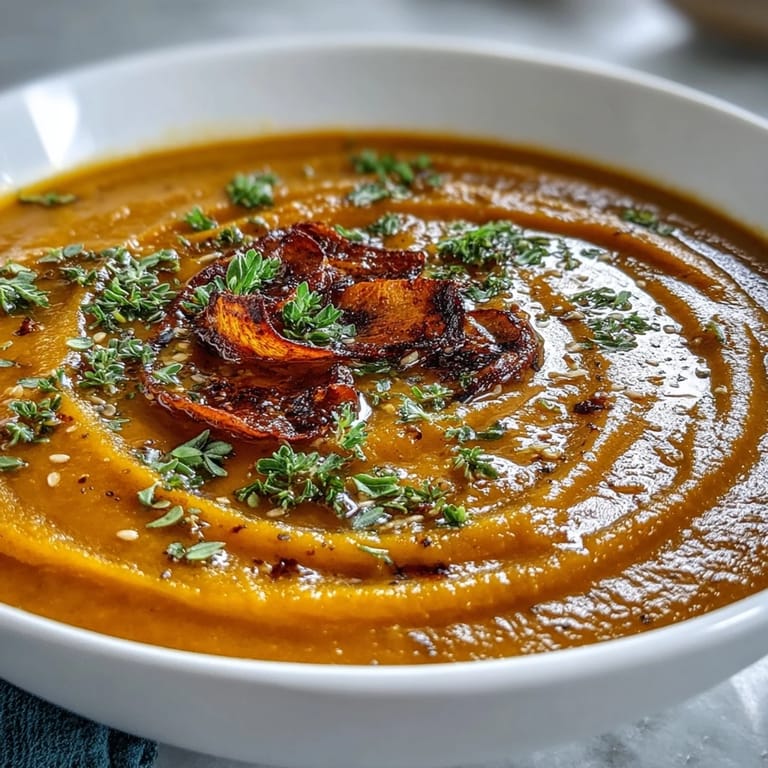
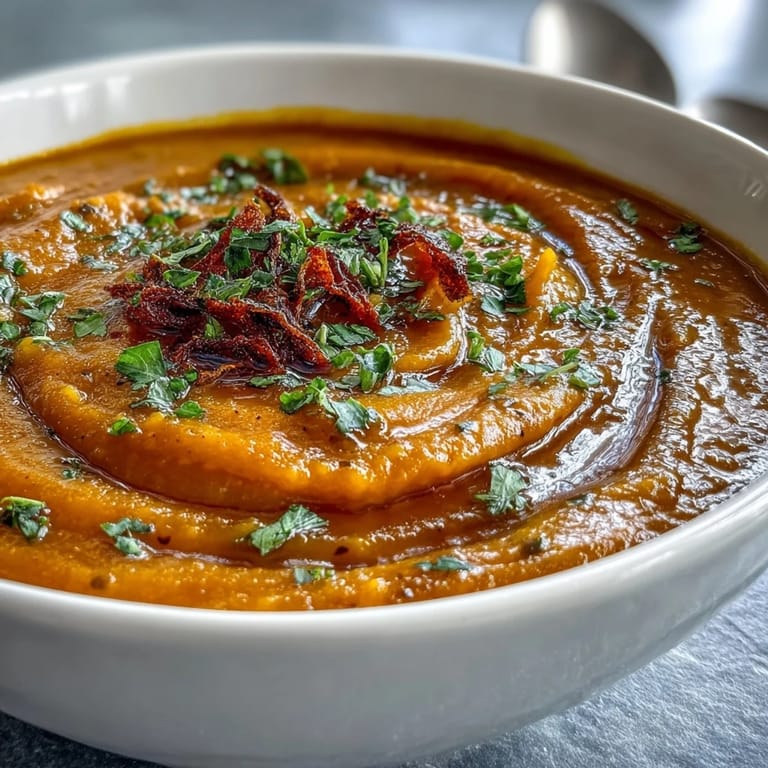
- Season with salt and pepper once more because roasted vegetables can be forgiving but they still need your palate's final say. Ladle it into bowls and add parsley, a thread of olive oil, and croutons if you want something to bite into.
 Pin it
 Last winter, I made this soup for a small dinner and realized halfway through that I'd forgotten the paprika entirely. I tasted it and knew something was missing but couldn't place what until my friend mentioned it tasted nice but almost one-dimensional. I've never made that mistake again, and now I always lay out my spices before I start so nothing gets overlooked in the chaos of cooking.
When to Make This Soup
This soup is perfect for the transition seasons when you're craving warmth but not heaviness, and it works in summer too if you serve it at room temperature with extra olive oil drizzled on top. I make it in fall when the farmers market suddenly has everything at once, and in winter when the kitchen needs to feel lived in and warm. It's also quietly impressive as a first course for dinner, especially if you garnish it thoughtfully and serve it in smaller bowls.
How to Adapt This Recipe
The beauty of this soup is that it genuinely works with whatever vegetables you have, as long as you're roasting them first to build flavor. I've made it with parsnips instead of carrots, added leeks when I had them, swapped zucchini for summer squash, and it's never failed me. The one thing I don't skip is the red onion because its caramelization is what carries the whole thing, everything else can be shuffled around based on what's in your life that day.
Storage and Make Ahead
This soup keeps beautifully in the refrigerator for up to three days, and honestly it often tastes better the next day once the flavors have had time to settle and know each other better. You can also freeze it if you're thinking ahead, just leave a little headspace in your container because it expands slightly. If you want to make it creamier before serving, stir in a splash of coconut milk or regular cream, or keep it as is and let the roasted vegetables do all the work.
- Make the roasted vegetables ahead and store them separately, then blend with fresh broth when you're ready to eat.
- Keep garnishes separate and add them just before serving so the parsley stays bright and any croutons don't get soggy.
- This soup works in a thermos if you need to take it somewhere, and it stays warm for hours without losing anything.
 Pin it
 This recipe has become the soup I make when I want to feel capable in the kitchen without stress, and the one I share when someone asks for something that tastes like care. It's simple enough that nothing can really go wrong, but somehow always tastes like you've put thought into it.
Recipe Q&A
- → Can I use different vegetables?
Absolutely. This method works well with parsnips, butternut squash, leeks, or any seasonal vegetables you have available. Just keep the total quantity similar for consistent results.
- → How do I make it creamier?
Stir in a splash of coconut milk, heavy cream, or cashew cream before blending. This adds richness without overpowering the roasted vegetable flavors.
- → Can I freeze this soup?
Yes, it freezes beautifully for up to 3 months. Let it cool completely before transferring to airtight containers. Thaw overnight in the refrigerator and reheat gently.
- → What's the best way to blend?
An immersion blender works directly in the pot for easy cleanup. For the smoothest texture, use a countertop blender in batches, being careful with hot liquids.
- → How long does it keep in the refrigerator?
Store in an airtight container for up to 3 days. The flavors often develop even more after a day. Reheat on the stovetet over low heat, adding a splash of broth if needed.