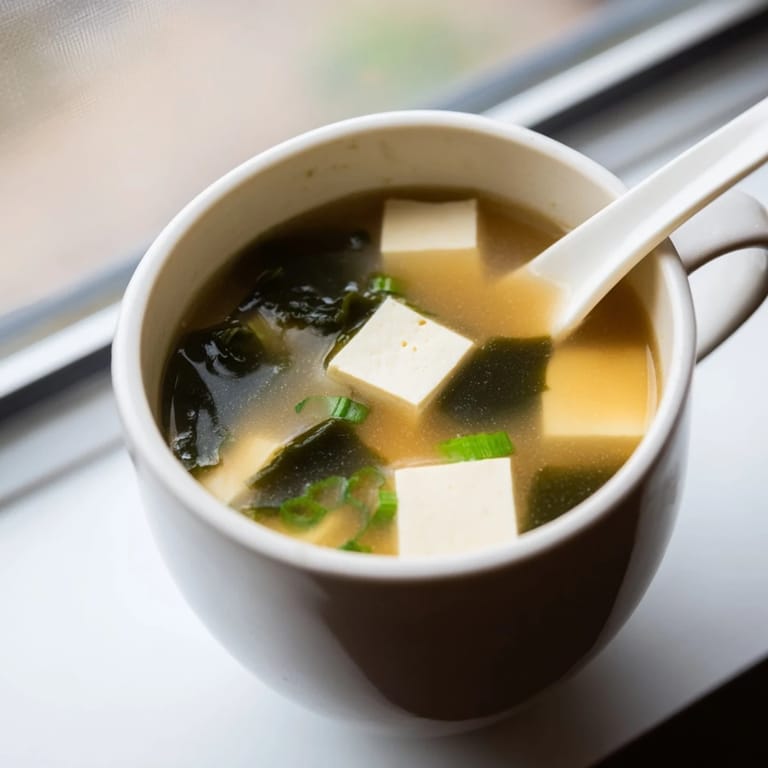
 Pin it
 The first time I attempted miso soup in my tiny apartment kitchen, I treated it like any other soup and boiled everything together. The result was a sad, separated mess that taught me miso is delicate and demands respect. Now whenever I make it, I'm reminded of that rainy evening and how the simplest soups often hold the biggest lessons. This recipe has become my go-to comfort food, ready in minutes but feeling like a warm embrace.
Last winter, my roommate came home exhausted from a terrible shift at work. I silently made a pot of this soup, and the way her shoulders dropped as she inhaled that first steamy spoonful said everything. Sometimes the most profound way to say I care is through something this simple.
Ingredients
- Dashi stock: This is the foundation of Japanese cooking, and using quality dashi makes all the difference in depth
- White or yellow miso paste: Lighter miso varieties bring a gentler, sweeter flavor that lets other ingredients shine
- Silken tofu: Its delicate texture absorbs the broth while holding its shape beautifully
- Dried wakame seaweed: Rehydrates into tender ribbons that bring that classic ocean essence
- Scallions: Fresh, bright finish that cuts through the richness and adds a pop of color
Tired of Takeout? 🥡
Get 10 meals you can make faster than delivery arrives. Seriously.
One email. No spam. Unsubscribe anytime.
Instructions
- Warm the dashi gently:
- Bring your dashi stock to a gentle simmer, never a rolling boil, keeping it calm and welcoming
- Prep the seaweed:
- Soak the wakame in cold water while the stock heats, watching it expand and soften
- Dissolve the miso:
- Whisk the miso paste with a ladle of hot dashi in a separate bowl until perfectly smooth
- Add the tofu and seaweed:
- Gently slip the tofu cubes and drained wakame into the simmering broth, treating them with care
- Finish with miso:
- Remove from heat completely, stir in the dissolved miso, and let the flavors meld without boiling
- Serve immediately:
- Ladle into bowls and scatter those fresh scallions on top while the steam still rises
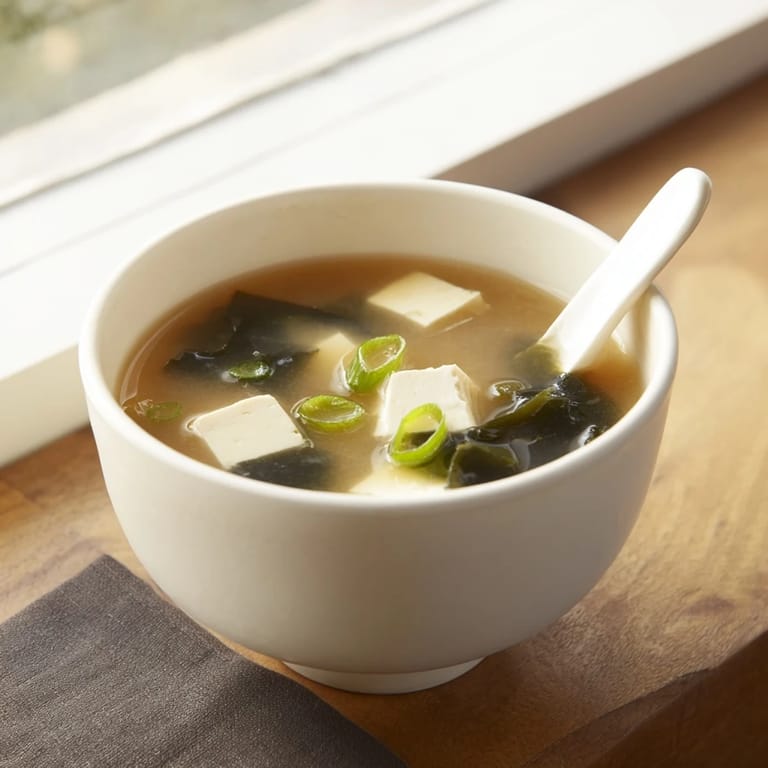 Pin it
 This soup has become my ritual on Sunday evenings, setting the tone for the week ahead. Theres something meditative about the process, the gentle simmering, the careful stirring. Its not just sustenance, its a moment of peace.
Finding Your Perfect Miso Balance
White miso is sweet and mild, while red miso brings depth and intensity. I love experimenting with different ratios, and some of my best bowls have come from happy accidents when I was low on one type and improvised with another.
Making It Your Own
Thinly sliced mushrooms add earthiness, and baby spinach wilts beautifully into the hot broth. I once added a handful of corn kernels when that was all I had, and the sweetness against the salty miso was revelatory.
The Art of Simple Garnishes
Beyond scallions, consider a drizzle of sesame oil or a sprinkle of toasted sesame seeds for nutty depth. Some nights I add a few drops of chili oil when I need that extra warmth.
- Grated fresh ginger adds a lovely zing
- A handful of cilantro brings a completely different vibe
- A soft boiled egg makes it a meal in itself
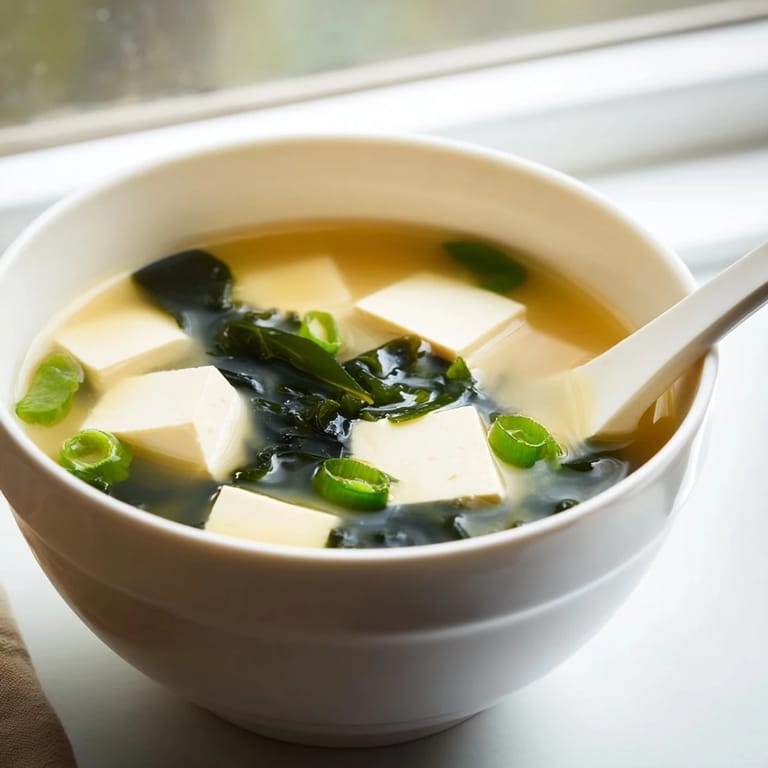 Pin it
 Every bowl is a reminder that sometimes the most nourishing things in life are also the simplest. May your kitchen always smell like comfort.
Recipe Q&A
- → What type of miso works best?
White or yellow miso paste offers a milder, sweeter flavor perfect for beginners. Red miso provides a deeper, more intense taste. You can also blend both varieties for added complexity and depth.
- → Can I make this vegan?
Absolutely. Simply use vegetarian dashi made from kombu seaweed and dried shiitake mushrooms instead of traditional bonito-based stock. Most miso pastes are naturally vegan, but always check labels to be certain.
- → Why shouldn't I boil the miso?
Boiling miso paste destroys its beneficial probiotics and enzymes while creating an overly strong, bitter flavor. Always remove the soup from heat before stirring in the dissolved miso to maintain its delicate balance and health benefits.
- → How do I store leftovers?
Keep cooled soup in an airtight container in the refrigerator for up to 3 days. The tofu will continue absorbing miso flavor, making it even tastier. Gently reheat over low heat, being careful not to let it boil.
- → What can I add for variety?
Thinly sliced shiitake mushrooms, baby spinach, or snow peas make excellent additions. You could also add cooked ramen noodles for a heartier bowl or a soft-boiled egg for extra protein. Adjust ingredients based on what you have available.