 Pin it
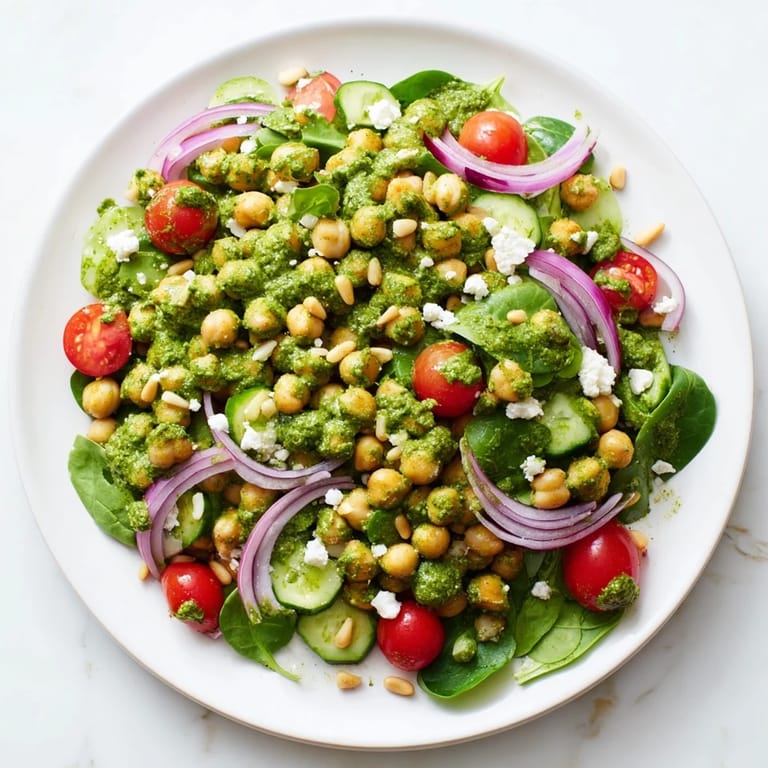
 There's something magical about the moment when you taste a salad and realize it's not just an afterthought—it's the whole meal. I discovered this truth on a sunny afternoon when I had nothing but chickpeas, basil from my overgrown garden, and tired spinach that needed rescuing from the back of my fridge. I threw it together almost out of obligation, but that homemade pesto made everything click into place. Now it's the salad I make when I want to feel nourished without spending hours in the kitchen.
I made this for my sister last summer when she was stressed about eating better, and watching her take a second helping told me everything I needed to know. She kept asking about the pesto, convinced I'd bought it somewhere fancy. When I explained I'd blended it in my food processor while standing in my kitchen in bare feet, she laughed and asked for the recipe that same night.
Ingredients
- Chickpeas: Drain and rinse them well—this removes excess sodium and helps them absorb the pesto better rather than sitting watery in the bowl.
- Fresh baby spinach: The tender leaves wilt slightly when the warm pesto touches them, creating a better texture than mature spinach would.
- Cherry tomatoes: Halve them so they release their juice into the salad and create a subtle sauce as you eat.
- Red onion: A thin slice adds sharpness that cuts through the richness of the pesto without overwhelming the dish.
- Cucumber: Diced small, it stays crisp and provides cooling contrast to the herbaceous dressing.
- Pine nuts: Toast them yourself if you have time—the difference between raw and toasted is the difference between bland and buttery.
- Feta cheese: Crumbled into rough chunks, it catches the pesto and creates pockets of salty creaminess.
- Fresh basil: Use leaves that smell intensely green and fragrant, not tired or browning at the edges.
- Parmesan cheese: Grated fresh, never pre-shredded, because the fine texture integrates smoothly into the pesto.
- Extra-virgin olive oil: This is where you splurge a little—a good oil elevates the entire dressing.
- Garlic: One clove is plenty; basil pesto shouldn't taste like a vampire repellent.
- Lemon juice: Brightens everything and prevents the pesto from tasting heavy.
Tired of Takeout? 🥡
Get 10 meals you can make faster than delivery arrives. Seriously.
One email. No spam. Unsubscribe anytime.
Instructions
- Make the pesto first:
- Put your basil, Parmesan, pine nuts, and garlic into the food processor and pulse until everything looks finely chopped but still has some texture. This takes about 15 seconds—you're not making a paste. Now turn the motor on and drizzle in the olive oil slowly, almost like you're being precious about it, until the mixture becomes smooth and pourable, then add water a tablespoon at a time until it reaches the consistency you want.
- Assemble the salad:
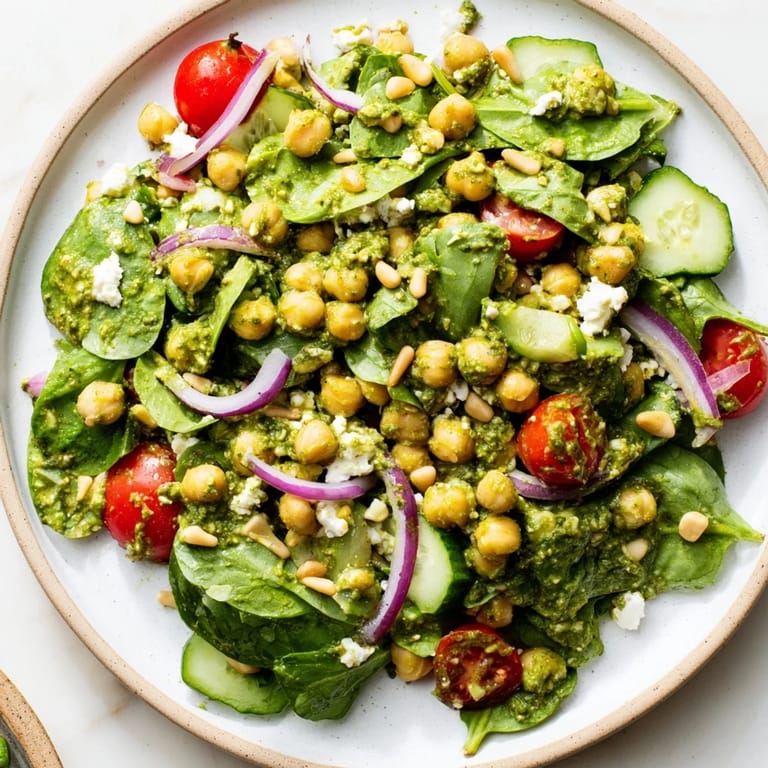
- Throw your rinsed chickpeas, spinach, tomatoes, red onion, and cucumber into a large bowl—there's no wrong way to do this part. A light toss to combine is all you need at this stage.
- Dress and combine:
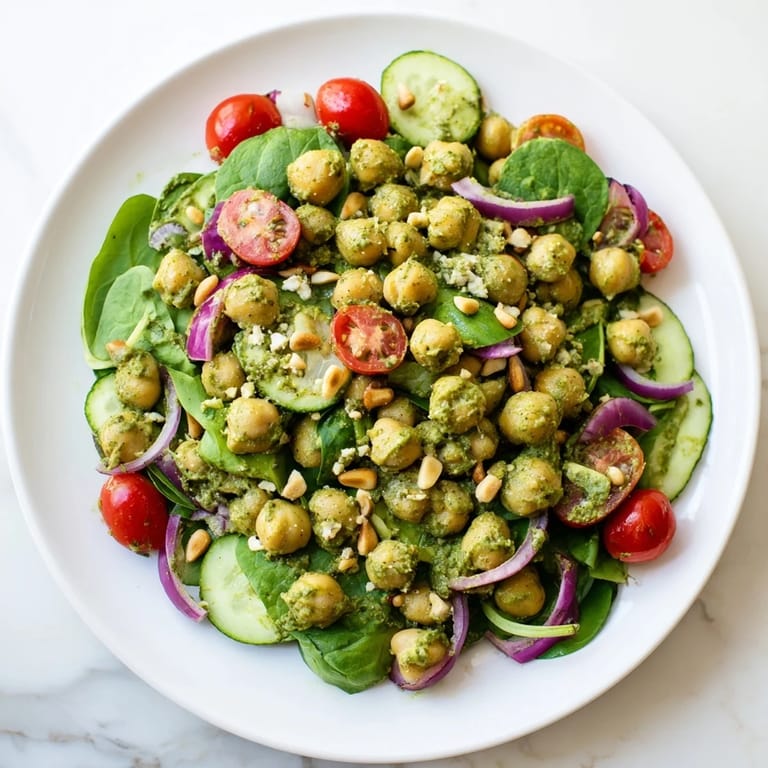
- Pour the pesto over everything and use two spoons or salad tongs to gently toss until every ingredient glistens with green. You want the spinach to just barely start softening from the warmth of the pesto.
- Finish and serve:
- Scatter the toasted pine nuts and crumbled feta over the top, then taste and adjust the salt and pepper. Serve immediately while the spinach still has a little crispness, or cover and refrigerate for up to 2 hours if you're eating later.
 Pin it
 There was a moment at a picnic where someone asked if this salad was from a restaurant, and I realized that homemade doesn't have to mean complicated. It just means you showed up and made something with your hands, and that counts for everything.
Customizing Your Salad
This salad is a starting point, not a rulebook. Want it heartier? Toss in some grilled chicken or roasted vegetables like zucchini or bell peppers. Prefer a peppery bite? Swap the spinach for arugula, though you'll use a tiny bit less since it's more assertive. The beauty of this dish is that it adapts to what you have and what you're craving without losing its essential character.
Variations for Different Diets
Making this for someone vegan? Skip the cheese entirely or use a plant-based version that melts slightly when it hits the warm pesto. For nut allergies, sunflower seeds or pumpkin seeds work beautifully in both the pesto and as a topping, giving you that same satisfying crunch. Once I made this without any nuts at all for a friend, and it was still delicious—the pesto was slightly lighter, but the basil and lemon carried the dish perfectly well.
Storage and Make-Ahead Tips
You can keep the pesto in an airtight container for up to three days if you press plastic wrap directly onto the surface so it doesn't oxidize and turn dark. The salad components can be prepped separately and kept in the fridge, then tossed together just before serving so the spinach doesn't get soggy. If you do make it ahead, the flavors actually deepen and meld together beautifully over an hour or two, which is sometimes exactly what you want.
- Store pesto with a thin layer of olive oil on top to protect the basil from air exposure.
- Keep chickpeas and vegetables separate until you're ready to eat to maintain the best texture.
- This salad is best eaten within a few hours of dressing to keep the spinach crisp.
 Pin it
 This is the salad I make when I want to prove to myself that eating well doesn't require sacrifice or complexity. It's become a quiet ritual of mine, especially on days when everything else feels chaotic.
Recipe Q&A
- → Can I make the pesto dressing without cheese?
Yes, simply omit the Parmesan for a vegan-friendly pesto. You can also use nutritional yeast or vegan cheese substitutes to maintain flavor.
- → What can I use instead of pine nuts?
Sunflower seeds, walnuts, or almonds can replace pine nuts for a different texture and similar crunch.
- → How long can the salad be stored?
The salad is best served fresh but can be refrigerated for up to 2 hours to let the flavors meld without losing texture.
- → Can I add protein to make it more filling?
Adding grilled chicken, roasted vegetables, or tofu can enhance the dish while maintaining its light and fresh qualities.
- → Is it possible to substitute spinach with other greens?
Yes, arugula or kale can be used for a different flavor profile, adding peppery or earthy notes respectively.