 Pin it
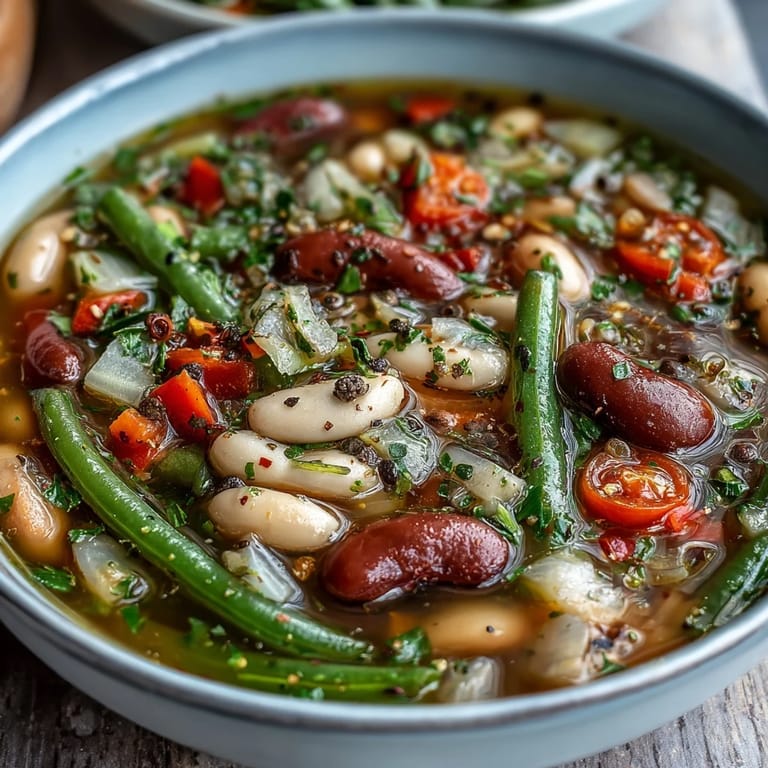
 My neighbor showed up one afternoon with a tupperware of three-bean salad, the kind that sits in the back of potlucks looking somehow both humble and essential. I loved it enough to wonder: what if this became soup? That question led me to this bowl, where the bright vinegar tang and colorful beans transform into something warm and alive, tasting like summer in a spoon no matter the season.
I made this for a friend who'd been eating takeout for weeks straight, and watching her face when she tasted it felt like I'd handed her something precious. She asked for the recipe before the bowl was even empty, then texted me days later saying she'd made it twice more.
Ingredients
- Kidney beans: Their earthiness anchors the soup and holds up beautifully through simmering without falling apart.
- Cannellini beans: Creamy and mild, they add a subtle richness that rounds out the brightness from the vinegar.
- Green beans: Fresh and crisp even from a can, they remind you this is meant to taste alive and summery.
- Red bell pepper: Sweet and slightly charred if you let it sit in the hot oil a moment longer, this is where gentle depth comes from.
- Red onion: Finely chopped so it softens into the broth rather than announcing itself, but you'll notice the difference if it's missing.
- Celery: The quiet hero that builds flavor without asking for credit.
- Garlic: Two cloves minced fine so they distribute their warmth evenly throughout.
- Cherry tomatoes: Halved so they release their juice slowly and keep the soup tasting fresh rather than canned.
- Vegetable broth: The foundation—use low-sodium so you control the final seasoning and the beans' natural taste comes through.
- Olive oil: Two tablespoons for sautéing the base layer where all the flavor magic begins.
- Red wine vinegar: This is what makes it taste like the salad you remember, so don't skip it or substitute lightly.
- Dijon mustard: A tablespoon quietly holds the flavors together like an invisible hand.
- Sugar: Just one teaspoon to balance the vinegar's punch without making anything sweet.
- Dried oregano: Half a teaspoon gives you that Mediterranean warmth without overpowering.
- Red pepper flakes: Optional, but a quarter teaspoon adds a whisper of heat that makes people say the soup tastes more alive.
- Fresh parsley: Two tablespoons stirred in at the end, plus more for garnish—it brightens everything it touches.
Tired of Takeout? 🥡
Get 10 meals you can make faster than delivery arrives. Seriously.
One email. No spam. Unsubscribe anytime.
Instructions
- Sauté your flavor base:
- Heat the olive oil over medium heat and add the red onion, celery, and garlic. You'll hear them hit the hot oil with that satisfying sizzle—wait for three to four minutes until they soften and release their sweetness, then the kitchen starts to smell like cooking something intentional.
- Add the pepper and cook briefly:
- Stir in the red bell pepper and let it cook for another two minutes, which is just enough time for it to start releasing its color into the oil without losing its snap.
- Introduce the beans and tomatoes:
- Now add all three types of beans and the halved cherry tomatoes, stirring gently for a minute or two so they warm through and absorb the aromatic oil you've built.
- Pour in the broth:
- Add your vegetable broth and bring it to a gentle boil—you want movement but not aggressive bubbling, which can break down the beans unnecessarily.
- Make the tangy dressing:
- While the broth comes up to temperature, whisk together the red wine vinegar, Dijon mustard, sugar, oregano, and red pepper flakes in a small bowl. This mixture is what transforms the soup from vegetable-forward to something with real personality.
- Add the dressing and simmer:
- Reduce heat to a simmer and pour in your vinegar mixture, then let everything cook uncovered for 15 minutes. The flavors meld in a way that surprises you—the broth becomes less brothy and more intentional with each passing minute.
- Season and finish:
- Taste and adjust salt and black pepper, then stir in your fresh parsley so it stays bright and herbaceous rather than cooked down.
- Serve warm:
- Ladle into bowls and top with extra parsley if you want to remind people this is a fresh soup, not a heavy one.
 Pin it
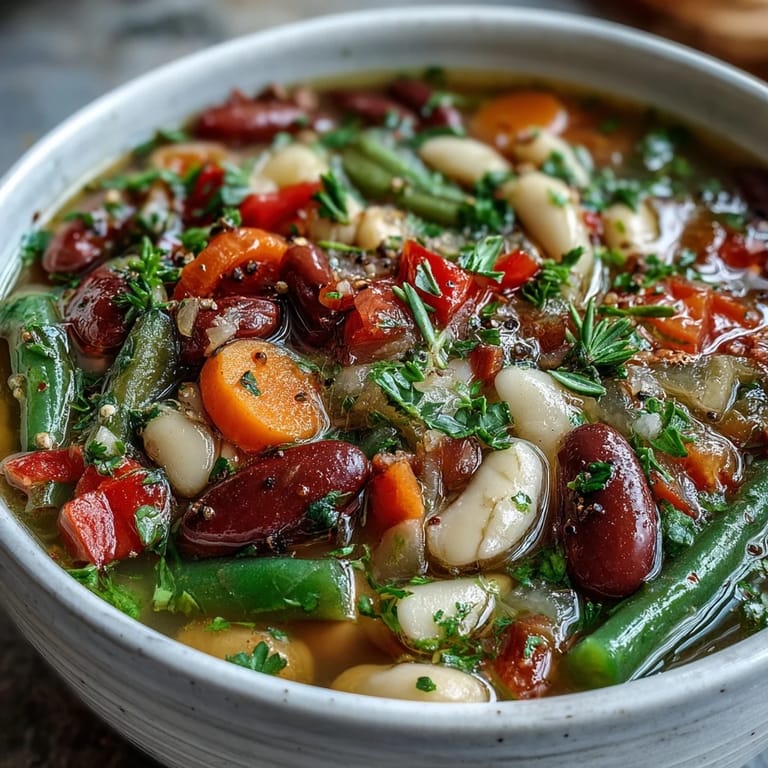
 There's a moment right around minute twelve of the simmer when you smell the vinegar and mustard mingling with the herb-touched broth, and you realize the soup tastes nothing like the individual ingredients anymore—it tastes like something intentional you created. That's when you know it's going to be good.
Why This Soup Stays Interesting
Most bean soups fade into the background of your meal, doing their job without demanding attention. This one refuses to be boring because the vinegar and mustard keep your palate awake with every spoonful, and the three different bean textures mean you're never quite eating the same thing twice. It tastes light enough to not weigh you down, but substantial enough that you feel genuinely nourished afterward.
How to Make It Your Own
The beauty of this soup is that it welcomes your changes without falling apart. Swap the red wine vinegar for apple cider vinegar if you prefer something gentler and slightly sweeter. Dill works beautifully instead of parsley if that's what you have reaching for you in the garden. Some people stir in cooked quinoa or shredded rotisserie chicken to push the protein higher, and the soup absorbs the additions like it was always meant to include them.
Serving Suggestions and Storage Wisdom
Serve this soup hot or at room temperature—it actually tastes even better the next day once the flavors have had time to truly settle into one another. A thick slice of crusty bread and a simple green salad alongside makes it feel like a complete meal rather than just a bowl of soup. Store leftovers in the refrigerator for up to four days, and it reheats beautifully on the stovetop with just a splash of water or broth to bring back the moisture that naturally evaporates.
- Cold leftover soup makes an unexpectedly refreshing lunch in summer, tasting almost like a gazpacho's distant cousin.
- Freeze individual portions for up to three months if you want to save some for a rushed weeknight when you need something this good.
- The flavors actually intensify in the freezer, so when you thaw and reheat, the soup tastes even more of itself than it did fresh.
 Pin it
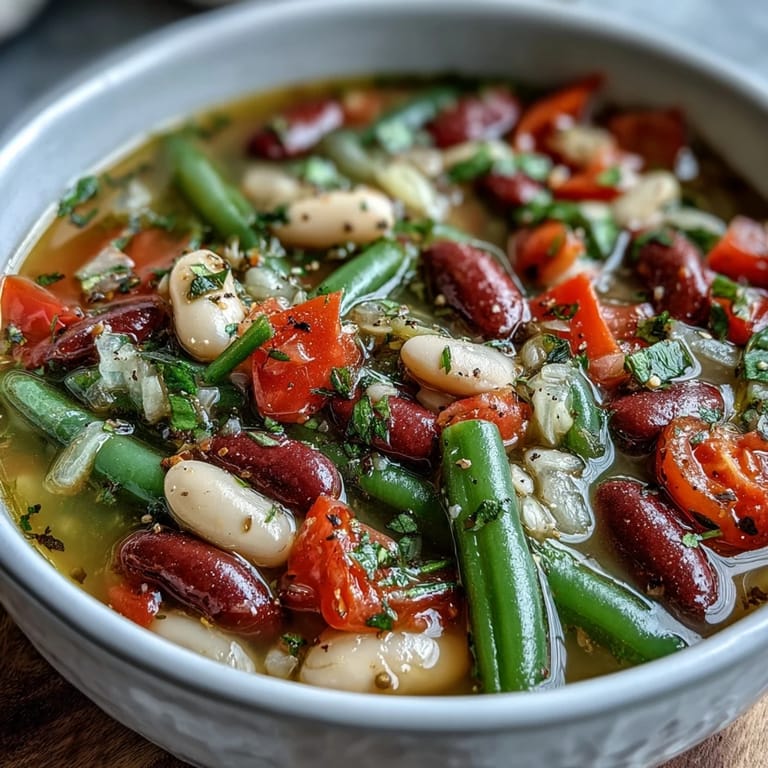
 This soup reminds me that sometimes the best kitchen discoveries come from wondering what would happen if you changed one thing. Make it once and I think you'll find yourself coming back to it, changing small things each time until it tastes entirely like your own.
Recipe Q&A
- → Can I use dried beans instead of canned?
Yes, soak and cook 1 cup each of dried kidney and cannellini beans separately until tender before adding to the soup. For green beans, use fresh blanched beans instead of canned. This method requires additional time but allows for greater control over sodium content and texture.
- → How long does this soup keep in the refrigerator?
The soup stores well in an airtight container for 4-5 days. The vinegar in the broth helps preserve freshness and actually allows flavors to develop further over time. Reheat gently on the stovetop, adding a splash of broth if needed to adjust consistency.
- → Can I freeze this soup?
This soup freezes beautifully for up to 3 months. Cool completely before transferring to freezer-safe containers, leaving some room for expansion. Thaw overnight in the refrigerator and reheat on the stovetop. The texture remains excellent after freezing.
- → What can I serve with this soup?
Crusty bread or garlic bread pairs perfectly for soaking up the flavorful broth. A simple green salad with vinaigrette complements the fresh, tangy notes. For a heartier meal, serve alongside grilled cheese sandwiches or a baked potato.
- → How can I make this soup spicier?
Increase the crushed red pepper flakes to 1 teaspoon or add a diced jalapeño pepper when sautéing the vegetables. A dash of hot sauce or cayenne pepper works well too. Adjust spice level gradually to suit your preference.
- → Can I add other vegetables to this soup?
Absolutely. Zucchini, yellow squash, carrots, or shredded cabbage make excellent additions. Add harder vegetables like carrots with the onions, and softer vegetables like zucchini along with the beans. This creates an even more nutrient-dense bowl.