 Pin it
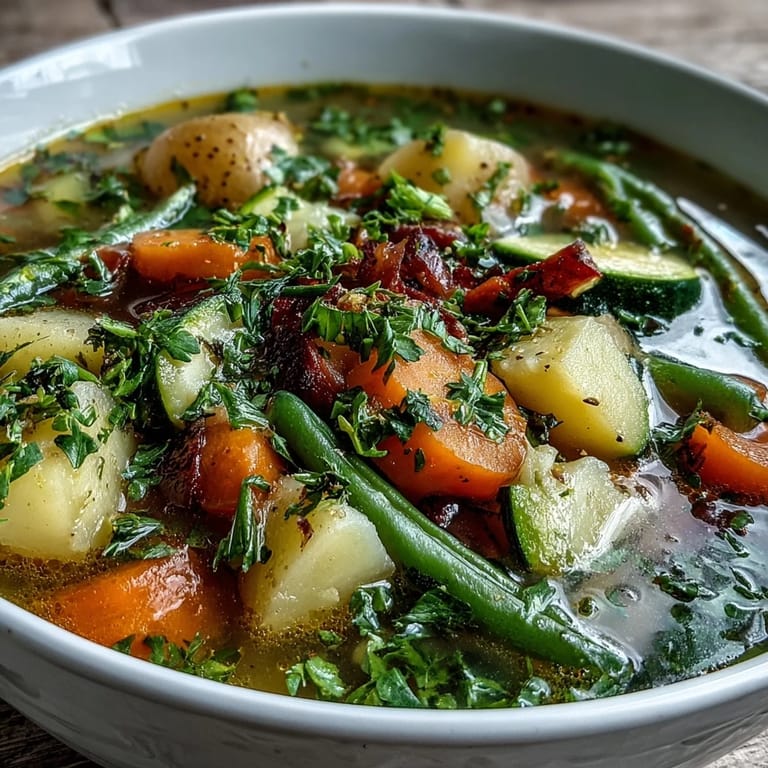
 My neighbor caught me staring at her garden one afternoon, watching her pull up the last of the summer vegetables with dirt still clinging to them. She laughed and handed me a basket, saying I looked like someone who needed to make soup. That evening, with those garden-fresh potatoes, carrots, and zucchini spread across my counter, I remembered why simple vegetable soup feels less like cooking and more like assembling warmth into a bowl.
I made this soup on a Tuesday when my sister called saying she was driving through town, hungry and tired. By the time she arrived, the kitchen smelled like caramelized onions and thyme, and somehow a pot of soup felt like the best welcome I could offer. She had three bowls and didn't say much, but that's how I knew it was right.
Ingredients
- Potatoes (3 medium, peeled and diced): These are your soup's backbone, softening into tender chunks that catch the broth beautifully; don't skip peeling them unless you want that earthy skin texture throughout.
- Carrots (2 medium, peeled and sliced): They bring natural sweetness that balances everything else, and slicing them slightly thicker than the potatoes keeps them from disappearing.
- Celery (2 stalks, diced): This is your secret flavor builder, adding depth that people taste but can't quite name.
- Onion (1 medium, chopped): The foundation of the whole thing, and worth the five minutes of sautéing to soften its sharpness into something round and welcoming.
- Zucchini (1, diced): A lighter vegetable that soaks up broth without overwhelming the pot, perfect for adding volume without heaviness.
- Green beans (1 cup, cut into 1-inch pieces): These keep their snap through cooking, giving you something to bite into rather than just swallow.
- Garlic (2 cloves, minced): One minute in the pot with oil transforms it from raw bite to mellow, almost sweet background note.
- Vegetable stock (6 cups): Use good stock here because it's doing all the talking; weak stock means a weak soup.
- Bay leaf, dried thyme, and dried parsley: These three create the soup's personality, simmering into every spoonful.
- Salt and black pepper: Taste as you go, because vegetable soup is forgiving and can always take more seasoning.
- Olive oil (2 tablespoons): For starting the vegetables and building that initial golden layer of flavor.
- Frozen peas (1 cup): Added at the very end so they stay bright and slightly firm, a last-minute pop of sweetness.
- Fresh parsley for garnish: Optional but worth it, a flick of green that says you cared enough to finish properly.
Tired of Takeout? 🥡
Get 10 meals you can make faster than delivery arrives. Seriously.
One email. No spam. Unsubscribe anytime.
Instructions
- Start with the softer vegetables:
- Warm the olive oil over medium heat in your largest pot, then add the onion, carrots, and celery. Let them sit for five minutes with occasional stirring, watching them turn golden and tender at the edges. This isn't rushed; this is where the soup gets its foundation.
- Wake up the garlic:
- Add your minced garlic and let it cook for just one minute, long enough that the smell fills your kitchen but not so long that it turns bitter. You want that garlicky fragrance, not browned garlic.
- Build the main event:
- Stir in the potatoes, green beans, and zucchini, cooking them together for two minutes to let them release their flavors into the oil and vegetables already in the pot. This small step makes a difference.
- Pour in the broth and seasonings:
- Add your vegetable stock and drop in the bay leaf, thyme, parsley, salt, and pepper, stirring everything until the seasonings dissolve into the liquid. Taste it now; you can always add more salt later.
- Simmer gently until vegetables are tender:
- Bring the whole pot to a boil, then turn the heat down and cover it. Let it simmer for twenty to twenty-five minutes until the potatoes yield easily to a spoon and the carrots are soft through. The slower simmer means vegetables stay intact rather than falling apart.
- Finish with the bright note:
- Stir in your frozen peas and cook for just two to three minutes more, then remove the bay leaf before serving. The peas should still have a slight firmness to them, not mushy.
- Serve with intention:
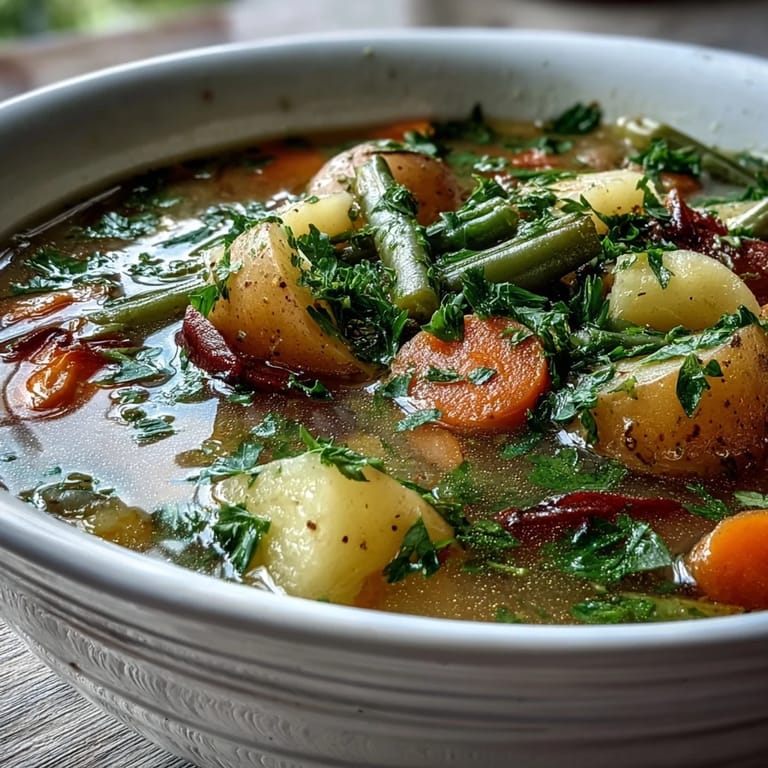
- Ladle the soup into bowls and scatter fresh parsley on top if you have it, letting people see what's in their bowl before they taste it.
 Pin it
 My daughter asked one morning why I was making soup when it was still warm outside. I told her that good soup doesn't care about the weather, it just cares about feeding people. She sat on a stool watching me chop vegetables, asking questions I hadn't thought to ask myself, and by the time we sat down to eat, it felt less like lunch and more like proof that we'd made something together.
When to Make This Soup
This soup exists for tired evenings when you want something nourishing but don't have the energy for complicated cooking. It's also perfect for that moment when you open your refrigerator and realize you have too many vegetables and no clear plan. Make it when you need to feed a small crowd something wholesome without fussing, or when you want your kitchen to smell like comfort for the next few hours.
Making It Your Own
The beauty of vegetable soup is that it bends to what you have on hand. Swap the zucchini for eggplant, trade green beans for broccoli, add a handful of spinach at the end, or use corn if that's what's in your garden or your freezer. The structure stays the same, but the soup becomes a reflection of your pantry and your season. Some cooks add a splash of cream or cheese at the end for richness, and that's lovely too.
Serving and Storage
This soup tastes even better the next day, after the flavors have had time to get to know each other, so don't hesitate to make it ahead. Serve it with crusty bread for soaking up the broth, or with a simple salad on the side if you want something lighter. It keeps in the refrigerator for four days and freezes beautifully for up to three months, making it the kind of recipe that pays dividends in future busy evenings.
- Let it cool completely before freezing, or it'll take forever to thaw.
- Reheat gently on the stovetop rather than blasting it in the microwave, which can make vegetables turn soft.
- Add fresh parsley and a squeeze of lemon juice when reheating to brighten up the flavors.
 Pin it
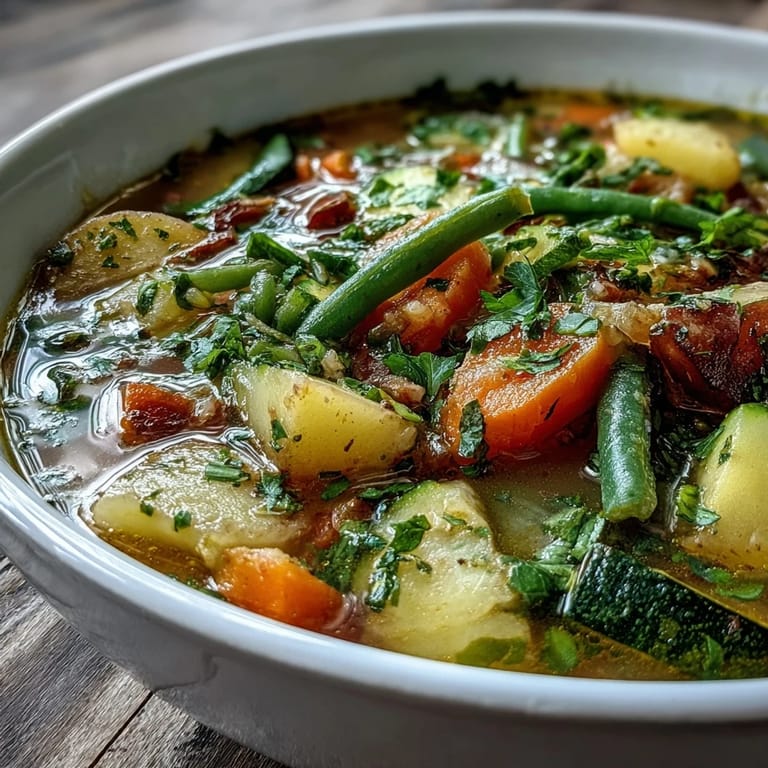
 There's something quiet and honest about vegetable soup, the way it brings people to the table without pretense. Make it when you remember that the best meals are sometimes the simplest ones.
Recipe Q&A
- → Can I use different vegetables in this soup?
Absolutely. This versatile base works beautifully with corn, spinach, kale, bell peppers, or butternut squash. Add heartier vegetables like potatoes and carrots early, while tender greens like spinach go in during the last few minutes of cooking.
- → How long does this soup keep in the refrigerator?
Stored in an airtight container, this soup stays fresh for 4-5 days in the refrigerator. The flavors often deepen and improve after a day or two. Reheat gently on the stovetop, adding a splash of water or stock if it has thickened.
- → Can I freeze this potato and vegetable soup?
Yes, this soup freezes well for up to 3 months. Cool completely before transferring to freezer-safe containers, leaving some space for expansion. Thaw overnight in the refrigerator and reheat on the stovetop, stirring occasionally.
- → What can I serve with this soup for a complete meal?
Crusty bread, garlic knots, or warm dinner rolls make perfect accompaniments for dipping. A simple green salad with vinaigrette adds freshness. For protein, serve alongside grilled cheese sandwiches or add cooked beans directly to the soup.
- → How can I make this soup creamy without dairy?
Puree a portion of the cooked vegetables and broth with an immersion blender, then stir back into the pot. Alternatively, blend in a can of coconut milk or add cashew cream for richness without dairy. These methods create velvety texture while keeping it plant-based.
- → Can I make this in a slow cooker or instant pot?
For slow cookers, sauté vegetables first, then cook on low for 6-7 hours or high for 3-4 hours. In an Instant Pot, use the sauté function for the base, then pressure cook for 5-8 minutes depending on vegetable size. Both methods yield excellent results.