 Pin it
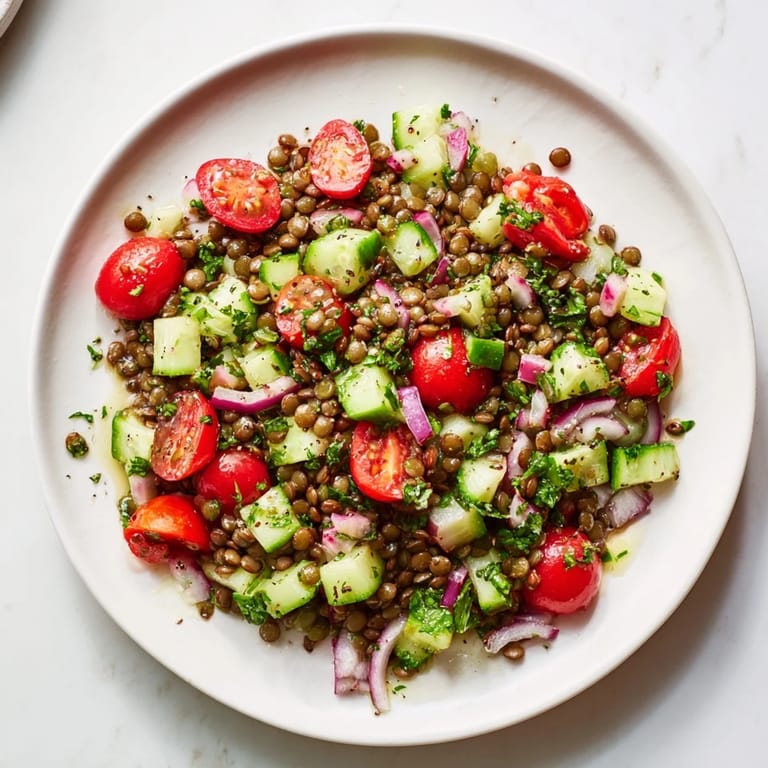
 There's something about a bowl of lentils that grounds you, literally and figuratively. I discovered this salad on a Tuesday afternoon when I had exactly one cup of lentils left in the pantry and nothing but vegetables wilting in the crisper drawer. What started as a "use it up" moment became something I find myself craving, the kind of dish that tastes better the next day and somehow makes a simple lunch feel intentional. The mustard vinaigrette does the heavy lifting here, turning humble legumes into something bright and alive.
I made this for a potluck last spring when everyone was tired of the same old pasta salads, and someone actually asked for the recipe before they finished their bowl. That feeling—when food stops being fuel and becomes conversation—that's what keeps me coming back to this one.
Ingredients
- Green or brown lentils (1 cup): These hold their shape during cooking, unlike red lentils which dissolve into mush; the earthy flavor is the backbone of the entire salad.
- Water (3 cups) and bay leaf: The bay leaf whispers its flavor into the lentils without overpowering them, and those three cups are just enough to cook them perfectly.
- Cherry tomatoes (1 cup): Halve them so they release their juices into the vinaigrette and become little flavor bombs in every bite.
- Cucumber (1 cup): Keep the skin on for texture and nutrients; the coolness is essential to the dish's soul.
- Red onion (1/4 cup): Finely chopped means the sharpness distributes throughout instead of shocking your palate in one spot.
- Fresh parsley (1/4 cup): This is where you taste the brightness; dried won't capture the same magic.
- Extra virgin olive oil (3 tbsp): This carries the flavor of everything else, so use something you actually enjoy tasting on its own.
- Red wine vinegar (1.5 tbsp): The acidity lifts the earthiness of the lentils and awakens every other ingredient.
- Dijon mustard (1 tsp): Just enough to emulsify and add a subtle kick that makes people wonder what they're tasting.
- Honey or maple syrup (1 tsp): A optional whisper of sweetness to balance the vinegar; taste as you go.
- Garlic (1 small clove): Minced small so it disappears into the vinaigrette rather than announcing itself.
Tired of Takeout? 🥡
Get 10 meals you can make faster than delivery arrives. Seriously.
One email. No spam. Unsubscribe anytime.
Instructions
- Rinse and simmer your lentils:
- Rinsing removes any dust or debris, and simmering them with the bay leaf fills your kitchen with a gentle, welcoming smell. You'll know they're done when you can easily squash one between your fingers but it hasn't collapsed into soft mush.
- Let them cool down:
- Hot lentils will wilt the parsley and cucumber if you add them immediately, so patience here is worth it. I usually spread mine on a plate to speed things up.
- Combine the vegetables with the cooled lentils:
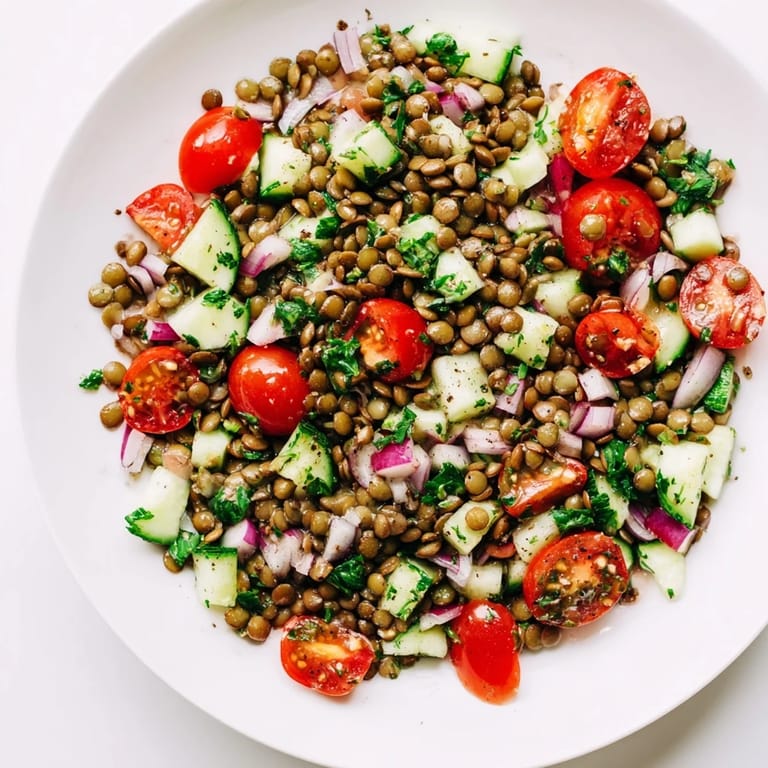
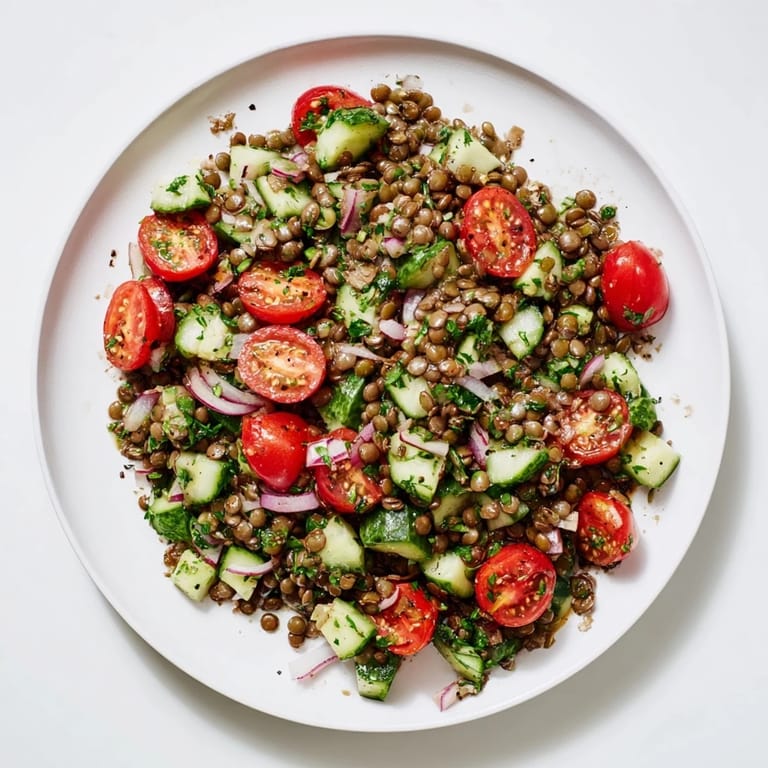
- This is where it starts to look like something real. The colors alone are reason enough to keep going.
- Build your vinaigrette:
- Whisking these ingredients together in a small bowl creates a temporary emulsion where everything clings to each other. The mustard acts as your glue, holding the oil and vinegar in conversation instead of letting them separate.
- Dress the salad and give it time:
- Pour that vinaigrette over everything and toss gently so nothing gets bruised. Then wait—chilling for at least 15 minutes lets the lentils drink in all that flavor.
 Pin it
 I've served this salad on lazy Sunday afternoons, packed it for work lunches in glass containers, and watched it disappear at every gathering where someone says they want to eat lighter. It's the kind of recipe that proves you don't need animal protein or heavy cream to feel satisfied and nourished.
Why Lentils Are Quietly Extraordinary
Lentils are one of those ingredients that seem ordinary until you really think about them. They cook quickly compared to beans, they don't require overnight soaking, and they have this gentle, almost nutty flavor that plays well with almost anything you pair them with. I've come to rely on them in ways I never expected—not because they're trendy, but because they're reliable and nourishing in a way that feels honest.
The Mustard Vinaigrette Magic
The vinaigrette is where this salad transforms from "something I made with what I had" to "something I want to make again." The ratio of acid to oil matters, but so does the Dijon mustard, which acts as an emulsifier and keeps everything bound together. I've learned through small experiments that a 1:2 ratio of vinegar to oil feels too heavy here, but 1.5:3 hits a note that's bright without being aggressive.
How to Make It Your Own
The skeleton of this salad is solid, but the flesh can shift depending on the season and what speaks to you. In summer, I add diced bell pepper and extra herbs. When I'm feeling it, crumbled feta turns it into a more substantial side dish. I've even tossed in leftover roasted vegetables on nights when I wanted to clean out the fridge and end up with something that felt intentional.
- Red bell pepper, spinach, or shredded carrots all slip into this salad without changing its essential character.
- If you add cheese or swap the maple syrup for honey, just keep track of dietary needs for anyone eating it.
- Make it ahead and store it in the fridge for three days; it only gets better as the flavors marry and deepen.
 Pin it
 This salad has become my answer to the question "what should I bring?" and my fallback dinner when I'm too tired to make something complicated. It's proof that simplicity, when done with intention and care, is its own kind of generosity.
Recipe Q&A
- → How should I cook the lentils for best texture?
Simmer lentils uncovered in water with a bay leaf until tender but still retaining their shape, about 20-25 minutes. Avoid overcooking to prevent mushiness.
- → Can I customize the vegetables in this dish?
Yes, adding diced red bell pepper, shredded carrots, or chopped spinach enhances texture and flavor diversity.
- → What can I use instead of honey in the dressing?
Maple syrup works well as a vegan-friendly substitute, providing a balanced sweetness to the vinaigrette.
- → How long should the salad chill before serving?
Chilling for 15 to 30 minutes allows flavors to meld and improves overall taste, though it can be served immediately if preferred.
- → Can this dish be served warm?
It's best enjoyed cold or at room temperature to appreciate the crisp vegetables and tangy dressing fully.