 Pin it
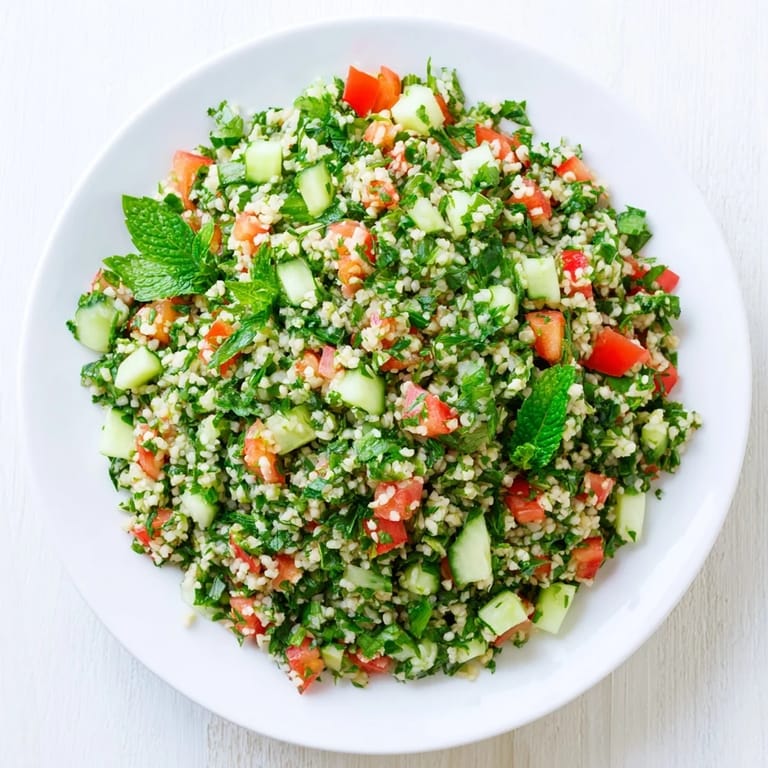
 The first time I made tabbouleh, I was standing in a Beirut kitchen with my friend Nadine, and she handed me a massive bunch of parsley so fresh it still had morning dew clinging to the leaves. She watched me chop it and said, "more, more, this is not a garnish," and I realized tabbouleh wasn't about the bulgur at all—it was about the herbs. Now whenever I make it, I smell that same bright green freshness and remember her laughter when I finally understood the ratio.
I brought a big bowl of this to a potluck years ago, nervous because everyone else had brought heavier casseroles, but it was gone before the main course even finished. My neighbor kept asking for the recipe, and when I told her the secret was using twice as much parsley as most people think is reasonable, she looked shocked. That moment taught me that boldness in flavor is never a mistake.
Ingredients
- Fine bulgur wheat: This is the grain that holds everything together, and using fine rather than coarse makes all the difference—it absorbs the dressing without becoming mushy and lets the herbs shine.
- Boiling water: The heat softens the bulgur gently, and you'll know it's ready when it's tender but still has a slight bite.
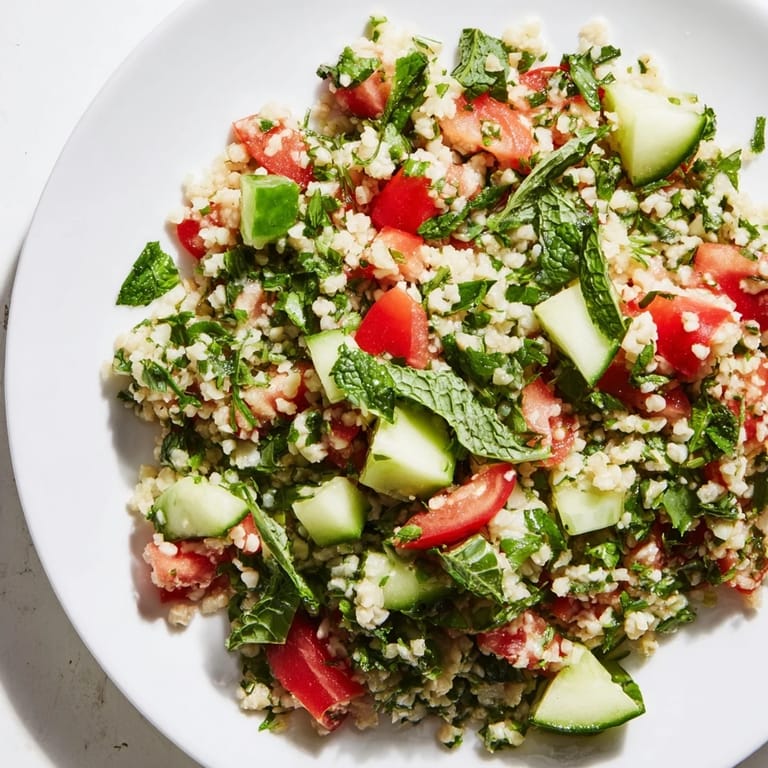
- Flat-leaf parsley: This is the soul of tabbouleh, so don't skimp or substitute with curly parsley—the flavor and texture are completely different.
- Fresh mint: Just enough to add brightness without overwhelming the parsley; it's the supporting player that makes everything taste fresher.
- Spring onions: Their mild onion flavor and crisp texture add a gentle bite that keeps the salad from feeling one-note.
- Tomatoes: Use the ripest ones you can find, and always seed them so the excess moisture doesn't make your salad soggy.
- Cucumber: The coolness and crunch are essential—peel it if the skin is thick, and dice it just before serving so it stays crisp.
- Extra-virgin olive oil: Don't use the cheap stuff here; this is where quality truly matters because you taste it directly.
- Fresh lemon juice: Always squeeze your own—bottled juice tastes like an afterthought, but fresh juice is the whole point.
- Sea salt and black pepper: Season generously; these simple seasonings let everything else be itself.
Tired of Takeout? 🥡
Get 10 meals you can make faster than delivery arrives. Seriously.
One email. No spam. Unsubscribe anytime.
Instructions
- Soften the bulgur gently:
- Pour boiling water over the bulgur, cover it, and let it sit undisturbed for 10 to 15 minutes until the grains are tender but still have a slight resistance when you bite into them. Fluff it with a fork to separate the grains, and if there's any pooled water at the bottom, drain it away.
- Build your herb base:
- Chop your parsley and mint by hand, not in a food processor—the processor bruises the delicate leaves and makes them oxidize and turn dark. Combine them in a large bowl with the spring onions, and you'll feel the kitchen come alive with the smell of fresh herbs.
- Add the vegetables:
- Toss in the seeded tomato pieces and diced cucumber, stirring gently so you don't break them apart. The salad should look vibrant and alive at this point.
- Combine with bulgur:
- Add the fluffed bulgur to the herb mixture and fold everything together carefully, letting the grains settle among the vegetables and herbs without crushing anything.
- Make your dressing count:
- Whisk the olive oil, lemon juice, salt, and pepper in a small bowl until they come together, then pour it over the salad and toss gently but thoroughly so every bite carries the flavor.
- Taste and adjust:
- This is the moment to add more lemon if you want brightness, or more salt if the flavors feel muted—trust your palate, not the recipe numbers.
 Pin it
 I learned something important the day my cousin Rami tasted my tabbouleh and nodded slowly before saying, "it's good, but it needs to taste like the garden." I realized I'd been too timid with the herbs, too worried about balance, when the whole point was to let the parsley be fearless and green.
Why This Salad Changed How I Cook
Tabbouleh taught me that a salad doesn't need to be a vehicle for protein or a side dish—it can be the main event. The simplicity of the ingredients forces you to respect each one, and there's nowhere to hide if your parsley isn't fresh or your lemon isn't bright. It's honest cooking, the kind that makes you a better cook just by trying to do it right.
When to Serve This
This salad feels at home at summer picnics, but I've also brought it to potlucks in March and April when fresh herbs are just starting to appear at the farmers' market. It's equally happy as part of a mezze spread where it sits alongside hummus and falafel, or as a light lunch on its own with some warm pita bread on the side.
Storing and Variations
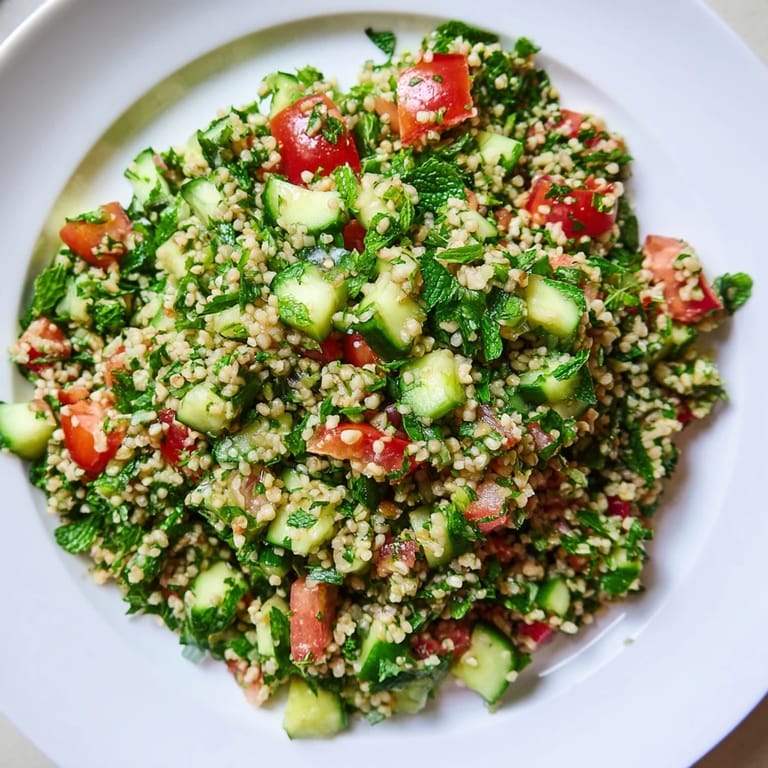
Tabbouleh keeps well in the refrigerator for up to two days, though it's best within the first few hours when the herbs are still vibrantly fresh and the vegetables have their crispest texture. If you need it to be gluten-free, swap the bulgur for cooked quinoa, which gives you a different texture but the same clean, herby spirit.
- For a heartier version, add crumbled feta cheese or chickpeas just before serving.
- If you can't find spring onions, use the white and light green parts of a regular onion, minced fine so the sharpness mellows into the salad.
- Taste and adjust the lemon and salt right before serving, because these flavors can shift slightly as the salad sits.
 Pin it
 Every time I make this, I'm back in that Beirut kitchen, learning that the best flavors come from respecting simple ingredients and not being afraid to be generous with what matters most.
Recipe Q&A
- → What is the key grain used in this salad?
Fine bulgur wheat is soaked until tender and adds a nutty texture to the dish.
- → Can I substitute bulgur for a gluten-free option?
Yes, cooked quinoa works well as a gluten-free alternative, maintaining texture and flavor.
- → How should the herbs be prepared for best results?
Finely chop flat-leaf parsley and mint to evenly distribute their fresh, aromatic flavors throughout the salad.
- → What dressing complements the salad's ingredients?
A simple mix of extra-virgin olive oil, freshly squeezed lemon juice, salt, and black pepper enhances the freshness and zest.
- → What serving suggestions pair well with this dish?
This salad complements grilled meats, falafel, or can be enjoyed as part of a mezze platter.
- → How long can the salad be stored after preparation?
Best consumed fresh, it can be refrigerated and kept good for up to two days without losing texture.