 Pin it
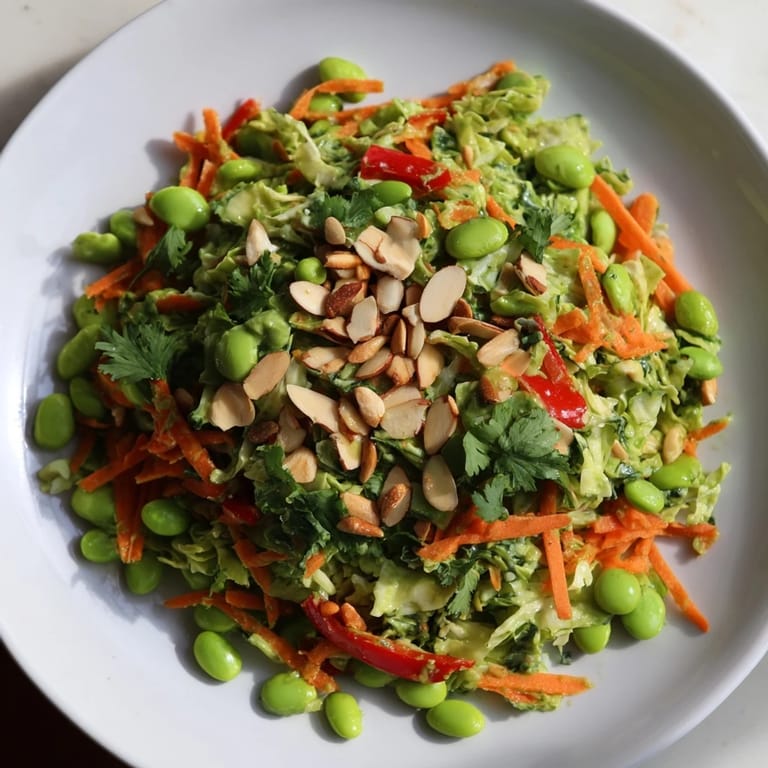
 There's this moment every summer when I'm standing in the produce aisle, surrounded by the smell of fresh greens, and I see cabbage stacked so perfectly that I just have to make a salad. This one came from an afternoon when I was craving something that would wake up my taste buds—crisp, bright, and nothing fussy. The edamame adds this happy protein boost that makes it feel substantial without heavy, and that Green Goddess dressing? It's become my secret weapon for turning simple vegetables into something people actually get excited about.
I made this for a potluck once and watched people go back for seconds without even asking what was in it. My neighbor took a bite and immediately wanted the recipe, and I realized then that salads don't have to be sad or boring—they can be the thing people remember about dinner.
Ingredients
- Green cabbage (4 cups, shredded): The foundation here—shred it finely so it wilts slightly into the dressing and becomes almost silky while staying crisp.
- Edamame (1 cup shelled): If you're using frozen, don't skip the ice bath after cooking; it keeps them bright and gives them the best texture.
- Carrots (1 cup julienned): The sweetness balances the savory dressing, and julienning them means they stay delicate and absorb the flavors.
- Red bell pepper (1/2 cup, sliced): This adds color and a subtle sweetness that makes the salad feel more special.
- Green onions (1/4 cup, sliced): A hint of sharpness that wakes everything up—don't skip them.
- Fresh cilantro (1/4 cup, chopped): The bridge between the vegetables and dressing, tying the whole thing together.
- Greek yogurt (1/2 cup): Swap for plant-based yogurt if you need it vegan; it makes the dressing creamy without being heavy.
- Mayonnaise (1/4 cup): Brings richness and helps emulsify the dressing so it clings to every piece of cabbage.
- Fresh lemon juice (2 tablespoons): The brightness is non-negotiable here—fresh is essential.
- Fresh parsley (2 tablespoons, chopped): Mild and herbaceous, it's the workhorse of the dressing.
- Fresh chives (2 tablespoons, chopped): A subtle onion note that complements the green onions in the salad.
- Fresh tarragon (1 tablespoon, optional): If you have it, add it; if not, the salad won't suffer, but it will be slightly more sophisticated if you do.
- Garlic (1 small clove, minced): Just enough to give the dressing depth without overpowering it.
- Dijon mustard (1 teaspoon): This little bit adds tang and helps keep the dressing emulsified.
- Salt and black pepper: Taste as you go—seasoning is personal, and you might want more than the recipe suggests.
- Roasted salted sunflower seeds (1/3 cup): Add these right before serving so they stay crunchy and don't get soggy from the dressing.
- Sliced almonds, toasted (1/3 cup): Toasting them yourself makes a real difference; store-bought roasted work in a pinch, but fresh toasting brings out their flavor.
Tired of Takeout? 🥡
Get 10 meals you can make faster than delivery arrives. Seriously.
One email. No spam. Unsubscribe anytime.
Instructions
- Cook the edamame (if frozen):
- Bring a small pot of water to a boil and add the edamame. They'll only need 3 to 4 minutes—you want them tender but still with a little bite. Drain and immediately plunge them into cold water to stop the cooking.
- Build the base:
- In your largest bowl, combine the shredded cabbage, cooked edamame, carrots, bell pepper, green onions, and cilantro. Toss everything gently so you're not crushing the vegetables.
- Make the dressing:
- In a separate bowl, whisk together the yogurt, mayo, lemon juice, parsley, chives, tarragon if using, minced garlic, mustard, salt, and pepper until it's completely smooth. Taste it on a piece of cabbage—this is your chance to adjust.
- Bring it together:
- Pour the dressing over the vegetables and toss everything until every piece is coated. The cabbage will soften slightly and absorb the flavors, which is exactly what you want.
- Crown with crunch:
- Just before serving, scatter the sunflower seeds and toasted almonds on top so they stay crispy and provide contrast to the soft vegetables.
- Serve:
- This salad is delicious chilled or at room temperature, and it keeps beautifully in the fridge if you store the toppings separately.
 Pin it
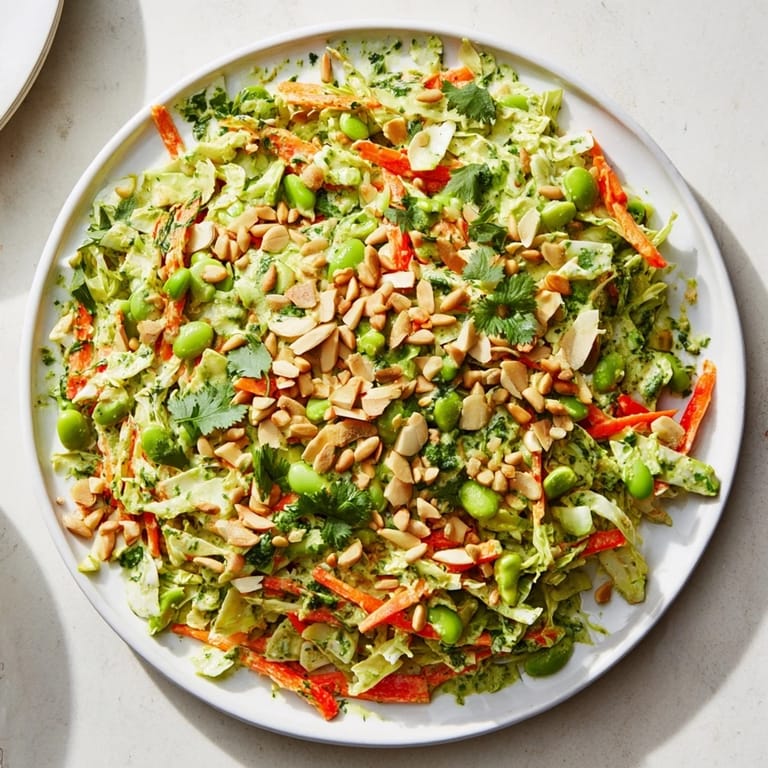
 There's something honest about a salad like this—it doesn't pretend to be something it's not, but it's so much better than it looks. It became my go-to when friends asked for something light, and I learned that sometimes the simplest dishes are the ones people appreciate most.
The Magic of Green Goddess Dressing
Green Goddess dressing has been around forever, but I never really understood its appeal until I made it fresh with actual herbs instead of the bottled version. The combination of tarragon, chives, and parsley creates something herbaceous and alive—it tastes like a garden, but in a way that feels luxurious. Greek yogurt keeps it light, and that little bit of Dijon mustard gives it a backbone that prevents it from tasting flat or one-note. Once you understand how the dressing works, you'll find yourself adding it to everything.
Customizing Without Losing the Soul
This salad is forgiving in the best way. If you don't have tarragon, skip it. If edamame isn't your thing, swap in chickpeas or white beans for protein. I've added avocado slices, cucumber, and even roasted beets when I was feeling adventurous, and the salad adapted beautifully each time. The key is respecting the ratio—you want equal parts vegetables and dressing, and you always want that final crunch on top. Some people add sunflower seed butter to the dressing for extra richness, or a splash of apple cider vinegar for more tang.
Making It Your Own
The best part about knowing how to make this salad is that you can build it around what you have in your kitchen. In winter, I use shredded Brussels sprouts instead of some of the cabbage. In spring, fresh peas join the party. The dressing formula stays the same—herbs, yogurt, mayo, acid, mustard, and seasoning—so once you memorize it, you're free to improvise forever.
- Toast your own almonds if you have time; five minutes in a dry pan at medium heat transforms them completely.
- If the dressing seems too thick when you first finish whisking, taste before you add liquid—sometimes it just needs a minute to relax.
- Keep the sunflower seeds in an airtight container so they stay crispy and fresh between uses.
 Pin it
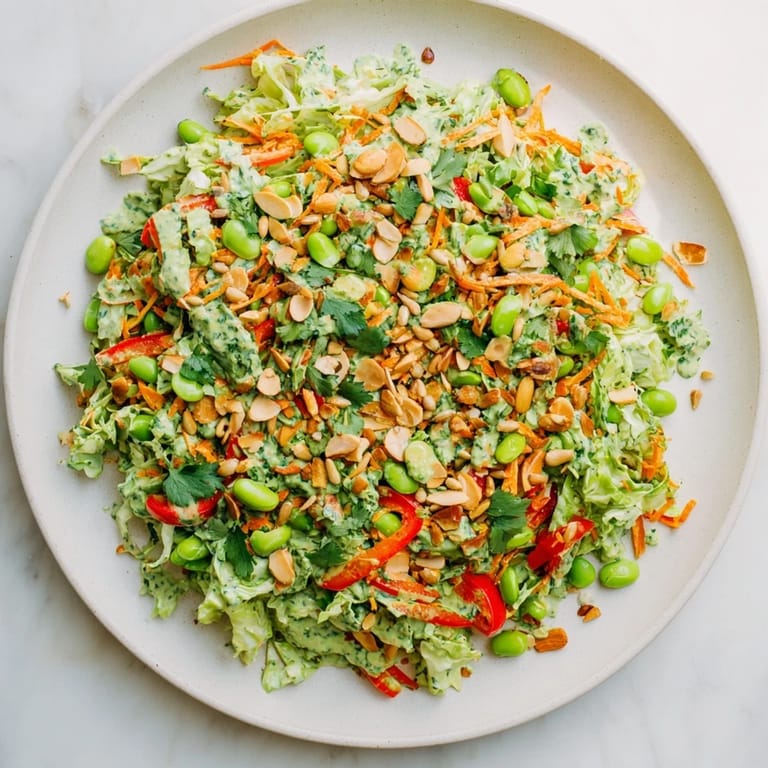
 This salad has become my answer to the question of what to make when I want to feel good about what I'm eating. It's proof that healthy food doesn't have to feel like a compromise.
Recipe Q&A
- → Can I use frozen edamame?
Yes, simply boil the frozen edamame for 3-4 minutes, drain, and rinse under cold water before adding to the salad.
- → How can I make this salad vegan?
Substitute the Greek yogurt and mayonnaise with plant-based alternatives to keep it vegan-friendly.
- → What gives the salad its crunch?
Roasted salted sunflower seeds and toasted sliced almonds provide a satisfying crunch on top.
- → Can I prepare the dressing in advance?
Yes, the dressing can be made ahead and kept refrigerated until ready to use.
- → Is this salad gluten-free?
Yes, all ingredients are naturally gluten-free, making it suitable for gluten-sensitive diets.
- → What other additions complement this salad?
Fresh avocado slices or diced cucumber add extra freshness and texture.