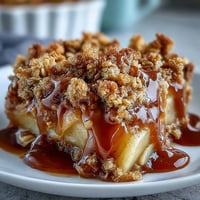
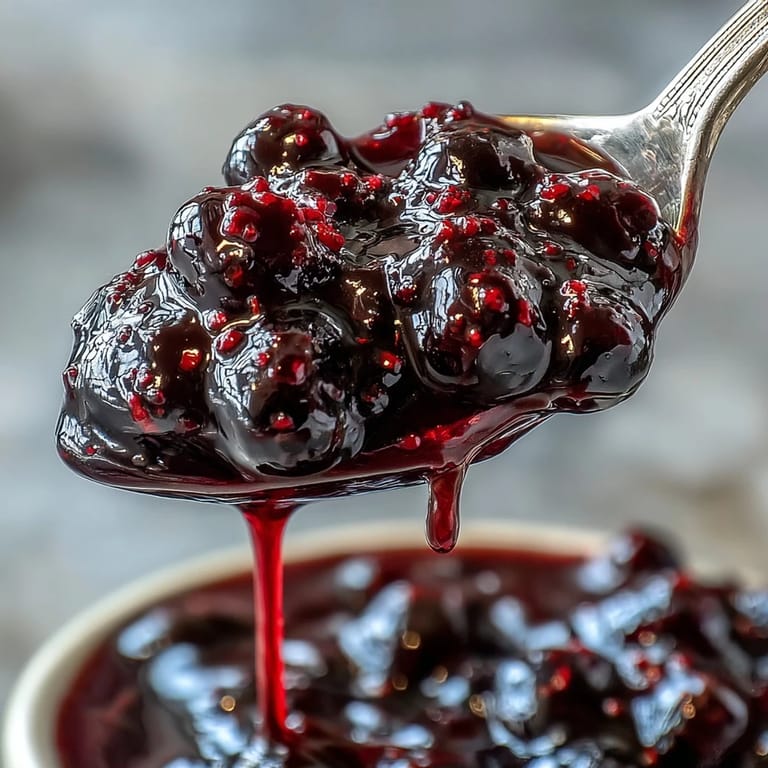
 Pin it
 My neighbor's kitchen smelled like jam one afternoon, and I wandered over to find her stirring a pot of black currants that had turned the most gorgeous deep purple. She handed me a spoon to taste, and the brightness of it—that sharp-sweet snap followed by a smooth, velvety finish—made me understand why she'd been hoarding black currants from her garden all summer. That day, I learned that the best dessert sauces aren't complicated; they're just fruit, sugar, and patience.
I made this sauce for a dinner party where someone brought store-bought cheesecake, and I was slightly nervous it wouldn't be good enough. But when I drizzled this glossy purple sauce across the top and watched the color spread like liquid silk, the whole thing suddenly looked intentional, luxurious, and homemade. Everyone asked for the recipe that night, and I realized the sauce had done all the heavy lifting.
Ingredients
- Fresh or frozen black currants (1 cup, 150 g): These little gems deliver a tart complexity that regular berries can't match—frozen works just as well as fresh and often costs less.
- Granulated sugar (1/2 cup, 100 g): This sweetens the currants' natural tang without overpowering them, though you'll want to taste and adjust based on how sour your particular batch tastes.
- Water (1/4 cup, 60 ml): Just enough liquid to get the fruit to release its juice and create a sauce base without diluting the flavor.
- Cornstarch (1 tsp, optional): A small amount creates that glossy, restaurant-quality shine and helps the sauce cling to whatever you're topping—mix it with cold water first to prevent lumps.
- Lemon juice (1/2 tsp): A whisper of brightness that lifts the currant flavor and prevents the sauce from tasting one-dimensional.
- Vanilla extract (1/2 tsp): This optional addition rounds out the sauce with warmth and softness, making it feel less sharp and more embracing.
Tired of Takeout? 🥡
Get 10 meals you can make faster than delivery arrives. Seriously.
One email. No spam. Unsubscribe anytime.
Instructions
- Combine your base:
- Pour the black currants, sugar, and water into a small saucepan and give it a gentle stir. The berries will look so dark and promising already.
- Bring to a simmer:
- Set the heat to medium and let the mixture warm slowly, stirring every minute or so to help the sugar dissolve and the currants start breaking down. You'll hear a soft bubble at first, then notice the liquid turning a deep, translucent purple as the berries release their juice—this takes about 6 to 8 minutes and is where the magic happens.
- Make it glossy (if you want that shine):
- If you're using cornstarch, whisk it with 1 tablespoon of cold water to create a smooth slurry with no lumps, then stir it slowly into the simmering sauce. Keep stirring gently for another 1 to 2 minutes until you see the sauce thicken and become almost shiny, like a glaze.
- Finish with flavor:
- Remove the pan from heat and stir in the lemon juice and vanilla extract if you're using them. Taste it now—you might want a tiny bit more sugar if the tartness feels overwhelming, and that's completely fine.
- Strain for silk, or skip for rustic:
- If you want a perfectly smooth, seedless sauce, press it through a fine mesh sieve using the back of a spoon. If you prefer a more textured, rustic sauce with some berry bits, just leave it as is.
- Cool and thicken:
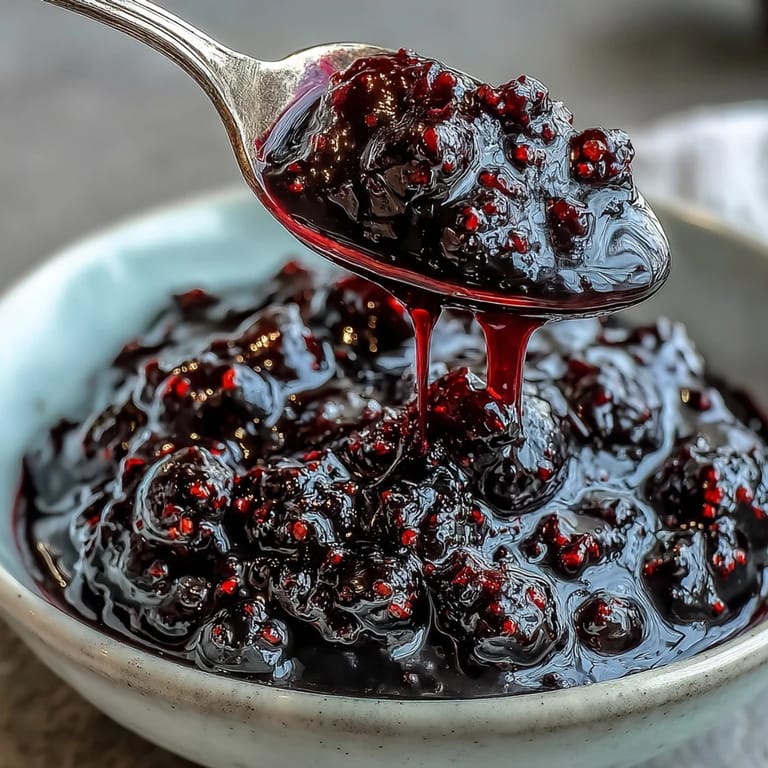
- Let the sauce sit at room temperature for 30 minutes or so—it will continue to thicken as it cools, becoming more luxurious and cling-able. Serve it warm, at room temperature, or even chilled straight from the fridge.
 Pin it
 I served this sauce over homemade panna cotta to a friend who usually doesn't care much about dessert, and she actually paused mid-bite and smiled. That moment—when a simple topping elevates something ordinary into something memorable—is exactly why I keep black currants in my freezer year-round.
The Power of Tiny Adjustments
One batch of currants might taste tarter than the next depending on ripeness, where they grew, or even what time of year you're using them. The first time I made this sauce, I followed the recipe exactly and found myself wishing it was slightly sweeter. Now I taste as I go, adding another teaspoon of sugar if needed, and the sauce always lands exactly where I want it. This small habit—tasting, adjusting, tasting again—is the difference between a good sauce and one that feels personally made.
Storage and Making Ahead
This sauce actually improves a little bit after a day in the fridge, as the flavors meld and deepen. You can make it up to a week ahead, which means you can be that person who serves an elegant dessert without any last-minute fuss. I've even poured it into a clean jar and given it as a gift—it looks fancy enough to be a real present.
Beyond Cheesecake
Black currant sauce is obviously beautiful on cheesecake, but I've found it works magic on things you might not expect. Spoon it over plain Greek yogurt for breakfast, swirl it into whipped cream for a sophisticated topping, or drizzle it over roasted duck for a savory-sweet moment. The tartness cuts through rich, creamy, or fatty things with elegance, so let your imagination guide you.
- If your currants were particularly sour, an extra pinch of sugar goes a long way toward balance without making the sauce taste candied.
- A tiny pinch of black pepper or a whisper of fresh thyme can add an unexpected savory note if you're feeling adventurous.
- Let this sauce sit at room temperature for at least 30 minutes after cooking so it reaches its full thickness and smooth, elegant consistency.
 Pin it
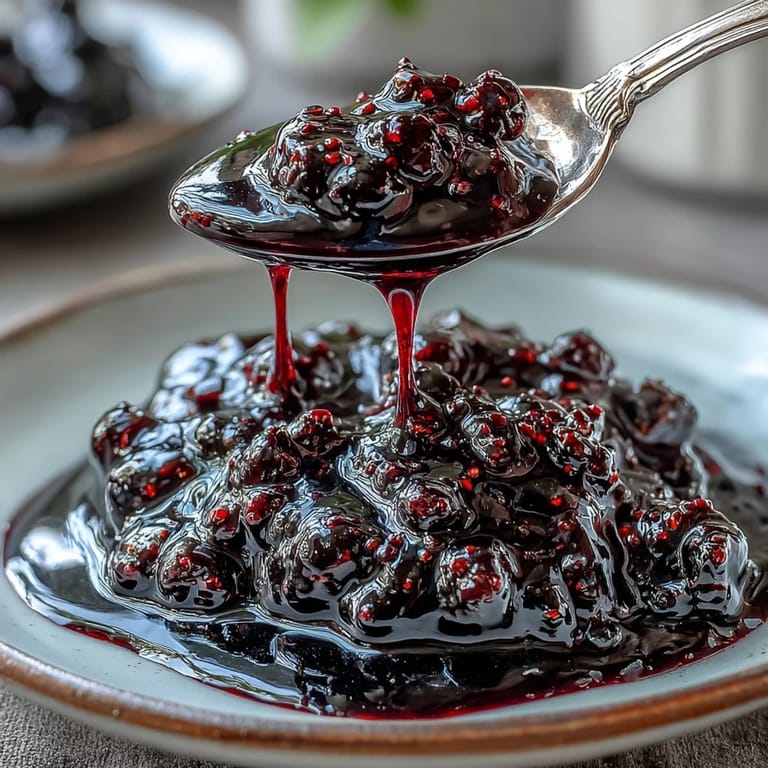
 This small pot of dark purple sauce might seem simple, but it's one of those quiet kitchen victories that proves how a few good ingredients and a little attention can turn an ordinary moment into something worth remembering. Make it, taste it, and find your own reasons to love it.
Recipe Q&A
- → Can I use frozen black currants?
Yes, frozen currants work perfectly. No need to thaw—add them directly to the saucepan. They may need an extra minute or two to break down completely.
- → Is straining necessary?
Not at all. Straining creates a smooth, seedless finish, but leaving the sauce rustic gives you more texture and fiber. Both versions taste delicious.
- → How long does the sauce keep?
Store in an airtight container in the refrigerator for up to one week. The sauce will continue to thicken slightly as it chills.
- → Can I substitute other berries?
Absolutely. Raspberries, blackberries, or blueberries all work beautifully with this same method. Adjust sugar based on the natural sweetness of your chosen fruit.
- → Why add cornstarch?
Cornstarch creates a thicker, glossier finish that clings beautifully to desserts. It's optional—the sauce thickens naturally through fruit reduction alone.