 Pin it
 There's something about the way bacon fat transforms vinegar into liquid gold that made me understand why this salad became a weeknight staple. The first time I made it, I was trying to use up a bag of frisée before it wilted, and I'd learned the trick of warm dressing from my neighbor who swore by it for cutting through bitterness. When those hot, garlicky whispers hit the cool greens, something magical happened—they softened just enough to become tender without losing their edge, and suddenly I had a side dish that tasted like restaurant-quality cooking.
I made this for a dinner party once when I was short on time and long on greens from the farmers market, and a guest asked if I'd learned to cook at a farm. That small moment stuck with me—the salad tasted like care, even though it was genuinely just me cooking what I had on hand. It taught me that sometimes the simplest moves look the most considered.
Ingredients
- Mixed bitter greens (escarole, frisée, dandelion, radicchio, or chicory): The bitterness is the whole point—it's what stands up to the warm dressing without getting pushed around. Tear them by hand instead of cutting for a texture that feels less bruised and more welcoming.
- Red onion: Thin slicing matters here because it needs to soften just enough from the heat to lose its harshness. I learned this the hard way by slicing thick once and regretting the sharp bite.
- Thick-cut bacon: The thickness means it renders properly and stays chewy in the center rather than shattering into dust. This is your flavor anchor, so don't skip quality here.
- Red wine vinegar: Its brightness cuts through the richness without tasting sour. I've tried other vinegars and always come back to this one.
- Dijon mustard: It acts as an emulsifier and adds a subtle tang that helps the dressing cling to the greens instead of pooling at the bottom of the bowl.
- Honey: Just enough to soften the sharpness and add a whisper of sweetness. The bacon fat will warm it into the dressing seamlessly.
- Extra-virgin olive oil: Finish with good oil because it's doing actual work here, not just filler. The warmth will coax out its fruity notes.
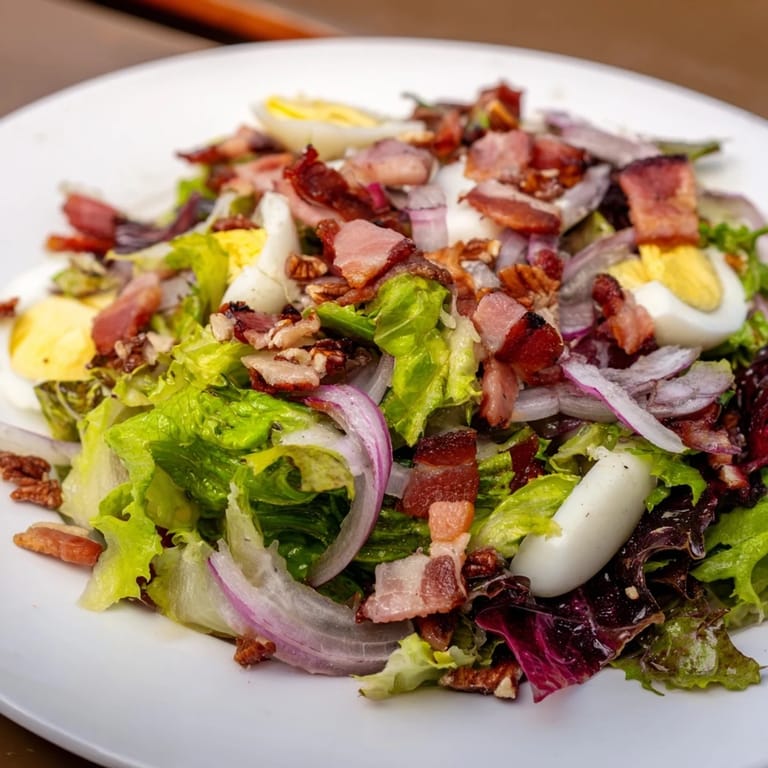
- Hard-boiled eggs and toasted nuts (optional): These turn a side dish into something substantial enough for a light meal. The eggs add richness, and the nuts give you a crunch that plays beautifully against the wilted greens.
Tired of Takeout? 🥡
Get 10 meals you can make faster than delivery arrives. Seriously.
One email. No spam. Unsubscribe anytime.
Instructions
- Prepare your greens:
- Rinse and dry the bitter greens as thoroughly as you can manage—any excess water will dilute your dressing. Tear them into bite-size pieces and toss them into a bowl with the red onion while you tackle the warm part of the equation.
- Render the bacon:
- Dice it into small pieces and cook it over medium heat in a large skillet, stirring occasionally until the edges darken and the fat turns clear, about 7 to 9 minutes. The smell alone will tell you when it's getting close to crispy.
- Build the dressing:
- Transfer the bacon to a paper towel to drain, leaving that precious fat behind in the pan. Lower the heat to gentle and whisk in the red wine vinegar, mustard, honey, pepper, and salt, scraping up any browned bits clinging to the bottom—those are concentrated flavor.
- Emulsify and warm:
- Slowly drizzle the olive oil while whisking constantly until the dressing becomes glossy and cohesive. You'll feel it come together, and the warmth should be there but not smoking.
- Finish the salad:
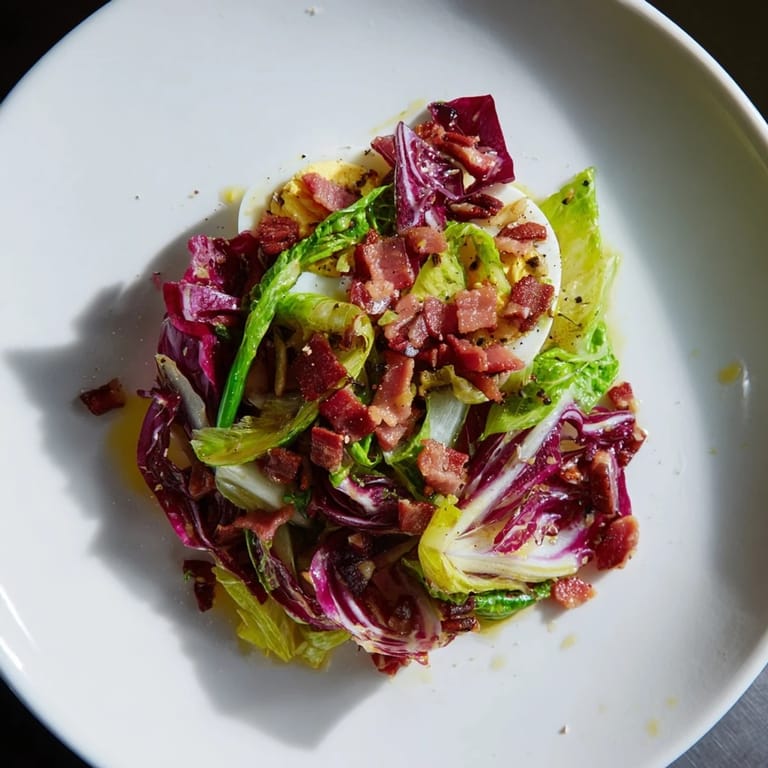
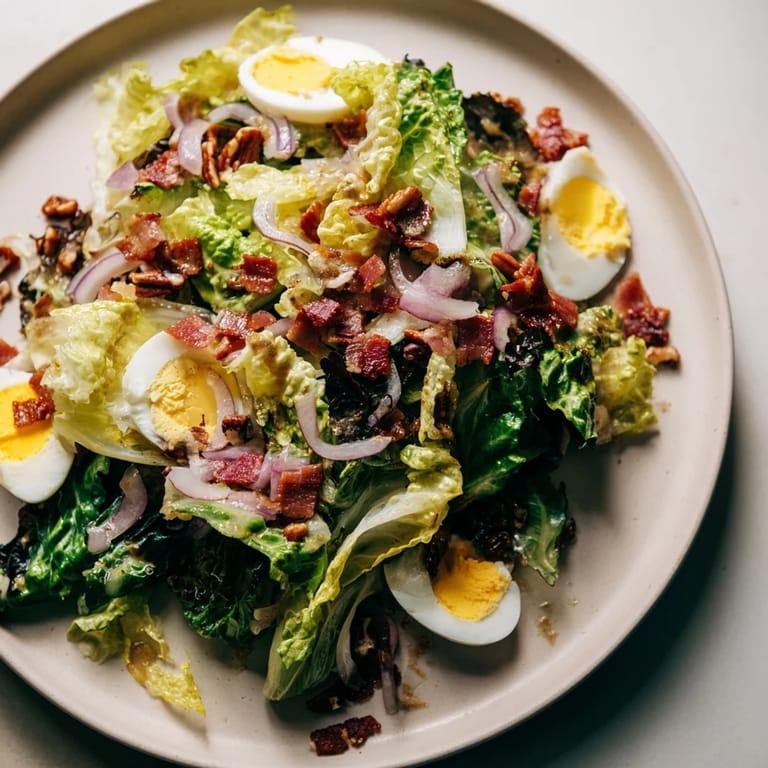
- Pour the hot dressing over your greens and onion immediately, add the bacon back in, and toss everything together. The greens will soften and darken slightly, which is exactly what you want.
- Plate and garnish:
- Arrange the salad on individual plates and top with quartered hard-boiled eggs and toasted nuts if you're using them. Serve while the greens are still warm and the dressing is clinging to every leaf.
 Pin it
 There was a moment at a family dinner when my uncle ate this salad quietly, then came back for seconds without saying anything. He's not one for words, but I realized he was tasting what I was trying to do—make something bitter taste beloved. That's when I knew this recipe had crossed over from being just good technique to being something that actually meant something.
Why Warm Dressing Works
The magic of warm vinaigrette over bitter greens is that the heat softens the edges of the bitterness without erasing it, creating a harmony instead of a battle on your palate. I used to dress salads at room temperature and wondered why they felt one-dimensional, but warmth brings everything into conversation. The greens still hold their texture, but they're relaxed enough to drink in the flavors around them.
Variations That Work
This salad is forgiving in the best way, which is why it's stuck around in my rotation. If you have apples or pears on hand, slice them thin and toss them in just before serving—the sweetness echoes the honey in the dressing and feels almost planned. Maple syrup can swap in for honey and brings an earthier depth that's particularly nice in fall, or you can go vegetarian by skipping the bacon entirely and sautéing mushrooms in olive oil until they're caramelized and tender, which gives you that savory richness without the meat.
- The beauty of this framework is that it works with whatever bitter greens you can find at the market.
- If you make it vegetarian, bump up the mustard slightly to keep the flavor from feeling thin without the bacon.
- Leftover dressing keeps for a few days in the fridge, though it separates—just reheat gently and whisk it back together.
Building Confidence in Your Kitchen
Making a warm salad dressing taught me that cooking isn't about following orders—it's about understanding why things work. Once you know that fat carries flavor, that acid balances richness, and that warmth can soften resistance, you stop being afraid of improvising. This salad is proof that simple techniques, when done with intention, create something memorable.
 Pin it
 Every time I make this salad, it reminds me that the best dishes are often the ones that feel casual but taste intentional. It's become the recipe I make when I want to cook something real for people I care about.
Recipe Q&A
- → What type of greens work best in this dish?
Robust bitter greens like escarole, frisée, dandelion, radicchio, or chicory provide the ideal texture and flavor balance.
- → Can I substitute bacon in the dressing?
Yes, for a vegetarian option, omit bacon and use sautéed mushrooms with extra olive oil in place of bacon fat.
- → How do you make the dressing emulsified and warm?
After cooking the bacon, the rendered fat is combined with vinegar, mustard, honey, and seasonings. Slowly whisk in olive oil over low heat until smooth and warmed through.
- → What garnishes complement this salad?
Hard-boiled eggs and toasted walnuts or pecans add texture and richness, enhancing the overall dish.
- → Are there any suggested flavor variations?
Try substituting maple syrup for honey or adding thinly sliced apples or pears for a fruity twist.