 Pin it
 The first time I tasted saltah was on a cool evening in a small Yemeni home, where the kitchen filled with steam and the scent of fenugreek rose like a quiet blessing. I watched the cook whip that foam by hand, watching it transform from nothing into something ethereal, and knew immediately this wasn't just stew—it was ceremony on a plate. The way the bread soaked up the spiced broth while the hulbah sat light and airy on top felt like eating layers of comfort I didn't know I was missing. Since then, I've made it countless times, each bowl a small reminder of that first moment.
I remember cooking this for friends who'd never had it before, watching them hesitate at first, then close their eyes after that first spoonful. The way the warm broth and soft meat mingled with that cloud-like hulbah on top made everyone go quiet for a moment, which in a room full of talkers, meant everything. Since then, saltah has become the dish I make when I want to show someone a small piece of the world through food.
Ingredients
- Beef or lamb, cut into 2 cm cubes: Use pieces that are consistent in size so they cook evenly; lamb carries more traditional flavor, but beef works beautifully and is easier to find.
- Vegetable oil: Just enough to get a good sear on the meat without making the broth greasy.
- Onion, finely chopped: This becomes the foundation of everything, so don't rush browning it.
- Garlic and chili: These wake up the broth and add a gentle heat that builds slowly rather than hitting all at once.
- Tomatoes and tomato paste: Fresh tomatoes add brightness, their acidity balancing the rich spices beautifully.
- Potato and carrot: They soften into the broth and add natural sweetness and body.
- Water or beef broth: Broth deepens everything, but water works fine and lets the spices shine.
- Cumin, coriander, black pepper, turmeric, ground fenugreek: Each spice layers differently, building warmth and earthiness without overpowering the meat.
- Ground fenugreek seeds for hulbah: This is non-negotiable; it's what makes the foam possible and gives saltah its signature character.
- Yemeni flatbread (malawah or lahoh): The traditional choice, though pita or naan will work in a pinch—look for something soft that can absorb broth without falling apart.
Tired of Takeout? 🥡
Get 10 meals you can make faster than delivery arrives. Seriously.
One email. No spam. Unsubscribe anytime.
Instructions
- Brown the aromatics and meat:
- Heat oil in a large pot and let the onions turn golden and soft, which takes patience but builds flavor. Once they're right, add garlic and chili and let them bloom briefly before adding the meat cubes, then sear everything until the meat has a nice crust on all sides.
- Build the stew base:
- Add tomatoes and all your spices, stirring gently so everything gets coated and the kitchen starts to smell incredible. Let it cook for a few minutes so the spices toast slightly in the oil, then pour in your water or broth and bring it up to a boil.
- Simmer slowly:
- Lower the heat, cover the pot, and let it go for 1 to 1.5 hours; the meat should be fork-tender and the vegetables soft enough that they're almost melting into the broth. Taste as you go and adjust salt and spices.
- Whip the fenugreek:
- While the stew simmers, soak the ground fenugreek in cold water for an hour, drain it well, then whisk or beat it vigorously with a fork—you're trying to incorporate air and create a light, fluffy foam. Once it's cloud-like, fold in the fresh tomato, cilantro, chili, and lemon juice very gently so you don't deflate all that air you just created.
- Assemble and serve:
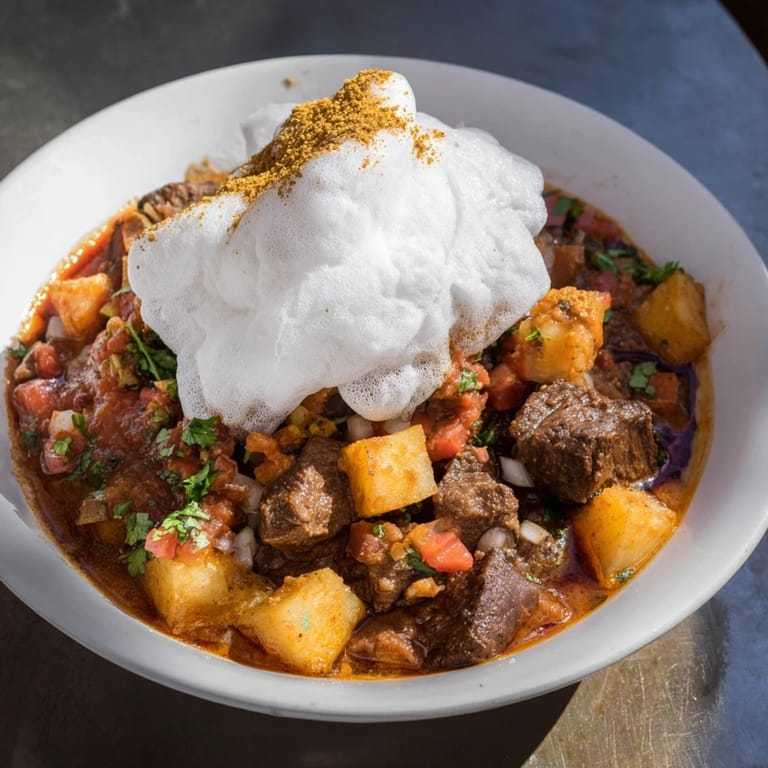
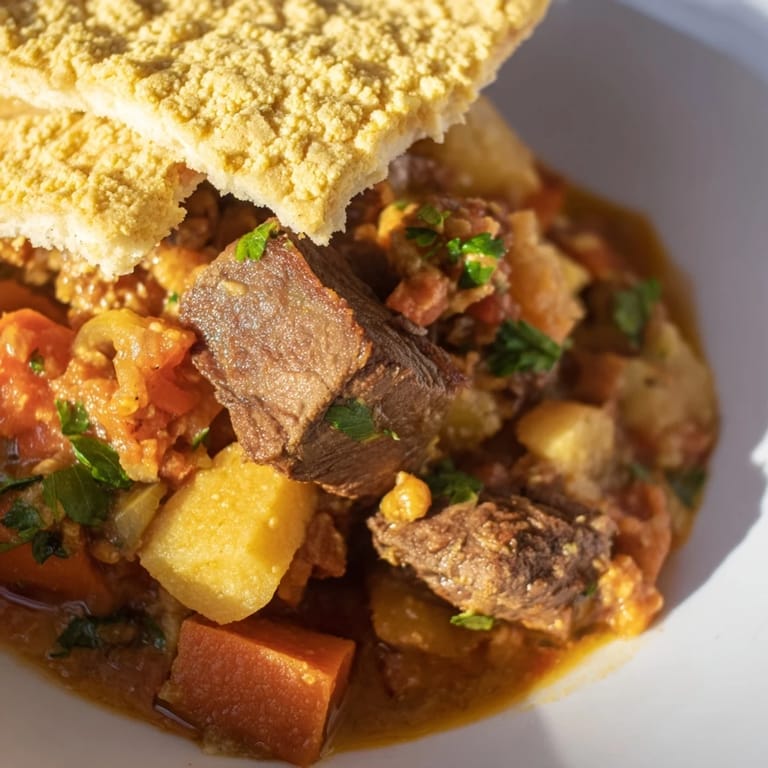
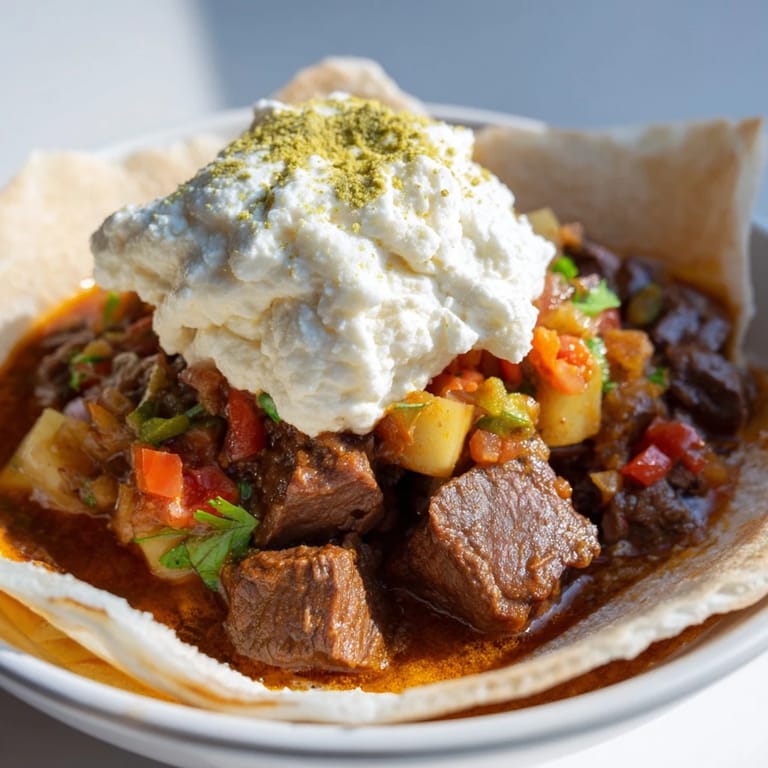
- Tear your flatbread into pieces and layer them in bowls, ladle the hot stew over top until the bread is soaked but still holding together, then crown each bowl with a generous spoonful of that ethereal hulbah. Bring everything to the table while it's steaming hot and let people mix it all together before they eat.
 Pin it
 There's something about serving this dish that reminds me why cooking matters—it's not just feeding people, it's showing them you've taken time to create something layered and thoughtful. When everyone leans over their bowl and starts mixing those three elements together, I see it click for them, that moment when they understand why this dish has survived and traveled and been made the same way for generations.
Why Fenugreek Transforms Everything
Fenugreek has this gentle maple-like sweetness that sounds strange until you taste it mingled with fresh cilantro, tomato, and lemon juice, and suddenly it makes complete sense. The foam isn't there to be fancy; it's there because it creates contrast and lightness against the deep, rich broth, giving your palate a break while you're eating. I learned early on that this isn't a garnish you can skip or replace—it's the soul of the dish, the thing that makes saltah saltah.
The Art of Layering
Saltah is really a lesson in layering textures and temperatures—the soft, warm bread absorbing broth from below, the airy hulbah floating on top, and the savory meat and vegetables in between. This interplay is what makes every spoonful interesting; you're never eating just one thing. I've learned that how you assemble these layers matters almost as much as how you cook them, so take your time with the final bowl and don't be stingy with the hulbah.
Cooking for a Crowd
Saltah is one of those forgiving dishes that actually improves when you're feeding more people, because the ratios stay simple and the broth only gets richer as it sits. The beauty is that you can prepare everything ahead except the hulbah, then whip that foam right before serving so it stays perfect in every single bowl. One small note: if you're making this for a gathering, have extra flatbread on hand because people often want more once they taste how good it is.
- Make the stew several hours ahead and reheat gently just before serving.
- Prepare the hulbah ingredients but don't whip until the last possible moment.
- Warm your serving bowls so the bread softens more gently and the whole experience feels warmer.
 Pin it
 Every time I make saltah, I'm grateful for dishes that refuse to be rushed, that ask you to show up and pay attention to what you're making. It's a meal that brings people together in the most genuine way, and once you understand how it works, you'll find yourself making it again and again.
Recipe Q&A
- → What cut of meat works best for this stew?
Beef or lamb cut into 2 cm cubes is ideal as it remains tender and absorbs flavors well during the long simmer.
- → How do I prepare the whipped fenugreek topping?
Soak ground fenugreek seeds in water for an hour, then whisk vigorously until light and frothy. Fold in chopped tomato, cilantro, chili, lemon juice, and salt.
- → Can I substitute the traditional flatbread?
Yes, if Yemeni flatbreads are unavailable, pita or naan can be used as a substitute to soak up the stew.
- → Is this stew spicy?
The stew can be mild or slightly spicy depending on the amount of green chili used. Zhug, a hot Yemeni sauce, can be added for extra heat.
- → How long should the stew simmer?
Simmer the meat and vegetables covered on low heat for 1 to 1.5 hours until the meat is tender and flavors meld.