 Pin it
 One rainy October afternoon, I stood in my kitchen watching the last of summer's tomatoes turn soft in their can, and it struck me that this soup could be exactly what I needed—something warm, something that wouldn't demand much fuss, yet would fill the house with that deeply satisfying smell of simmering vegetables and spices. I'd had versions of tomato lentil soup before, but never one that felt quite like mine until I started playing with the proportions and letting the smoked paprika do its quiet magic. The first bowl I made for myself became the first bowl I made for a friend, and somehow it's been on rotation ever since.
I made this for my neighbor last winter when she had just moved in, and we sat at her half-unpacked kitchen table with steam rising from our bowls while she told me about leaving her old city. There was something about the simplicity of it—just vegetables, lentils, broth, and warmth—that made the conversation easier, less performative. She's requested it every season since, and I think that's when I knew this soup had become something more than dinner.
Ingredients
- Onion, carrots, and celery: This is your aromatic base, and taking five minutes to let them soften properly makes everything that follows taste richer and more complete.
- Garlic: One minute is all it needs—any longer and it turns bitter, which I learned the hard way by not paying attention while scrolling through my phone.
- Canned diced tomatoes: Fresh tomatoes are wonderful, but canned ones here are honestly better because they're already at peak ripeness and you get their juice included in the broth.
- Tomato paste: This concentrate of tomato flavor gets toasted with the spices, which deepens everything in the pot in a way that feels almost alchemical.
- Brown or green lentils: They hold their shape and have an earthy backbone that stands up to the acidity of the tomatoes without disappearing into mush.
- Vegetable broth: Quality matters here more than quantity—a good broth lifts the whole soup, so taste yours before adding salt.
- Olive oil: Just enough to get things moving; this isn't a rich soup, and that's exactly the point.
- Cumin and smoked paprika: These two spices are doing the heavy lifting flavor-wise, building something warm and almost smoky that makes the soup feel more complex than its ingredient list suggests.
- Thyme and bay leaf: Dried thyme is milder than fresh, which keeps it from overpowering, and the bay leaf sits quietly in the background, tying everything together.
- Lemon juice: Held until the very end, this brightens everything and reminds you why tomato-based soups always need that acidic punch at the finish.
Tired of Takeout? 🥡
Get 10 meals you can make faster than delivery arrives. Seriously.
One email. No spam. Unsubscribe anytime.
Instructions
- Start your aromatics:
- Heat the olive oil in a large pot over medium heat, then add your chopped onion, carrots, and celery. Let them soften for five minutes, stirring occasionally—you want them to release their sweetness and become translucent at the edges. Listen for the gentle sizzle; when things get quiet, they're usually ready.
- Wake up the garlic:
- Stir in your minced garlic and cook for just one minute until the kitchen fills with that unmistakable smell. This is your cue to move forward before it has a chance to brown.
- Toast the spices:
- Add your tomato paste, cumin, smoked paprika, thyme, and black pepper all at once, stirring for about a minute. You'll notice the mixture getting deeper in color and more fragrant—that's the spices releasing their essential oils and bonding with the tomato paste.
- Build your broth:
- Pour in the diced tomatoes with their juice, add your rinsed lentils, vegetable broth, bay leaf, and salt. Stir everything together and bring it to a boil—you'll see small bubbles breaking the surface, which is your signal to lower the heat.
- Simmer and let time do the work:
- Reduce the heat to low, cover the pot, and let it bubble gently for 30 minutes or until the lentils are completely tender but not falling apart. Peek in occasionally just to hear that quiet burble and smell the deepening soup.
- Finish and taste:
- Remove the bay leaf, squeeze in the lemon juice, and taste carefully. Add more salt, pepper, or lemon if something feels like it's missing—cooking is about adjusting as you go, not following blindly.
- Serve with intention:
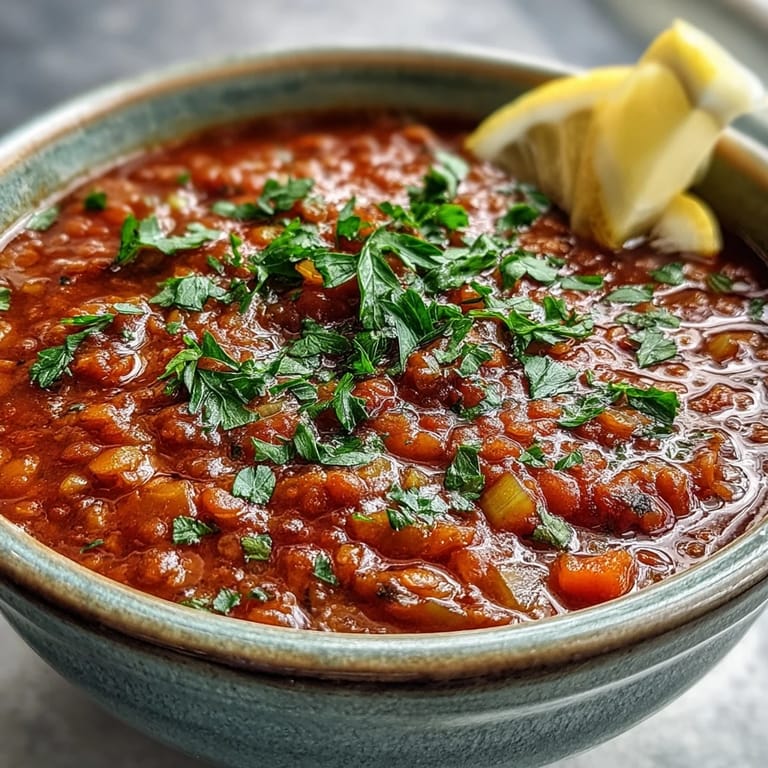
- Ladle into bowls and scatter fresh parsley on top if you'd like. The brightness of the parsley against the russet tones of the soup makes it feel intentional, like you cared about how it looks.
 Pin it
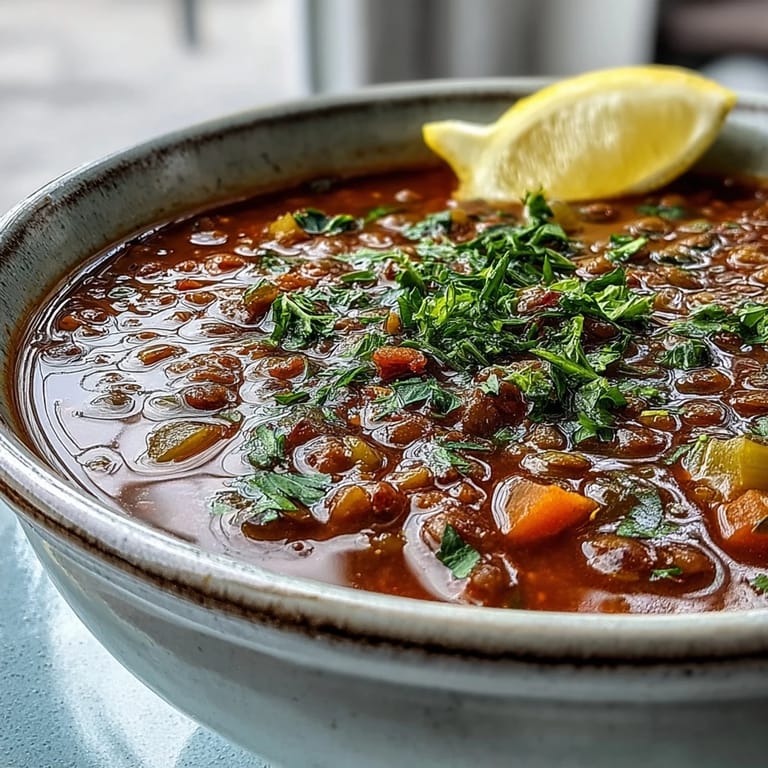
 There's a moment near the end of cooking this soup when the whole kitchen goes quiet except for the gentle simmer, and the smell becomes almost medicinal in how it wraps around you. That's when I know it's working, when something humble has become nourishing.
Texture Play and Personal Preference
Some days I leave this soup exactly as it is—chunky and rustic, with every vegetable visible and distinct. Other times, especially when I'm tired or when someone visiting has mentioned they prefer things smoother, I'll use an immersion blender to soften everything into a velvety broth while keeping some of the lentils whole for a little textural contrast. There's no wrong answer here; it's just about what your kitchen needs that particular day.
Building on the Base
This soup is honest and straightforward on its own, but it also accepts additions gracefully if you find yourself wanting to push it further. I've stirred in a handful of fresh spinach at the very end, which wilts into the warmth and adds an earthiness that feels natural. Sometimes a dollop of non-dairy yogurt on top creates a cooling contrast that makes the spices sing louder.
Storage and Reheating
This soup keeps beautifully in the refrigerator for four or five days, and it actually tastes better the next day once the flavors have had time to mingle and settle. When you reheat it, do so gently over low heat so the lentils don't break down further, and taste again before serving—the seasoning sometimes needs a small adjustment after time has passed.
- If you freeze it, leave the lemon juice out until after thawing and reheating so the brightness doesn't fade.
- A crusty piece of bread alongside this soup transforms it into something that feels almost ceremonial, like a quiet meal worth slowing down for.
- Make extra and you'll have something honest and warming waiting for whatever kind of day comes next.
 Pin it
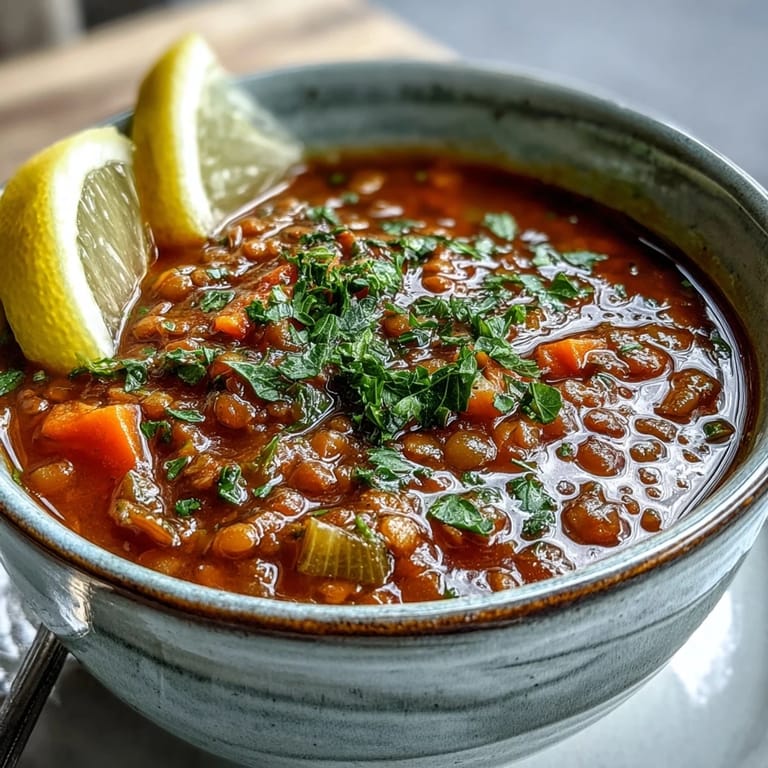
 This soup exists in that comfortable middle ground between nourishing and easy, between humble and deeply satisfying. Make it for yourself on an ordinary evening, or make it for someone else and watch how it becomes part of your shared memory together.
Recipe Q&A
- → Can I use red lentils instead of brown or green?
Yes, red lentils work beautifully and cook faster. Reduce the simmer time to about 20 minutes since red lentils break down more quickly. The result will be slightly thicker with a creamier consistency.
- → How long does this soup keep in the refrigerator?
Store cooled soup in an airtight container for up to 5 days. The flavors actually deepen and improve after a day or two. Reheat gently on the stove, adding a splash of broth if needed to adjust consistency.
- → Can I freeze this soup?
Absolutely. Freeze in portions for up to 3 months. Thaw overnight in the refrigerator, then reheat on the stove. Note that lentils may soften slightly after freezing, but the flavor remains excellent.
- → What can I serve with this soup?
Crusty bread or garlic bread makes perfect for dipping. A simple green salad with vinaigrette balances the heartiness. For extra protein, top with a dollop of non-dairy yogurt or serve alongside roasted chickpeas.
- → How can I make this soup smoother?
Use an immersion blender to purée part or all of the soup after removing the bay leaf. Blending about half creates a creamy texture while maintaining some lentil chunks. For a completely smooth bisque-like consistency, blend the entire pot.
- → Is this soup spicy?
No, the smoked paprika adds smoky depth rather than heat. If you prefer some warmth, add a pinch of red pepper flakes along with the other spices. Adjust to your taste preference.