 Pin it
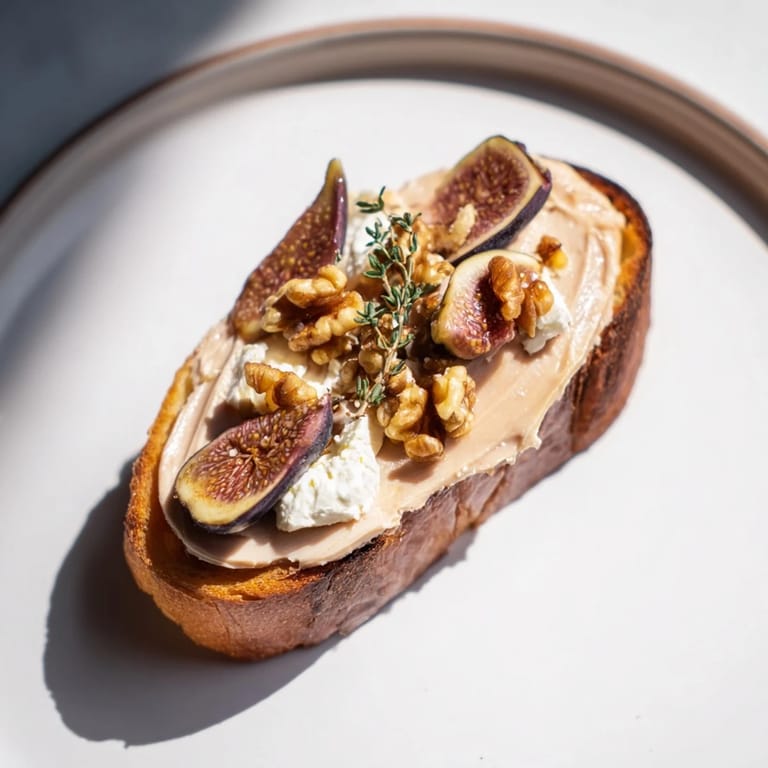
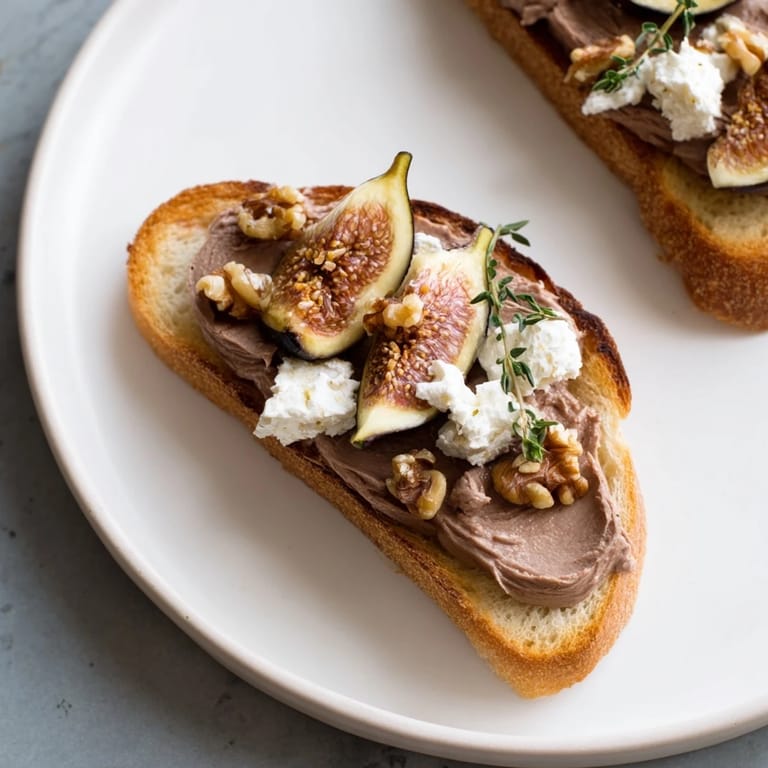
 I discovered this dish at a small Paris bistro, watching a server arrange these jewel-like pieces on a slate board with the kind of care usually reserved for painting. The way the deep liver pâté, golden figs, and creamy goat cheese caught the light made me realize appetizers could be art. Back home, I started playing with the layers and proportions, and somehow it became the opener I reach for when I want to feel a little fancy without the fuss.
I made this for my book club last spring, and what started as a quiet appetizer became the entire conversation. One friend who'd never had pâté before reached for a third piece and said, "Wait, I'm supposed to like this?" in genuine surprise. That night taught me that sometimes the best food moments happen when you challenge what people think they should enjoy.
Ingredients
- Duck or chicken liver pâté (200 g): This is the foundation, rich and earthy. Buy it from a good butcher or specialty shop if you can; the quality difference is real.
- Dried figs (120 g, thinly sliced): They bring sweetness and visual drama. I learned the hard way that thick slices slip around, so thin is your friend.
- Soft goat cheese (80 g, room temperature): Room temperature matters here because cold cheese won't spread smoothly or blend with the other flavors the way it should.
- Toasted brioche or gluten-free crackers (12 slices): The brioche adds luxury, but good crackers work just as well and let the toppings shine.
- Toasted walnuts (40 g, roughly chopped): The crunch is essential, and toasting them yourself makes a surprising difference in flavor depth.
- Fresh thyme sprigs: A small garnish that signals you actually care about the details.
- Fig jam (2 tbsp, optional): A drizzle adds shine and binds the flavors together if you want that final touch of luxury.
Tired of Takeout? 🥡
Get 10 meals you can make faster than delivery arrives. Seriously.
One email. No spam. Unsubscribe anytime.
Instructions
- Build your canvas:
- Lay out your toasted brioche or crackers on a large platter in an overlapping pattern, like you're creating something guests will photograph before eating. Leave no gaps, because the visual density is part of the appeal.
- Spread the pâté:
- Use a small spatula or butter knife to spread a generous but even layer of pâté on each piece, working quickly so it doesn't warm up too much. You want enough to taste it, not so much that it slides off.
- Layer the figs:
- Arrange the thin fig slices on top of the pâté, overlapping them slightly. This is where the color contrast happens, so take a breath and enjoy this moment.
- Nestle the goat cheese:
- Drop small spoonfuls of goat cheese across the platter, tucking them into spaces like you're filling gaps in a mosaic. The creaminess will soften any harsh edges between flavors.
- Add texture with walnuts:
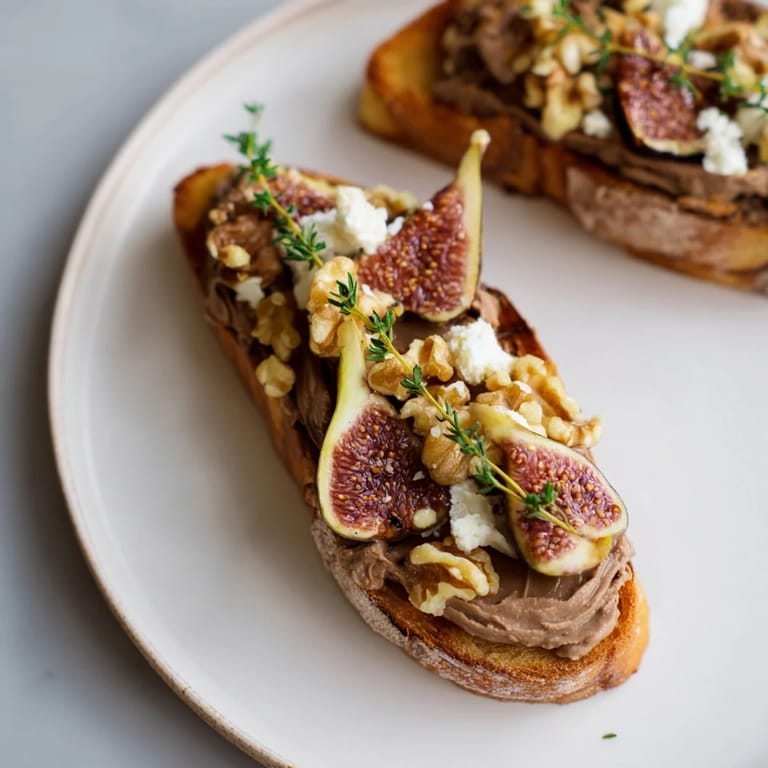
- Sprinkle your toasted walnuts over everything, distributing them so every bite has a chance at that satisfying crunch.
- Final flourishes:
- Drizzle fig jam if you're using it, then scatter fresh thyme sprigs across the platter. This is the moment it transforms from food into something people want to remember.
- Serve with intention:
- Bring it to the table while everything is still at its best and encourage people to sample the layers together rather than picking pieces at random.
 Pin it
 The real magic happened when my neighbor took one bite and closed her eyes, and I realized this dish had stopped being about ingredients and technique. It became about giving someone permission to feel luxurious on an ordinary Tuesday.
Playing with the Layers
The beauty of this appetizer is that each element works alone but sings together. I've experimented with the ratios countless times, sometimes adding more fig to soften the earthiness of the pâté, other times letting the goat cheese dominate. The arrangement matters as much as the ingredients because our eyes eat first, and a platter that looks thoughtfully composed tastes better than one that looks rushed.
Wines and Pairings That Belong Here
A chilled Sauternes is the obvious choice, but I've found that fruity reds like a young Côtes du Rhône work beautifully too, cutting through the richness while respecting the elegance. Champagne is another path, if you want to lean into the occasion. The figs bring enough sweetness that you don't need a dessert wine, but something with body and slight sweetness elevates everything.
Making It Your Own
Once you understand how these flavors play together, you can start riffing. I've swapped goat cheese for blue cheese on nights when I wanted something more assertive, or replaced the figs with apricots when those were fresher. A vegetarian friend asked me to try mushroom pâté instead of liver pâté, and honestly, it became my go-to when she comes over. The structure stays the same, but the personality changes.
- Try blue cheese for a sharper, more intense contrast that demands attention.
- Swap figs for fresh apricots or dried apricots in summer when you want something brighter.
- Use gluten-free crackers and call it done, because nobody tastes the difference and everyone can enjoy it.
 Pin it
 This is the appetizer I reach for when I want to prove to myself and my guests that simple elegance never goes out of style. It's a reminder that the best meals aren't about complexity, they're about care.
Recipe Q&A
- → Can I make this appetizer vegetarian?
Yes, replacing the liver pâté with mushroom pâté offers a flavorful vegetarian alternative without compromising texture.
- → What cheese substitutes could I try?
Blue cheese can be used instead of goat cheese for a stronger flavor profile that complements the figs and walnuts.
- → Are gluten-free options available?
Using gluten-free crackers in place of brioche accommodates gluten sensitivities without altering the dish's character.
- → How should I serve this appetizer?
Arrange layers densely on a large platter, garnish with fresh thyme and optionally drizzle fig jam. Serve immediately to enjoy the textures and flavors.
- → What wine pairing works best?
A chilled Sauternes or a fruity red wine beautifully complements the richness and sweetness of the layers.