 Pin it
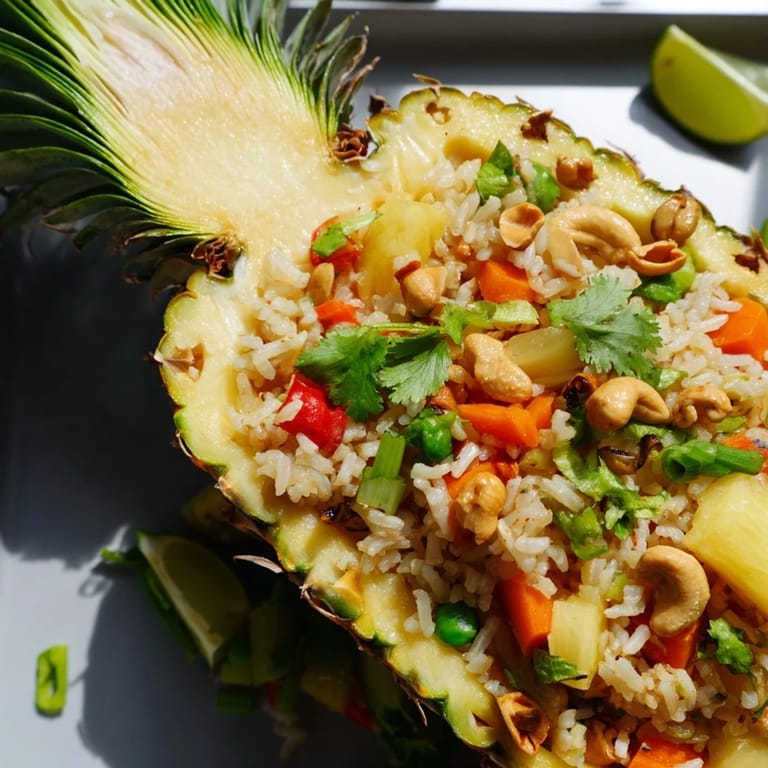
 The evening I created pineapple fried rice for the first time, my kitchen filled with the most intoxicating aroma of curry spices and sweet tropical fruit. What began as a practical solution to leftover rice transformed into a moment of culinary theater when I impulsively decided to serve it in the hollowed pineapple. My dinner guests actually applauded when I brought it to the table, their faces lit with delight at the unexpected presentation.
Last summer during a backyard gathering, my neighbor Miguel asked for the recipe after his third helping. He mentioned how the dish reminded him of a beachside meal he had on his honeymoon in Thailand. Watching how food can transport someone to a cherished memory made me realize why I love cooking so much. The conversation flowed easier with each bite, and suddenly my impromptu dinner had become an evening everyone still talks about.
Ingredients
- Day-old jasmine rice: The secret weapon that ensures each grain remains distinct and avoids the dreaded mushy texture that can ruin fried rice.
- Ripe pineapple: Look for one with a sweet fragrance at the base and leaves that pull out easily, which signals peak ripeness and flavor.
- Curry powder: Just a teaspoon transforms the dish, bringing warmth and that golden color that makes this dish instantly recognizable.
- Cashews: After burning them in my first attempt, I now add them toward the end for that perfect crunch without risking over-toasting.
- Soy sauce: I use low-sodium which allows you to control the saltiness while still getting that essential umami foundation.
Tired of Takeout? 🥡
Get 10 meals you can make faster than delivery arrives. Seriously.
One email. No spam. Unsubscribe anytime.
Instructions
- Prepare your pineapple vessel:
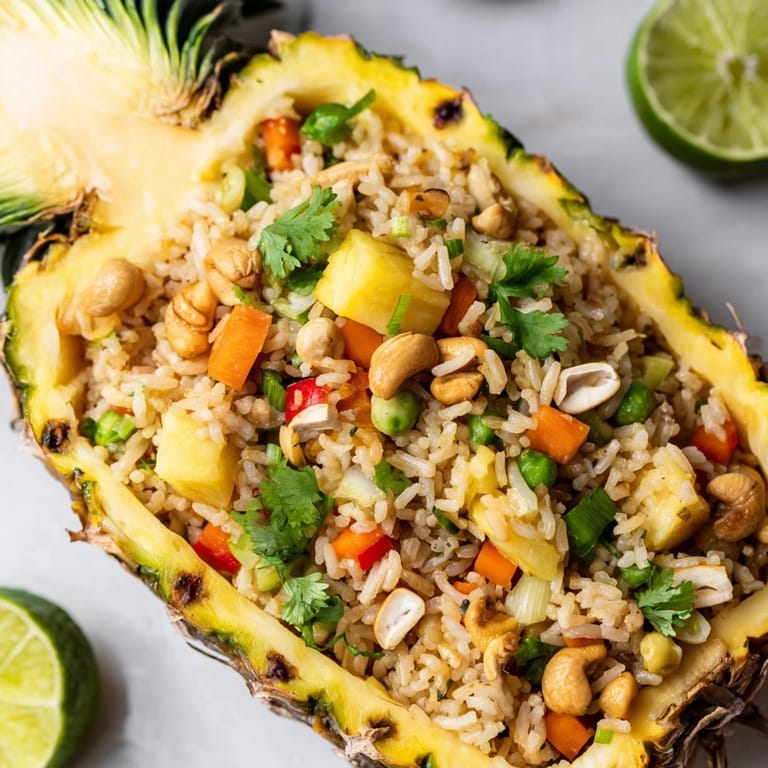
- Slice the pineapple lengthwise and hollow it carefully, preserving that beautiful shell that will make everyone gasp when you bring it to the table. Reserve about half a cup of the flesh for the rice itself, letting those sweet juices infuse the dish.
- Create your aromatic base:
- Heat your oil until it shimmers, then add onion and garlic, filling your kitchen with that irresistible fragrance that will draw everyone in. You want them just softened, not browned.
- Build your vegetable foundation:
- Add carrots and bell peppers, giving them just enough time in the hot wok to soften slightly while maintaining their vibrant colors and slight crunch. The key is quick movement and high heat.
- If using eggs, create space:
- Push everything to one side of your wok and pour in those beaten eggs, scrambling them quickly just until set. Watch this part carefully as overcooked eggs become rubbery.
- Combine the star ingredients:
- Now for the main event where everything comes together with your day-old rice, bright peas, sweet pineapple chunks, crunchy cashews, and those little bursts of sweetness from the raisins if you re using them. Keep things moving constantly.
- Season with balance:
- Add your liquid seasonings and spices, distributing them evenly with quick, confident stir-frying motions. This is where the magic happens as the curry powder coats the rice in its golden hue.
- Finish with freshness:
- Toss in those green scallions at the last moment so they maintain their bright flavor and slight crunch. They bring a necessary brightness to the rich flavors.
- Present with flair:
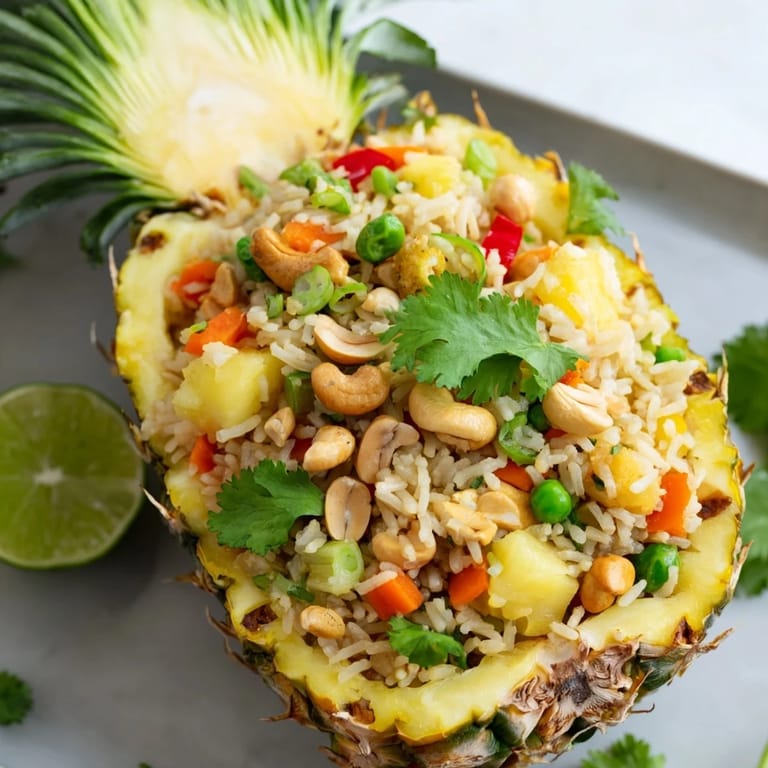
- Spoon your creation back into those waiting pineapple boats, garnish with fresh cilantro and place lime wedges alongside for squeezing. The presentation transforms a simple fried rice into an unforgettable dining experience.
 Pin it
 When my daughter came home from college last winter, this was the first meal she requested. As we sat together, the bright flavors seeming to push back against the gray day outside, she told me she had described this dish to her roommates so many times they had started calling particularly good things pineapple-fried-rice-level. Sometimes the meals we create become more than sustenance they become their own language of love and belonging.
Adapting For Different Diets
After experimenting with various protein additions, Ive found that marinated tofu cubes bring a wonderful texture contrast while keeping it vegetarian. For meat eaters, small pieces of chicken thighs rather than breast maintain better moisture and flavor throughout the high-heat cooking process. The beauty of this recipe lies in its flexibility without compromising that essential sweet-savory balance that makes it so distinctive.
Storage and Reheating
While the filled pineapple makes a dramatic presentation, for leftovers transfer just the rice mixture to an airtight container where it keeps beautifully for up to three days. A quick reheating tip I discovered by accident a splash of pineapple juice just before warming in a hot skillet revives all the flavors and prevents that sometimes dry texture that can plague leftover rice dishes.
Seasonal Variations
During summer months when sweet corn is at its peak, I often add some fresh kernels that bring another dimension of sweetness and texture. Winter adaptations might include diced butternut squash that caramelizes beautifully in the hot wok.
- Spring version can include tender asparagus tips and fresh peas instead of frozen for a seasonal brightness.
- Try swapping traditional raisins for dried cranberries during fall for a tart counterpoint to the sweet pineapple.
- No matter the season, always taste before serving as the sweetness of your pineapple will determine how much additional sugar your dish needs.
 Pin it
 This pineapple fried rice has become my go-to when I want to remind someone how special they are without saying the words directly. The care taken in the preparation speaks volumes, and somehow, food served from a pineapple boat just makes everyone feel celebrated.
Recipe Q&A
- → Why should I use day-old rice?
Day-old rice has dried out slightly, making individual grains firmer and less likely to clump together during stir-frying. Fresh, warm rice tends to become mushy and stick together.
- → Can I prepare this dish ahead of time?
You can prep ingredients in advance, but cook the fried rice just before serving for the best texture and flavor. The assembled pineapple shells should be filled immediately before serving to maintain their presentation.
- → What are good protein additions?
Add cooked shrimp, diced chicken, or cubed tofu in step 5. For shrimp and chicken, use about 1 to 1.5 cups; for tofu, use 3/4 to 1 cup pressed and cubed.
- → How do I make this vegan?
Omit the eggs and fish sauce. Replace regular soy sauce with tamari if avoiding gluten. All other ingredients are naturally plant-based, making this easily adaptable for vegan diets.
- → What equipment do I need?
A wok or large skillet works best for even heat distribution and quick cooking. You'll also need a sharp knife for carving the pineapple, cutting board, large spoon for serving, and a mixing spoon or spatula for stir-frying.
- → Can I use canned pineapple instead?
Fresh pineapple offers the best flavor and texture for both the filling and hollow shells. Canned pineapple works for the filling but lacks the visual appeal and juice quality of fresh fruit.