 Pin it
 The first time I made maklouba, my grandmother watched from the kitchen doorway, arms crossed, waiting to see if I'd have the courage to flip it. That moment of turning the pot upside down felt like pure theatre—dramatic, slightly terrifying, and absolutely worth it when the golden dome emerged intact. Now, whenever I cook this Palestinian dish, I'm transported back to that kitchen, the scent of cumin and cinnamon filling the air, the sizzle of vegetables hitting hot oil, and the quiet satisfaction of mastering something that took generations to perfect.
I made this for a dinner party last spring when a friend mentioned she'd never had authentic Palestinian food, and honestly, I was nervous. But watching her face when I lifted that pot away and revealed the perfectly pressed tower of golden rice, caramelized vegetables, and tender chicken—that's when I knew this recipe wasn't just about feeding people, it was about sharing something real and meaningful.
Ingredients
- Bone-in chicken pieces (1.2 kg): The bones release gelatin into the broth, making every grain of rice taste richer; I always use a mix of thighs and legs for maximum flavor and moisture.
- Basmati rice (2 cups): Its long grains stay separate and don't turn mushy; soaking it in salted water is the secret my grandmother taught me.
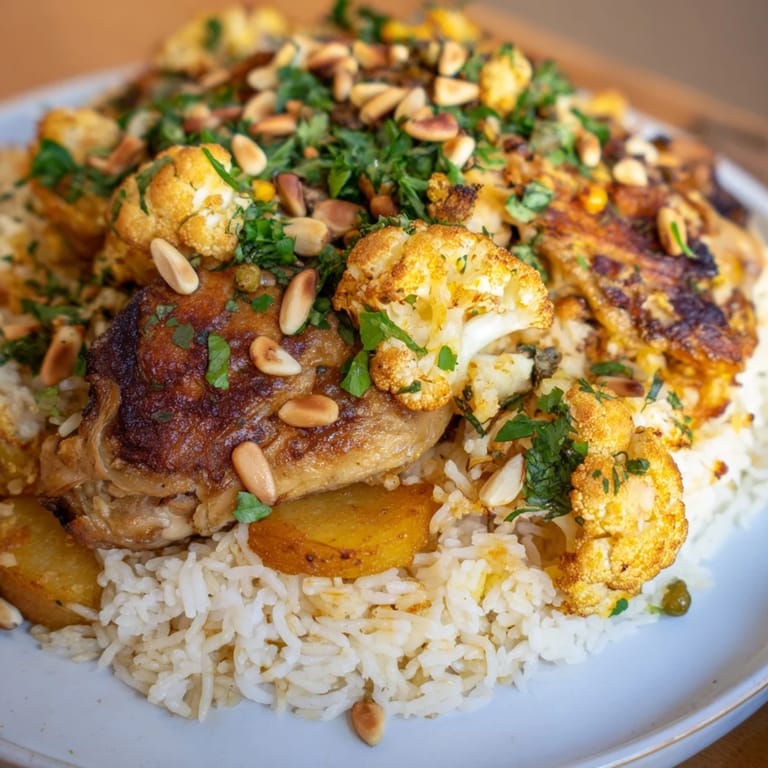
- Cauliflower florets: Fried until their edges crisp and caramelize, they become sweet and tender, a textural contrast that makes the dish sing.
- Potato slices (2 medium potatoes): Thin slicing (1 cm) ensures they cook through while staying intact in the layers.
- Onion (1 large): The foundation that carries all those warming spices into the broth.
- Ground cumin, coriander, cinnamon, turmeric, allspice, and cardamom: This blend is what makes maklouba distinctly Palestinian; toast them briefly in the oil to wake up their essential oils.
- Chicken stock or water (5 cups): Use homemade stock if you can—it transforms the entire dish into something more layered and complex.
- Pine nuts or almonds: A finish that adds richness and that whisper of luxury; I toast mine in a dry pan until fragrant.
Tired of Takeout? 🥡
Get 10 meals you can make faster than delivery arrives. Seriously.
One email. No spam. Unsubscribe anytime.
Instructions
- Soak and prepare the rice:
- Rinse the basmati under cold running water until the water runs clear, then soak it in salted cold water for 30 minutes. This draws out excess starch and helps each grain cook independently. Drain well before using.
- Brown the chicken:
- Heat olive oil in your large pot over medium-high heat, then add the seasoned chicken pieces. You want them to hit the hot oil with a satisfying sizzle—this takes about 6 minutes total, getting color on all sides. Remove them to a plate and set aside.
- Build the flavor base:
- In the same pot, soften the sliced onion in the oil until translucent, then add all your spices at once. Stir continuously for about 1 minute so they bloom and release their fragrance into the oil. Return the chicken to the pot, add your stock, and bring everything to a boil.
- Simmer the chicken:
- Reduce heat to medium and let the chicken poach gently for 20 minutes. The meat will be tender and the broth will be infused with all those warm spices. Remove the chicken pieces carefully and set aside, but save every drop of that broth.
- Fry the vegetables:
- While the chicken simmers, heat vegetable oil in a deep pan and work in batches—don't crowd the pan or the vegetables will steam instead of fry. Fry the cauliflower florets until their edges turn golden and caramelized, then the potato slices until they're golden and crispy. Drain everything on paper towels; the oil will drain away and they'll stay crispy.
- Assemble the layers:
- This is where the magic happens. In your heavy-bottomed pot, lay down the fried potato slices as your base, then distribute the cooked chicken pieces evenly over them. Add the fried cauliflower next, and finally top with the drained rice, pressing it down gently so everything compacts slightly. Pour enough reserved broth over the rice to just cover it—about 4 to 5 cups depending on your pot.
- Cook without peeking:
- Bring the pot to medium heat until liquid bubbles at the edges, then immediately reduce to low heat. Cover tightly with a lid and don't open it—not even to peek. Let it cook undisturbed for 35 to 40 minutes. The rice absorbs the broth, steam cooks everything together, and the bottom layer gets slightly caramelized.
- Rest before the flip:
- Turn off the heat and let the pot sit covered for 10 to 15 minutes. This resting time lets everything settle and helps the maklouba hold together when you invert it.
- The dramatic inversion:
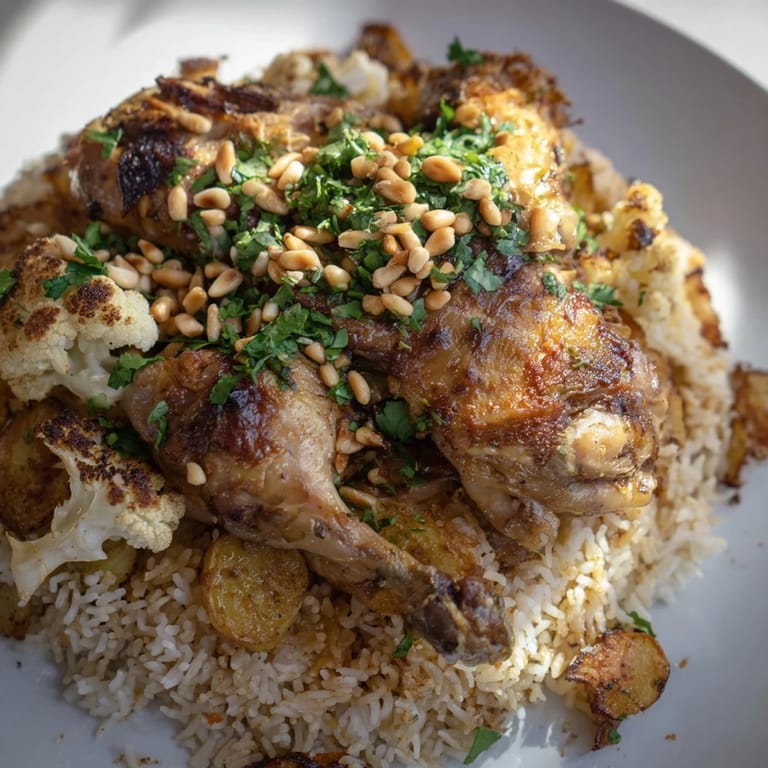
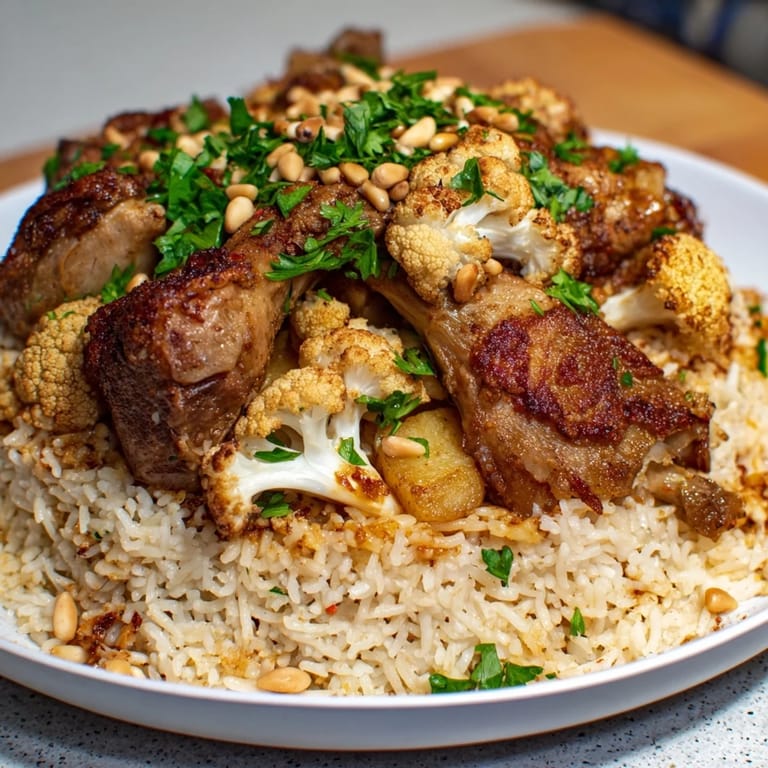
- This is the moment. Place your largest serving platter upside down over the pot, take a breath, and flip the entire pot quickly and confidently. Lift away the pot carefully, and there it is—a golden dome of rice studded with caramelized vegetables and chicken, pressed perfectly into place. It's showstopping.
 Pin it
 I'll never forget the sound of my grandmother's satisfied sigh when that maklouba slid perfectly onto the platter—a small, wordless approval that meant more than any compliment. It was the moment I understood that food isn't just sustenance; it's how we carry love and tradition from one generation to the next.
The Poetry of Layering
What makes maklouba magical is its structure—each layer contributes something different. The potatoes at the bottom toast in the heat, the chicken stays moist surrounded by broth, the cauliflower offers sweetness and texture, and the rice absorbs all the flavors filtering down through the pot. It's not random; it's engineered for maximum impact. When you eat it, you're tasting a conversation between ingredients that were chosen centuries ago to work in harmony.
Spice Notes and Substitutions
The spice blend is warm but not aggressive—cinnamon and cardamom provide sweetness, cumin grounds it with earthiness, and turmeric adds a subtle golden note. If you're missing one of the spices, don't skip the dish; use what you have and adjust quantities. I've made this with just cumin and cinnamon when time was short, and it was still extraordinary. The beauty of maklouba is that it's forgiving enough to work with your pantry while still tasting authentic.
Serving and Sharing
Maklouba deserves ceremony when you serve it. Bring the pot to the table if you can so people see the flip happen—it's part of the experience, not just the food. Serve it hot with cooling yogurt alongside, or with a crisp Arabic salad to cut through the richness. For vegetarians, simply omit the chicken and use vegetable broth; layer eggplant and carrots instead for depth. A pinch of saffron stirred into the broth elevates everything, adding a floral note that feels like luxury.
- Always invert onto a platter larger than your pot—you'll need the space and it looks more impressive.
- If you're nervous about the flip, practice your motion once with the lid on before you commit to it.
- Leftover maklouba reheats beautifully and sometimes tastes even better the next day.
 Pin it
 Maklouba means 'upside down' in Arabic, and every time you make it, you're participating in something that connects you to generations of Palestinian tables and kitchens. It's comfort and celebration in a single pot.
Recipe Q&A
- → What is the cooking technique for this dish?
The dish is assembled in layers inside a heavy pot and cooked slowly, then carefully inverted onto a platter to unveil its layered composition.
- → Can I substitute chicken with vegetables?
Yes, omitting chicken and using vegetable broth creates a flavorful vegetarian variation with the same spiced rice and vegetables.
- → How do the spices enhance the flavors?
Spices like cumin, coriander, cinnamon, turmeric, and cardamom add warmth and aromatic depth, perfectly complementing the rice and vegetables.
- → What vegetables are used in the layers?
Cauliflower florets and sliced potatoes are fried and layered with the rice and chicken to provide texture and richness.
- → What garnishes work best with this dish?
Toasted pine nuts or slivered almonds along with fresh parsley add a crunchy, fresh finish enhancing the flavors and presentation.
- → Is this dish suitable for dietary restrictions?
This dish is naturally dairy-free and halal; omitting chicken makes it vegetarian. Check broth and garnishes to accommodate allergies.