 Pin it
 The first time I truly understood the magic of sumac was during a quiet afternoon in my kitchen, when a friend from Damascus handed me a small jar and said, "taste this first, before you cook." That tartness woke something up in me—a brightness I didn't know I was missing. This stew came together that same evening, layering those fragrant spices with humble lentils and chickpeas, and suddenly I understood why this dish appears on tables across the Levant with such quiet confidence. It's not fancy, but it feels like home the moment it hits your bowl.
I made this for my partner on a cold February night when we were both tired and needed something warm and uncomplicated. By the time it was simmering, the whole apartment smelled like cumin and earth—the kind of smell that makes you feel like you've traveled somewhere without leaving your kitchen. We ate it straight from the pot with torn pieces of pita, sitting on the couch, and neither of us said much because the food was doing all the talking.
Ingredients
- Brown or green lentils (1 cup, rinsed): These hold their shape better than red lentils and give you a firmer bite—I learned this after a batch turned to mush because I wasn't paying attention.
- Canned chickpeas (1 can, drained and rinsed): Rinsing them removes the cloudy starch and makes them taste cleaner, fresher.
- Olive oil (2 tablespoons): Use something you actually like the taste of—it matters more here than you'd think.
- Yellow onion (1 large, finely chopped): The foundation of everything; take your time softening it, and the rest follows naturally.
- Garlic (3 cloves, minced): Mince it fine so it dissolves into the broth rather than sitting in chunks.
- Carrots and celery (2 medium carrots and 2 stalks, diced): These add sweetness and depth—they're the backbone of flavor most people never think about.
- Ground sumac (1½ teaspoons): This is the star; it brings tang and color without acidity that can curdle the broth.
- Cumin, coriander, smoked paprika (1 teaspoon, ½ teaspoon, and ½ teaspoon): Toast these spices briefly in the heat so they release their oils and become more alive.
- Salt and black pepper (1 teaspoon and ½ teaspoon): Taste as you go; you might need more depending on your broth.
- Cayenne pepper (¼ teaspoon, optional): Add it only if you want heat—some days the warmth comes from the spices alone.
- Vegetable broth and water (4 cups and 1 cup): Use broth you believe in; it becomes your stew's voice.
- Lemon juice (about 3 tablespoons fresh): Add this at the end so it stays bright and doesn't fade into the heat.
- Fresh parsley (½ cup, chopped): Save half for garnish; it's the final note that lifts everything up.
Tired of Takeout? 🥡
Get 10 meals you can make faster than delivery arrives. Seriously.
One email. No spam. Unsubscribe anytime.
Instructions
- Build your base with warmth:
- Heat the olive oil in a large pot over medium heat, then add your chopped onion. Let it cook for 4 to 5 minutes, stirring occasionally, until it becomes soft and translucent—you'll know it's ready when it smells sweet and looks golden at the edges. Don't rush this step; it's where the whole stew gets its soul.
- Layer in the aromatics:
- Toss in your minced garlic, diced carrots, and celery stalks. Cook for another 3 to 4 minutes, stirring as you go, until the vegetables start to soften and the garlic becomes fragrant. You're building flavor, layer by layer.
- Wake up the spices:
- Sprinkle in the sumac, cumin, coriander, smoked paprika, salt, black pepper, and cayenne if you're using it. Stir everything together and cook for just 1 minute—long enough to toast the spices and release their oils. Your kitchen should smell unbelievable right now.
- Bring it all together:
- Add your rinsed lentils, drained chickpeas, vegetable broth, and water. Bring it to a boil, then lower the heat, cover the pot, and let it simmer gently for 25 to 30 minutes. Check once or twice to make sure it's simmering peacefully, not boiling hard.
- Finish with brightness:
- Stir in the fresh lemon juice and half the chopped parsley, then cook uncovered for 2 to 3 more minutes. The lemon stays bright this way, not cooked down into submission.
- Taste and serve:
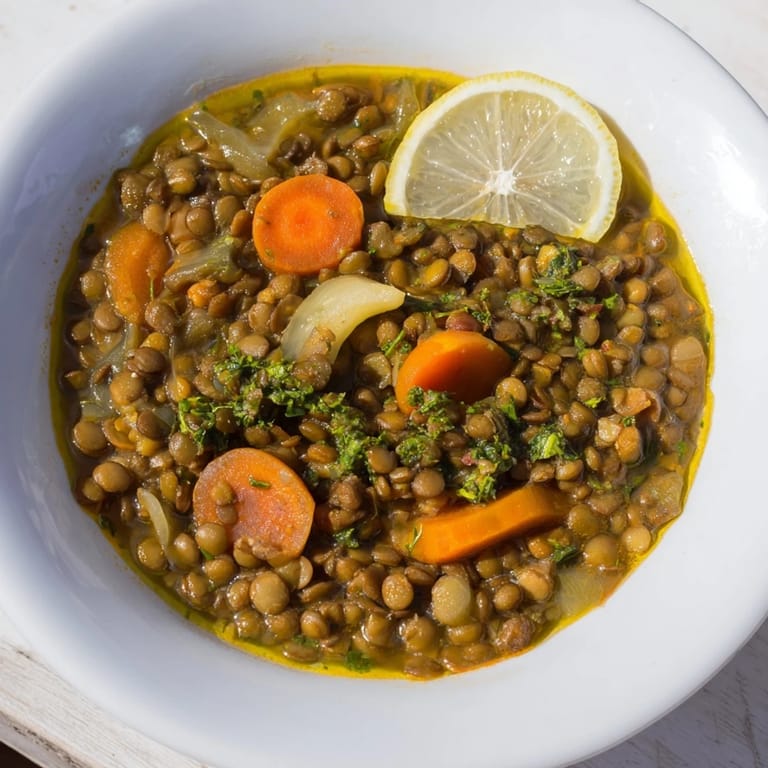
- Give it one last taste—you might need a pinch more salt or a squeeze more lemon depending on your broth. Ladle into bowls, scatter the remaining parsley on top, and set lemon wedges on the side for anyone who wants extra tang.
 Pin it
 What strikes me most about this stew is how it transforms an ordinary Tuesday into something that feels intentional. It's the kind of dish that asks you to slow down—to taste the spices, smell the herbs, notice the moment the lentils become tender. There's something deeply grounding about that.
The Story Behind Sumac
Sumac is one of those ingredients that doesn't get enough credit in Western kitchens, even though it's been central to Middle Eastern cooking for centuries. It's tart without being aggressive, floral without being perfumy, and it adds a visual brightness with its deep red color. I used to think lemon was the only way to bring tang to a dish until I understood that sumac brings complexity too—a depth that feels more grown-up somehow. Once you start cooking with it, you notice how many dishes could benefit from that particular kind of brightness.
Stretching This Stew Further
If you want to turn this into more of a meal, serve it over rice or with warm flatbread on the side—the stew becomes a sauce, and suddenly you have something more substantial. You can also stir in spinach or kale during the last few minutes of cooking, and the leafy greens will soften just enough to blend in without disappearing. Some people add a dollop of yogurt or labneh on top, which creates a cooling contrast to the warm spices. The beauty of this stew is its flexibility—it's hearty enough to stand alone but generous enough to play well with other things.
Storing and Reheating
This stew actually tastes better the next day, after the flavors have settled into each other overnight in the refrigerator. It keeps for about 4 days in an airtight container, and it reheats beautifully on the stovetop with a splash of water if it's thickened too much. The lemon juice fades slightly with time, so taste it again when you're reheating and add a squeeze of fresh lemon if it needs waking up.
- Freeze it in portions if you want to save it longer—it keeps for up to 3 months and is perfect for those moments when you need something nourishing without the thinking.
- Don't add fresh parsley before freezing; add it fresh after reheating so it stays vibrant.
- A drizzle of good olive oil on top before serving makes the whole thing feel more luxurious than it has any right to.
 Pin it
 This stew reminds me that the best meals aren't always the complicated ones—sometimes they're the ones that taste like someone cared enough to get the basics right. Make this when you need something warm, something real, something that tastes like it came from somewhere with roots.
Recipe Q&A
- → What types of lentils work best?
Brown or green lentils hold their shape well and offer a hearty texture suitable for this stew.
- → Can I adjust the spice level?
Yes, the cayenne pepper can be omitted or increased to suit your preferred heat intensity.
- → Is it possible to add greens to the stew?
Adding chopped spinach or kale in the last 5 minutes of cooking boosts nutrition and adds color.
- → What enhances the stew's tangy flavor?
Sumac and fresh lemon juice provide bright, tangy notes that complement the earthiness of the lentils and chickpeas.
- → How should leftovers be stored?
Store cooled portions in an airtight container in the refrigerator for up to 4 days or freeze for longer preservation.
- → What serving suggestions complement this dish?
Serve with warm flatbread or over rice to make a complete, filling meal.