 Pin it
 The first time I made mjadra, I was standing in a friend's kitchen in Beirut, watching her mother move through the steps with such ease that it seemed less like cooking and more like muscle memory. She didn't measure anything—just poured and tasted and adjusted—but what struck me most was the smell partway through, when those onions had been cooking long enough to turn the color of caramel and fill the entire house with something warm and almost sweet. I went home determined to recreate that moment, and somehow, this humble bowl of lentils and rice became one of my favorite things to cook on quiet afternoons.
I made this for a dinner party once when someone showed up unexpectedly hungry, and instead of panicking, I just started boiling water and pulling out the lentils. By the time everyone arrived, the whole apartment smelled incredible, and what could have been awkward turned into one of those meals where people just sat around the table longer than they meant to, asking for seconds and then thirds. It taught me that the best meals aren't always the complicated ones—sometimes they're the ones that let you actually be present with the people eating them.
Ingredients
- Brown or green lentils: These hold their shape beautifully as they cook, giving you that tender-but-still-whole texture that makes mjadra special. I've learned to rinse them well under cold water first, which washes away any dust and helps them cook more evenly.
- Long-grain rice: Basmati is ideal because the grains stay separate instead of turning mushy. Rinsing it until the water runs mostly clear removes excess starch and prevents clumping.
- Water or vegetable broth: Broth adds depth, but water lets the spices shine without competition. Either works, so choose based on what you want to emphasize.
- Olive oil: You'll use it twice—once to toast the lentils and again to caramelize the onions. Quality matters here because it's not just a cooking medium; it's a main flavor player.
- Cumin, allspice, and cinnamon: These three create the warm, slightly sweet backbone of the dish. Don't skip the cinnamon; it seems strange until you taste how it rounds out everything else.
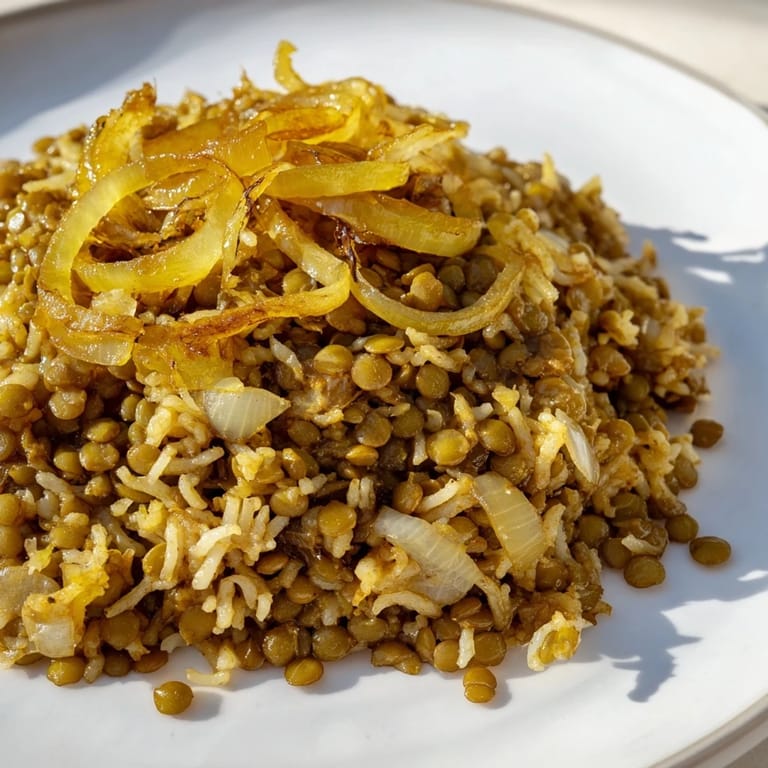
- Yellow onions: Three large ones might seem like a lot, but they shrink dramatically as they caramelize. The long, slow cooking transforms them into something entirely different from raw onions—sweeter, deeper, almost luxurious.
- Bay leaf: One leaf perfumes the entire pot without overpowering it. Remove it before serving, or someone will eventually find it and give you a look.
Tired of Takeout? 🥡
Get 10 meals you can make faster than delivery arrives. Seriously.
One email. No spam. Unsubscribe anytime.
Instructions
- Toast the lentils gently:
- Heat the olive oil in your saucepan until it shimmers slightly, then add the rinsed lentils and bay leaf. Stir for about two minutes so the lentils warm through and pick up a little color from the oil. You'll notice they smell nuttier after this step.
- Begin the broth:
- Pour in the water or broth and bring everything to a rolling boil. Once it's boiling hard, turn the heat down to a simmer and leave it uncovered for 15 minutes. This gives the lentils a head start so they cook at the right pace.
- Start the caramelized onions:
- While the lentils are working, slice your onions thinly and heat the olive oil in a large skillet over medium-low heat. Add the onions with just a pinch of salt and stir them every few minutes. They need about 25 to 30 minutes to turn that deep golden brown that makes this dish memorable.
- Add the rice and spices:
- After the lentils have had their 15 minutes, add the rinsed rice, cumin, allspice, cinnamon, salt, and pepper. Stir well so everything is evenly distributed and the spices release their fragrance. You'll smell the warmth immediately.
- Finish cooking together:
- Cover the saucepan and turn the heat to low. Let it simmer for 20 to 25 minutes until both the rice and lentils are tender and the liquid has been absorbed. Listen for it—when the liquid is gone, the pot stops steaming quite so much. If you peek and it looks dry but still feels hard, add a splash of water and give it another few minutes.
- Fluff and adjust:
- Remove the bay leaf and use a fork to gently fluff the whole mixture, breaking up any clumps. Taste it now and adjust the salt and pepper if needed. This is your moment to make it exactly right for your palate.
- Plate and crown:
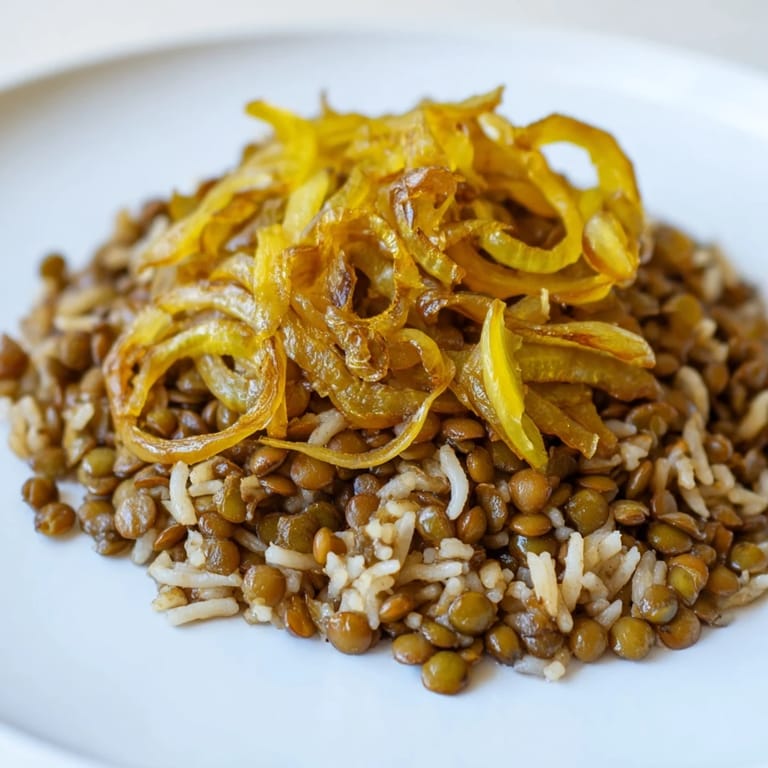
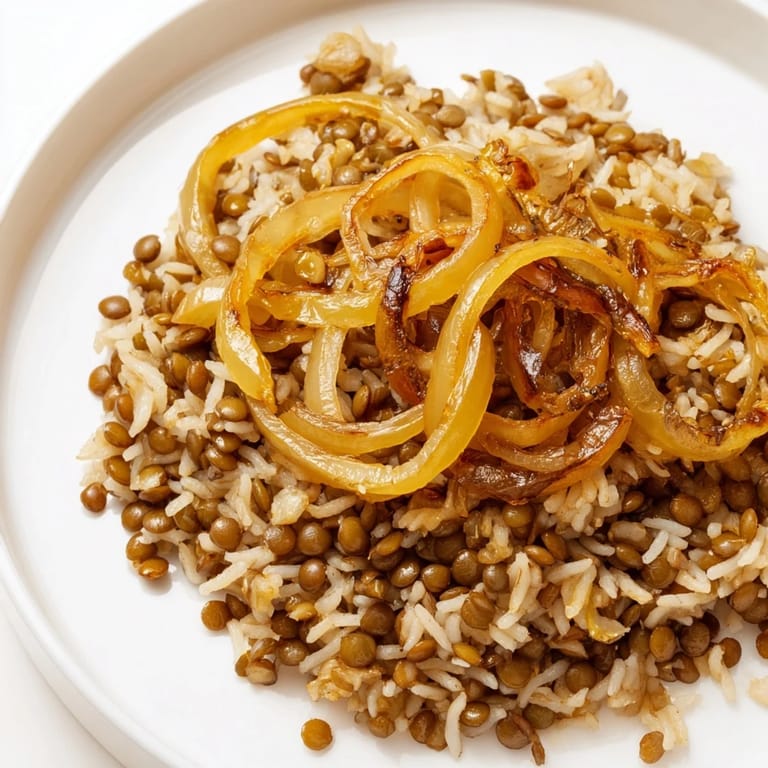
- Transfer to serving bowls and top generously with those caramelized onions. They're not a garnish here—they're the whole reason this dish works. Serve hot or at room temperature, whichever mood you're in.
 Pin it
 There's something almost meditative about this dish—the repetitive motion of stirring the onions, the gradual darkening of the rice as it absorbs the broth, the way a very humble ingredient list becomes something that fills the whole kitchen with comfort. I've come to love it not just as food but as proof that sometimes the most satisfying meals are the simplest ones.
Scaling This Recipe
The proportions here are pretty forgiving. If you need to feed more people, the ratio of one part lentils to three-quarters part rice to four parts liquid holds steady. Just multiply everything and give yourself the same cooking times—the dish scales beautifully without needing adjustments. For half the recipe, you can do it all in a medium saucepan and use just two medium onions, though honestly, it barely saves you any time to cook smaller quantities.
Serving Suggestions
Mjadra is complete on its own, but a cool, crisp side salad—fresh tomatoes, cucumbers, maybe some lemon juice—cuts through the richness perfectly. A dollop of plain yogurt on top (if you're not making it vegan) adds another layer of comfort. I've also served it alongside pickled vegetables, warm pita bread, or even with a simple green salad with lemon vinaigrette. The warm spices and caramelized onions pair well with almost anything fresh and bright.
Variations and Swaps
Red lentils cook faster and create a softer, almost creamy texture, so if you use them, reduce the simmering time before adding the rice to about 10 minutes instead of 15. White or wild rice can replace basmati if that's what you have, though the cooking time might shift slightly depending on the grain. Some people add a pinch of ground ginger or a touch more cinnamon if they want deeper warmth. You can also stir in some chopped fresh parsley or mint right before serving for color and freshness without changing the core flavor.
- Try it with toasted pine nuts sprinkled on top for a restaurant-quality moment.
- A squeeze of lemon juice over the finished bowl brightens everything and cuts the richness beautifully.
- Double the onions if you're the type who loves them as much as I do—there's no such thing as too many caramelized onions.
 Pin it
 There's a reason this dish has endured for generations across the Levant—it asks for so little but gives so much back. I keep coming back to it, and I think you will too.
Recipe Q&A
- → What type of lentils work best for Mjadra?
Brown or green lentils hold their shape well and provide a hearty texture suitable for this dish. Red lentils can be used but cook faster and become creamier.
- → How do I caramelize onions properly?
Cook thinly sliced onions slowly over low heat with some oil and salt, stirring often. This process takes 25–30 minutes to develop a deep golden color and natural sweetness.
- → Can I use broth instead of water?
Yes, using low-sodium vegetable broth enhances the flavor depth without overpowering the warm spices.
- → What spices are traditional in Mjadra?
Ground cumin, allspice, and cinnamon create the warm, earthy flavor profile typical of this Middle Eastern dish.
- → How should I serve this dish?
Serve hot or at room temperature, topped generously with the caramelized onions. It pairs well with fresh vegetable salads or pickles to add contrast and freshness.