 Pin it
 The first time I attempted kimchi fried rice was during a rainy Tuesday evening when my pantry was nearly bare. Standing at the refrigerator door, I spotted a jar of kimchi tucked behind leftovers, and something clicked. The sizzling sound of kimchi hitting hot oil filled my tiny kitchen with a tangy aroma that transported me straight to the bustling streets of Seoul. What started as kitchen improvisation quickly became my go-to comfort dish for those nights when cooking feels like too much effort but takeout isn't quite right.
Last winter, my friend Mia dropped by unexpectedly during a snowstorm, chilled to the bone and hungry. I had kimchi fried rice ready in twenty minutes flat, and we ate straight from the pan, standing over the stove for warmth. The spicy heat of gochujang warmed us from the inside as snow piled against the windows. Mia asked for the recipe three times before leaving, and now its apparently her signature dish when hosting game nights.
Ingredients
- Day-old short-grain rice: The secret weapon here is refrigerated rice that had time to dry out a bit, creating that perfect chewy texture instead of turning mushy when stir-fried.
- Kimchi plus its juice: Look for a properly fermented kimchi with that telltale sourness, as younger kimchi lacks the depth needed to transform this dish from good to extraordinary.
- Gochujang: This fermented chili paste brings a complex sweet-spicy-umami punch that regular hot sauce simply cannot replicate, so please dont substitute if you can help it.
- Toasted sesame oil: Just a teaspoon completely changes the aromatic profile, adding that distinctly Korean nutty finish that ties everything together.
Tired of Takeout? 🥡
Get 10 meals you can make faster than delivery arrives. Seriously.
One email. No spam. Unsubscribe anytime.
Instructions
- Build your flavor base:
- Heat that tablespoon of oil until it shimmers, then toss in your onions, carrots and white parts of green onions. The vegetables should sizzle immediately, releasing their aromatics as they soften.
- Unleash kimchi magic:
- When you add the chopped kimchi, give it time to actually caramelize around the edges. Those little browned bits are flavor gold, bringing a deeper dimension to the final dish.
- Create your sauce layer:
- Stir in gochujang, soy sauce, kimchi juice and seasonings until everything is coated in that gorgeous red mixture. The pan should smell absolutely intoxicating at this point.
- Rice integration technique:
- Add rice in sections rather than all at once, breaking up clumps with your spatula while folding everything together. Keep the heat high enough to slightly crisp some rice bits for textural contrast.
- Final flavor boost:
- That drizzle of sesame oil at the end isnt optional, its transformative. Add it with the green onions off the heat to preserve its aromatic qualities.
- Egg crowning glory:
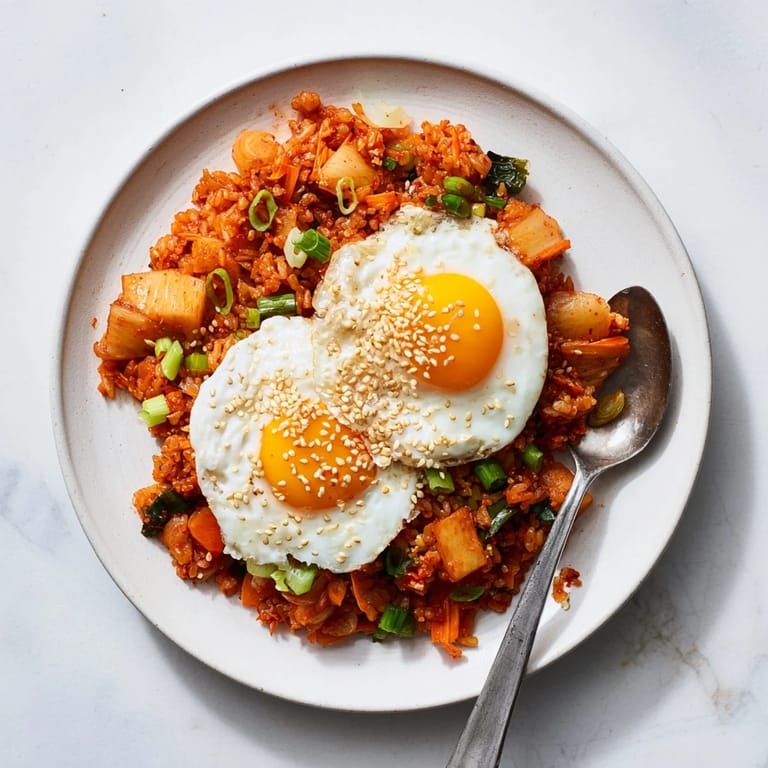
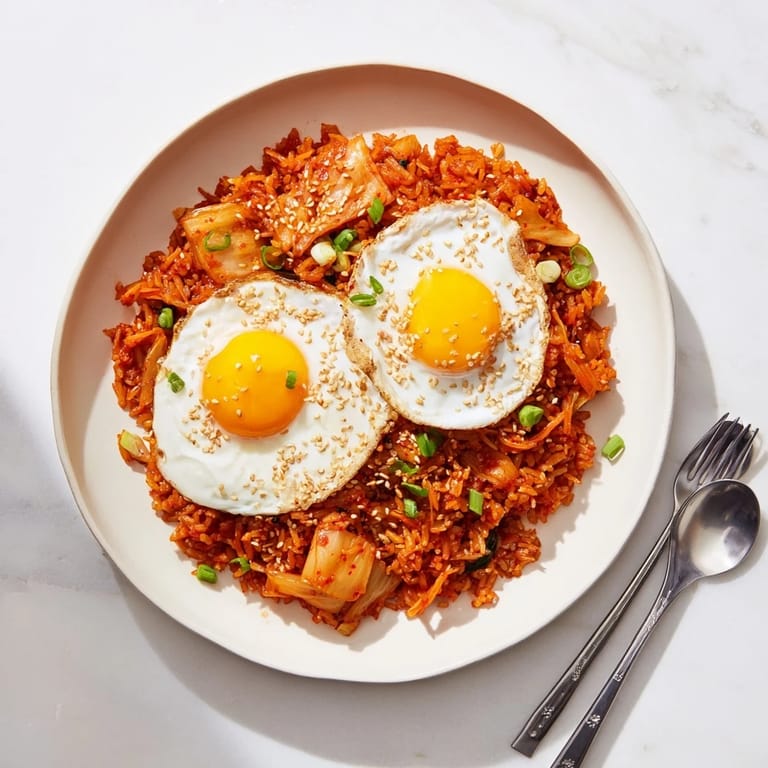
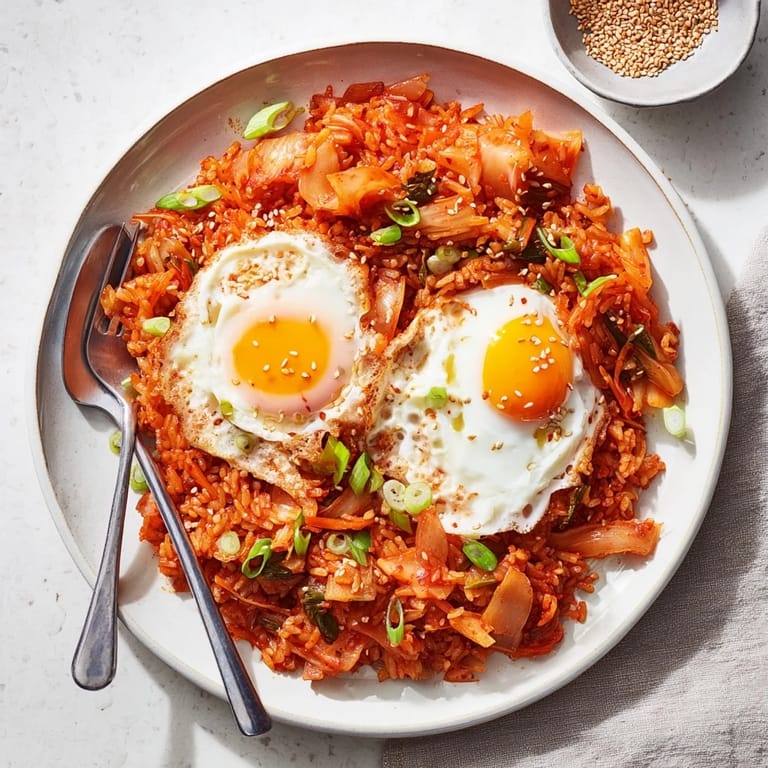
- If youre adding a fried egg, cook it in a separate pan with crispy edges but a runny yolk. The rich yolk creates an instant velvety sauce when broken over the hot rice.
 Pin it
 During graduate school, this dish became my edible currency. I traded bowls of kimchi fried rice for help with statistics homework, rides to the grocery store, and once for emergency printer access at 2 AM before a paper deadline. My classmates started bringing me jars of kimchi as gifts, hoping to subtly suggest I make it again. What began as budget cooking evolved into my signature dish, the thing friends requested when they needed comfort in edible form.
Customization Options
Over years of making this dish, Ive discovered it welcomes adaptation based on whatever protein you have available. Cubes of firm tofu soaked in soy sauce for ten minutes then pan-fried until crisp make an excellent vegetarian protein boost. Leftover rotisserie chicken shredded and added with the rice brings a savory dimension that pairs surprisingly well with the fermented flavors. My personal favorite addition is kimchi-marinated tempeh that Ill prepare a day ahead when I know this meal is on the horizon.
Serving Suggestions
The way you serve kimchi fried rice can elevate it from casual dinner to impressive meal. I learned this when I impulsively decided to serve it for a dinner party in individual stone bowls I found at an Asian market. The rice continued cooking against the hot stone, creating a coveted crispy layer at the bottom that guests fought over. For everyday meals, I simply place a mound in a deep bowl, creating a small well in the center for the egg, allowing the yolk to run precisely where its needed most.
Troubleshooting Tips
After making this dish countless times, Ive encountered and solved nearly every possible mishap. The most common issue is rice sticking stubbornly to the pan, which I now prevent by ensuring my wok is properly heated before adding any ingredients and using a bit more oil when working with older pans.
- If your rice clumps excessively, try breaking it apart with your hands before adding it to the pan, or drizzle a tiny bit of oil over cold rice and separate with a fork.
- For those who find gochujang too spicy, start with half the amount and supplement with an extra dash of soy sauce and sugar to maintain flavor balance.
- When the kimchi flavor isnt punchy enough, adding a splash of rice vinegar along with the kimchi juice can brighten the entire dish without making it soggy.
 Pin it
 This kimchi fried rice has been there for celebrations and consolations alike in my home, adapting to whatever the moment requires. I hope it finds its way into your kitchen rotation, becoming the reliable friend it has been in mine.
Recipe Q&A
- → Can I use fresh rice instead of day-old rice?
Day-old rice works best because it's drier and won't clump during cooking. If using fresh rice, spread it on a plate to cool completely and break up any clumps before stir-frying. Some cooks refrigerate fresh rice for a few hours to achieve better results.
- → How do I adjust the spice level?
Start with the recommended 1 tablespoon of gochujang and add more gradually if you prefer extra heat. You can also increase the kimchi juice for additional tang and spice. Conversely, reduce both to make it milder. Taste as you cook to reach your preferred heat level.
- → What proteins pair well with this dish?
Fried eggs are traditional and add richness. Diced cooked chicken, shrimp, or pan-fried tofu also work beautifully. For vegetarian versions, keep eggs or add tofu. Cooked ground meat can be stirred in during the stir-fry stage for added protein and texture.
- → Can I make this dish vegan?
Yes, omit the fried egg and verify your gochujang and kimchi labels for fish-based ingredients. Many brands offer plant-based versions. Add crispy tofu cubes or chickpeas for protein. Sesame oil and seeds provide richness and depth of flavor.
- → How should I store and reheat leftovers?
Store in an airtight container in the refrigerator for up to 3 days. Reheat in a skillet over medium heat with a splash of water or sesame oil, stirring occasionally until warmed through. A drizzle of extra soy sauce or sesame oil brightens the flavors when reheating.
- → What makes the kimchi edges caramelize?
Caramelization occurs when sugars in the kimchi undergo the Maillard reaction at high heat. This develops complex, slightly sweet and charred flavors. Cooking the kimchi in a hot skillet for 2–3 minutes before adding other ingredients creates this desirable depth and sweetness.