 Pin it
 Last spring, my neighbor handed me a basket of just-picked broad beans from her garden, still warm from the sun, and suddenly I was obsessed with finding a way to use them that felt special enough to honor that moment. I'd made shakshuka dozens of times with just tomatoes and eggs, but something about the sweetness of those fresh beans made me wonder what would happen if I built the whole dish around them. That afternoon, I threw together peas, asparagus, and a gentle spice blend, and when I cracked those eggs into the bubbling sauce, I knew I'd stumbled onto something worth making again and again.
I made this for friends who'd been debating whether vegetables could ever be the star of a main course, and watching them forget all about that argument and just eat spoke volumes. One friend went back for seconds and asked if the sauce was somehow sweet, and I realized it was just the peas and beans showing their true flavor when treated gently. That meal became a standing request whenever someone wanted to eat better but didn't want to sacrifice anything in terms of taste.
Ingredients
- Fresh or frozen peas: Use fresh when you can find them at the market, but frozen actually work beautifully here because they're picked at peak ripeness and add natural sweetness to the sauce.
- Fresh or frozen broad beans: If using fresh, you'll need to double-pod them (remove from the pod, then slip off the papery skin), which is meditative work but worth it for the tender result.
- Asparagus: Cut into 2-inch pieces so they cook evenly with the other vegetables and don't turn mushy or woody.
- Onion and red bell pepper: The onion builds the flavor base while the pepper adds sweetness and slight earthiness that balances the spices.
- Garlic: Don't skip mincing it finely because it distributes better throughout the sauce and cooks more evenly than larger pieces.
- Chopped tomatoes and tomato paste: The paste adds concentrated flavor and helps thicken the sauce naturally without needing flour or cream.
- Ground cumin: This warm spice connects the dish to its Middle Eastern roots and enhances the earthy vegetables without overwhelming them.
- Smoked paprika: It brings a subtle depth and slightly smoky note that makes the sauce taste like it's been simmered for hours rather than minutes.
- Ground coriander: A quieter spice that rounds out the flavor profile and adds a gentle floral quality.
- Chili flakes: Keep these optional and add them only if you want heat; the dish is delicious without them.
- Eggs: Room temperature eggs work better because they cook more gently and evenly in the hot sauce.
- Feta cheese: The salty tang is essential here; it cuts through the richness of the eggs and adds a textural contrast.
- Fresh parsley or mint: Mint feels more spring-forward, but parsley is classic; either one brightens everything right before serving.
- Extra virgin olive oil: A good one makes a real difference in the final drizzle, so don't use cooking oil here.
Tired of Takeout? 🥡
Get 10 meals you can make faster than delivery arrives. Seriously.
One email. No spam. Unsubscribe anytime.
Instructions
- Blanch the spring vegetables:
- Bring salted water to a rolling boil and add the peas and broad beans, watching carefully because they only need 2 minutes to soften slightly while staying bright green. Plunge them immediately into an ice bath to stop the cooking, then drain and set them aside so they'll have the perfect texture later.
- Build your flavor base:
- Heat olive oil in your largest skillet over medium heat, then add the chopped onion and diced red pepper, letting them soften and become translucent over about 5 minutes. You want to hear them sizzle gently rather than get any color on them at this stage.
- Wake up the spices:
- Stir in the minced garlic along with the cumin, smoked paprika, coriander, and chili flakes if you're using them, and let them toast for just a minute until your kitchen smells like a spice market. This step transforms raw spices into something warm and rounded.
- Create the sauce:
- Add the tomato paste first, stirring it into the spiced mixture for about 30 seconds, then pour in the canned tomatoes and let everything bubble gently for 10 minutes, stirring occasionally. The sauce should thicken slightly and darken a bit, which means the flavors are concentrating beauli.
- Add the vegetables:
- Stir in the blanched peas and broad beans along with the asparagus pieces, season generously with salt and black pepper, and let everything simmer together for 5 to 7 minutes until the asparagus just turns tender. Taste as you go and adjust the seasoning because it's easier now than after the eggs are in.
- Nestle in the eggs:
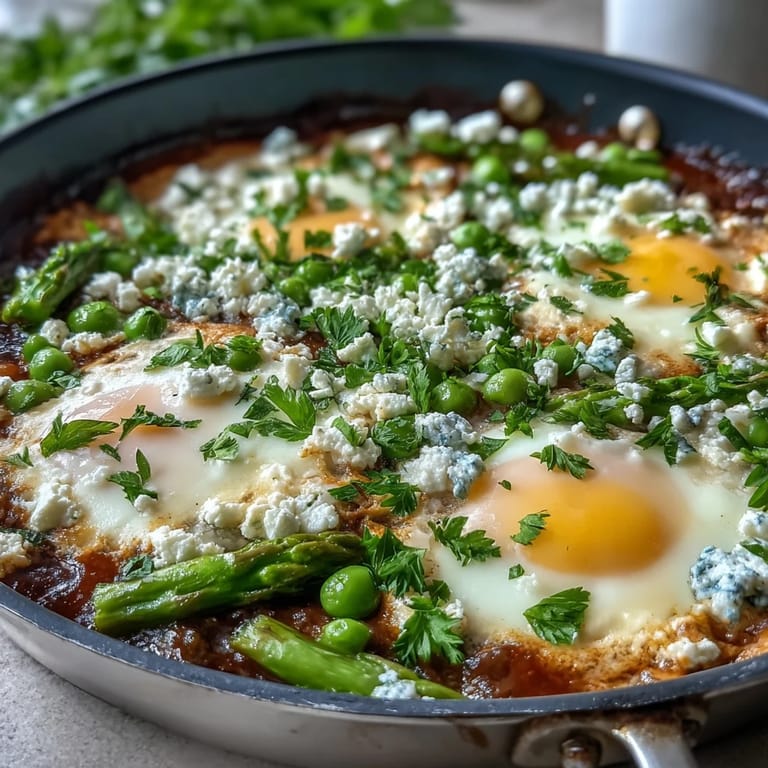
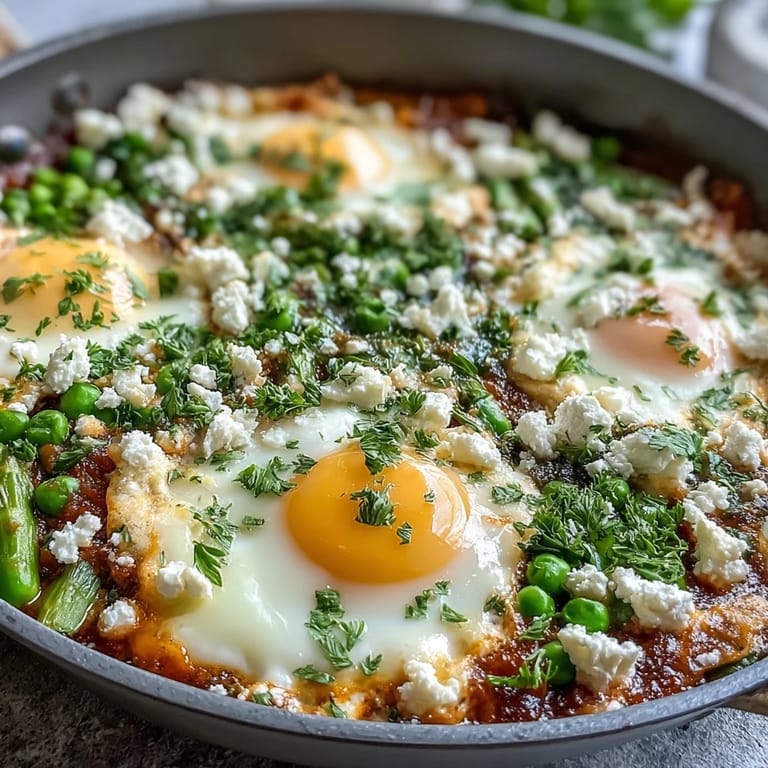
- Using the back of a spoon, create four small wells in the vegetable mixture, spacing them evenly around the pan, then carefully crack an egg into each one. Cover the skillet and lower the heat to gentle, then let it cook undisturbed for 7 to 10 minutes, depending on how runny you like your yolks.
- Finish and serve:
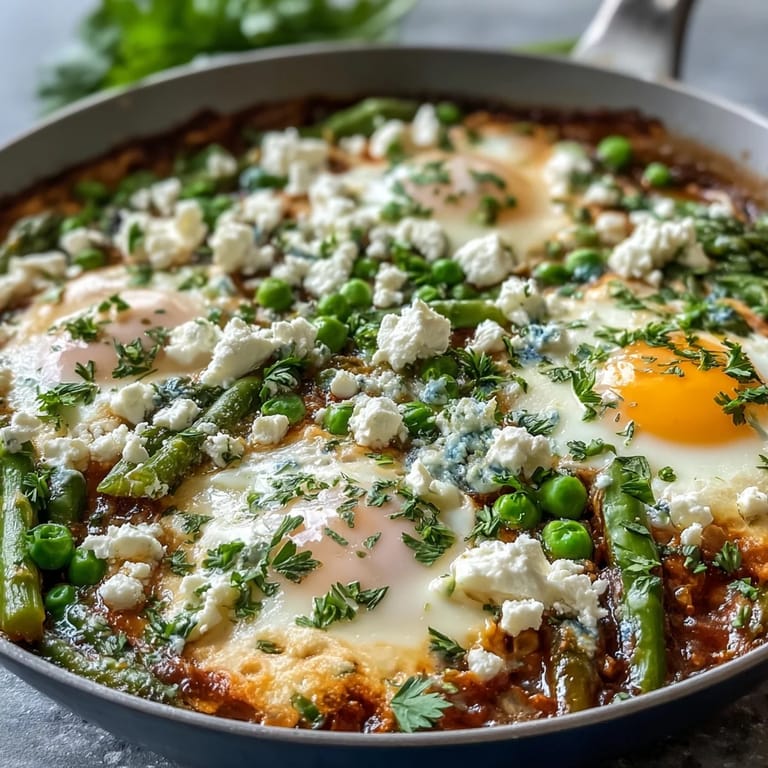
- Remove from heat, sprinkle the crumbled feta over everything, add a generous amount of fresh herbs, and drizzle with a little more olive oil. Serve directly from the pan with crusty bread for soaking up every bit of that golden sauce.
 Pin it
 There was something almost meditative about watching those eggs cook under the lid, seeing the whites slowly turn from transparent to opaque while the yolk stayed golden and soft, and knowing that everyone at the table was about to get exactly what they needed in that moment. That's when cooking feels less like a task and more like giving something real to people.
Why This Works as a Spring Dish
Spring vegetables have a natural sweetness and tenderness that heavier spices can actually overpower, which is why this recipe uses just enough seasoning to enhance rather than mask them. The peas and broad beans carry the weight of the dish while staying light enough that you don't feel like you need to nap afterwards, and the asparagus adds a subtle earthiness that keeps everything grounded. The eggs are the real magic though, because they turn what could be a vegetable stew into something that feels substantial and nourishing.
Making It Your Own
The beauty of shakshuka is that it adapts beautifully to whatever looks good at the market, so if you can't find broad beans, try fava beans or even tender green beans cut into short lengths. The spice blend can shift too; if you love heat, add more chili flakes or even a pinch of cayenne, and if you prefer something warmer and earthier, trade the smoked paprika for sweet paprika and add a tiny pinch of turmeric. I've even made this with a handful of spinach stirred in at the very end, which adds color and iron without changing the essential character of the dish.
Serving and Pairing Ideas
This dish practically demands good bread for scooping and soaking, so hunt down a crusty sourdough or find some decent flatbreads that can handle getting dunked in that gorgeous sauce. A cold glass of something crisp and white feels right because it cuts through the richness of the yolk and the earthiness of the vegetables, and honestly, sparkling water with fresh lemon works just as well if you're not in a wine mood. I've served this at breakfast, lunch, and dinner, and each time it feels appropriate and welcome.
- Make sure your bread is toasted lightly so it holds up when you use it to push the yolk around your plate.
- Have extra feta crumbled and ready at the table because everyone always wants more than you've sprinkled on top.
- If someone wants more heat, set out a small bowl of harissa or chili oil so they can add it to their own taste without affecting everyone else's meal.
 Pin it
 This shakshuka lives in that beautiful space where it feels fancy enough to make for guests but easy enough to pull together on a Tuesday night when you want something that tastes like spring. Make it once and you'll find yourself circling back to it whenever you need to feel both nourished and happy.
Recipe Q&A
- → Can I use frozen vegetables instead of fresh?
Yes, frozen peas and broad beans work perfectly in this dish. Simply blanch them for 2 minutes in boiling water before adding to the tomato sauce. No need to thaw beforehand.
- → How do I know when the eggs are done?
The whites should be fully set and opaque while yolks remain runny. This typically takes 7-10 minutes covered on low heat. Lift the lid occasionally to check—jiggle the pan gently to see if the whites are firm.
- → What can I substitute for feta cheese?
Try crumbled goat cheese, halloumi, or a vegan feta alternative. For a dairy-free option, add extra fresh herbs and a squeeze of lemon juice before serving.
- → Can I make this ahead of time?
Prepare the vegetable sauce up to a day in advance and refrigerate. When ready to serve, reheat gently, make the wells, and crack in fresh eggs. The dish is best enjoyed immediately after cooking.
- → What should I serve alongside?
Crusty bread, pita, or flatbreads are essential for soaking up the sauce. A crisp green salad with lemon vinaigrette balances the rich flavors. For brunch, add roasted potatoes or fresh fruit.
- → How can I adjust the spice level?
Omit the chili flakes for a milder version, or increase to ½ teaspoon for more heat. Serve with harissa or chili oil on the side so diners can customize their portions.