 Pin it
 The first time I made chickpea curry, I was skeptical that something so simple could taste so rich. I had invited friends over on a rainy Tuesday, barely cooked for anyone before, and decided to improvise with what I had in my pantry. The smell of toasted cumin and coriander filled my tiny apartment, and when my friends arrived, they actually asked what restaurant I'd ordered from. That night changed everything about how I approach plant-based cooking.
Last winter, my sister called me at 8 PM, exhausted and hungry, and I talked her through this recipe over the phone. She'd never cooked Indian food before, was intimidated by the long list of spices, but I told her to just trust the process. When she texted me a photo of her empty bowl thirty minutes later, she said she couldn't believe she made something that good herself. Now it's her go-to for busy weeknights when she wants something comforting but not heavy.
Ingredients
- Vegetable oil: Creates the foundation for building flavor, helps spices bloom properly
- Onion, finely diced: The smaller you chop it, the more it melts into the sauce
- Fresh garlic and ginger: Dont use powdered here, the fresh aromatics make all the difference
- Ground cumin and coriander: Toast them in the hot oil to unlock their essential oils
- Turmeric: Gives that beautiful golden color and earthy undertones
- Garam masala: Adds warmth and complexity, finish spice blend
- Chili powder and paprika: Adjust based on your heat tolerance, start with less
- Salt and black pepper: Taste and adjust at the end, coconut milk needs more salt than you think
- Canned chickpeas: Rinse them thoroughly to remove the starchy liquid
- Full-fat coconut milk: Light coconut milk makes a watery sauce, treat yourself
- Diced tomatoes: Use the juice too, it adds body and tang
- Vegetable broth: Helps thin the coconut milk and adds depth
- Baby spinach: Wilts beautifully into the warm sauce, optional nutrition boost
- Fresh lime juice: Cuts through the richness and brightens everything
- Fresh cilantro and lime wedges: The finishing touch that makes it feel restaurant-quality
Tired of Takeout? 🥡
Get 10 meals you can make faster than delivery arrives. Seriously.
One email. No spam. Unsubscribe anytime.
Instructions
- Build your flavor foundation:
- Heat the oil in a large skillet over medium heat, add the diced onion, and cook for 4 to 5 minutes until it's soft and translucent but not browned. This is your flavor base, so don't rush this step.
- Add the aromatics:
- Stir in the minced garlic and grated ginger, cooking for just 1 minute until the raw smell disappears and your kitchen smells amazing.
- Toast your spices:
- Add all the spices at once and stir constantly for 1 minute, watching carefully as they become fragrant and deepen in color. This blooming step is what separates flat curry from exceptional curry.
- Create the sauce:
- Pour in the chickpeas, diced tomatoes with their juice, coconut milk, and vegetable broth. Stir everything together and let it come to a gentle bubble.
- Simmer to perfection:
- Cover the pan and let it cook for 15 minutes, stirring occasionally so nothing sticks to the bottom. The sauce will thicken and the chickpeas will absorb all those beautiful spices.
- Add the greens:
- If you're using spinach, throw it in during the last 2 to 3 minutes, letting it wilt down into the sauce. Watch how quickly it disappears into the curry.
- Finish with brightness:
- Squeeze in the fresh lime juice, taste your curry, and adjust the salt or spices if needed. This is when you make it yours.
- Garnish and serve:
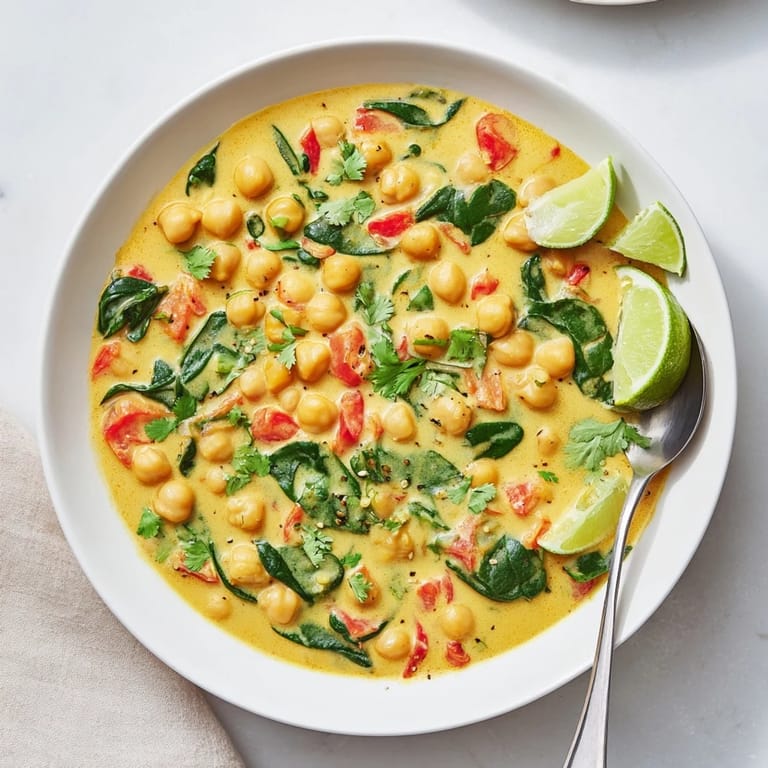
- Serve it hot over rice, topped with fresh cilantro and extra lime wedges for squeezing. Watch everyone reach for seconds.
 Pin it
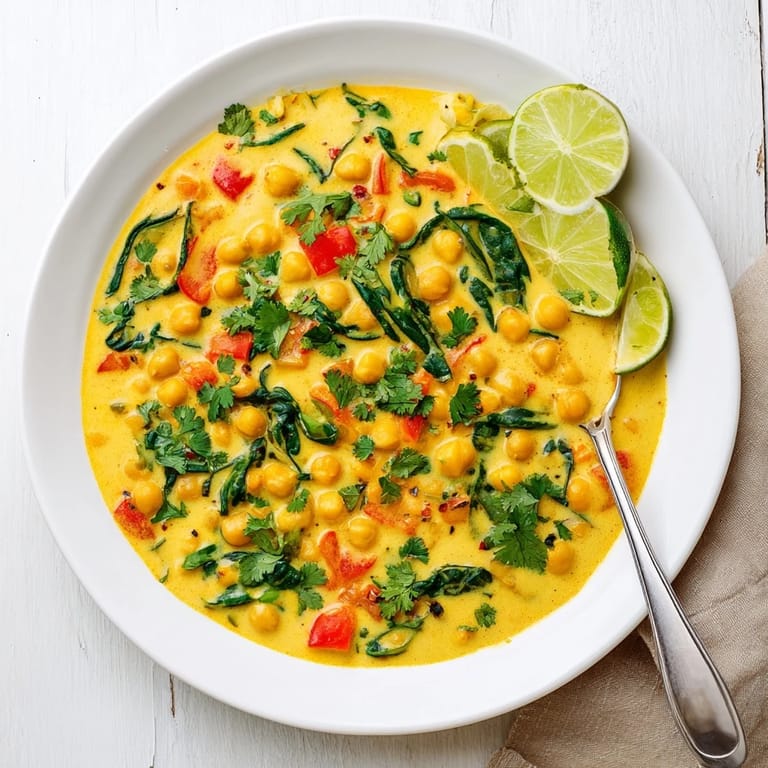
 This recipe has become my gift to new cooks, parents who need something reliable, and anyone who thinks they don't like curry. There's something magical about watching people take that first bite, their eyes widening as they realize how good simple food can be. My roommate now requests it every Sunday, and honestly, I never say no.
Make It Your Own
I've made this curry with sweet potatoes, cauliflower, and even butternut squash when I wanted something more substantial. The beauty is that the sauce works with almost any vegetable, so don't be afraid to use what you have. Once you master the spice ratios, you'll start improvising naturally.
Serving Suggestions That Work
Basmati rice is classic, but I've also served it over quinoa, roasted cauliflower rice, or even with warm naan for dipping. Sometimes I make a big batch on Sunday and eat it for lunch all week, each bite reminding me why homemade food matters. It freezes beautifully too, which means you're always one step away from a comforting meal.
Common Questions I've Learned From
People often ask if they can use fresh tomatoes instead of canned, and yes, but you'll need to cook them longer to break down. The canned version is reliable and consistent, which matters when you're learning. I've also learned that garam masala brands vary wildly in flavor, so taste as you go and trust your palate.
- Don't skip the lime juice, it's the secret ingredient that makes everything pop
- If your sauce is too thin, let it simmer uncovered for the last 5 minutes
- Leftovers reheat beautifully with a splash of water or broth to loosen the sauce
 Pin it
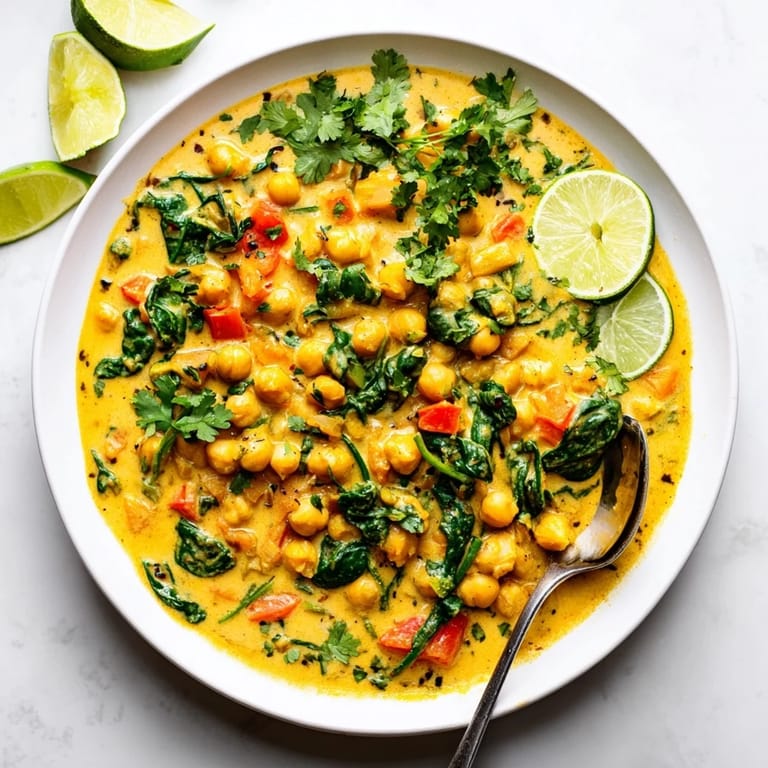
 Good food doesn't need to be complicated, and this curry proves it every single time. Whether you're cooking for one or feeding a crowd, there's something deeply satisfying about putting this on the table.
Recipe Q&A
- → How spicy is this curry?
The spice level is medium and customizable. The chili powder provides gentle warmth, while the garam masala adds aromatic depth. You can easily reduce the chili for a milder version or increase it for more heat.
- → Can I make this ahead of time?
Absolutely. This curry actually tastes better the next day as the spices continue to develop. Store in an airtight container in the refrigerator for up to 4 days and reheat gently on the stovetop.
- → What can I serve with this dish?
Steamed basmati rice or brown rice are classic choices. Naan, roti, or other flatbreads work perfectly for soaking up the creamy sauce. For a lighter option, serve over cauliflower rice.
- → How can I add more vegetables?
Diced sweet potato, bell peppers, or cauliflower work beautifully when added with the chickpeas. Baby spinach wilts in during the last few minutes. Green peas make a great addition too.
- → Is this curry freezer-friendly?
Yes, it freezes exceptionally well. Let it cool completely, then transfer to freezer-safe containers for up to 3 months. Thaw overnight in the refrigerator before reheating.
- → Can I use dried chickpeas instead of canned?
You'll need about 3 cups of cooked chickpeas from approximately 1 cup of dried chickpeas. Soak overnight, then simmer until tender before using in the curry.