 Pin it
 I discovered this stunning yin and yang board at a dinner party where a friend had arranged a simple spread in perfect circular harmony. The moment I saw how the dark and light ingredients spiraled together, something clicked—this wasn't just an appetizer, it was a conversation starter. That night, I watched guests pause before eating, taking in the visual balance before diving into the contrasting flavors. It inspired me to master the art of the beautiful board, and this recipe has become my signature move whenever I want to impress without spending hours in the kitchen.
I remember making this for my sister's engagement party when she asked for something 'Instagram-worthy but easy.' As I arranged the last cashew into place and stepped back to see the complete S-curve, she walked in, stopped dead, and said 'that's the most beautiful thing I've ever seen on a board.' Her fiancé immediately grabbed his phone, but what touched me more was watching everyone eat mindfully that night, tasting deliberately instead of just grazing.
Ingredients
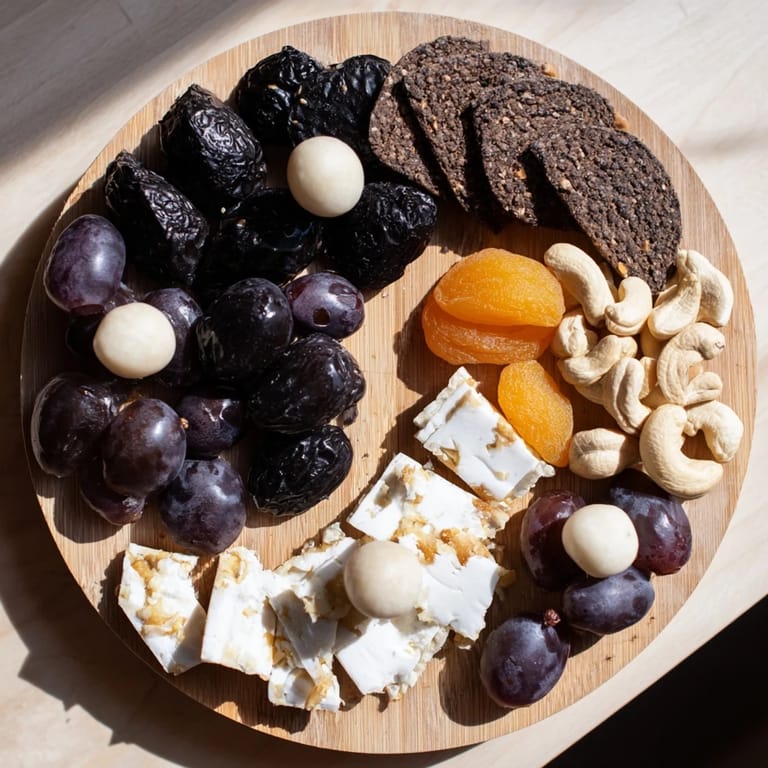
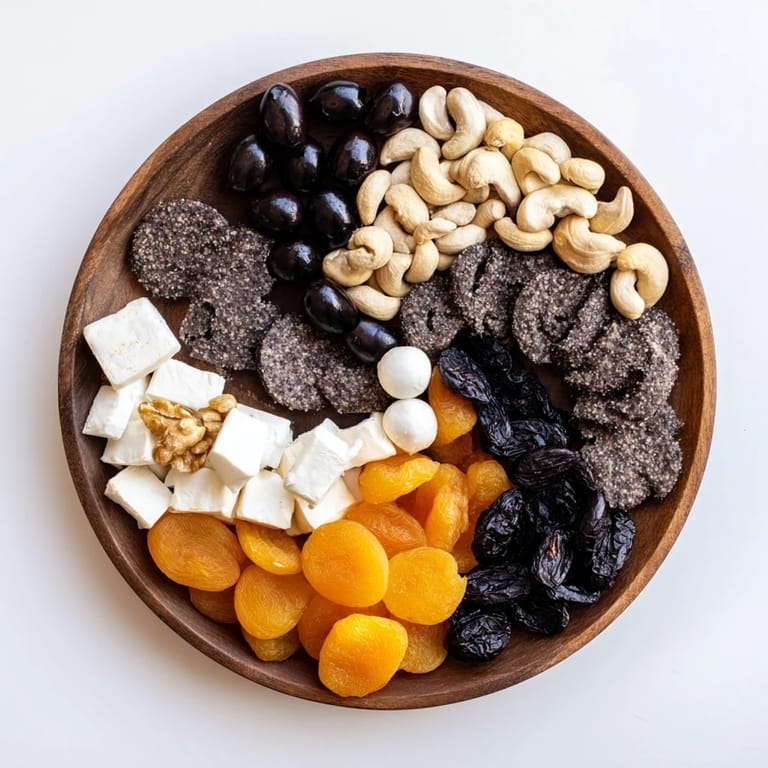
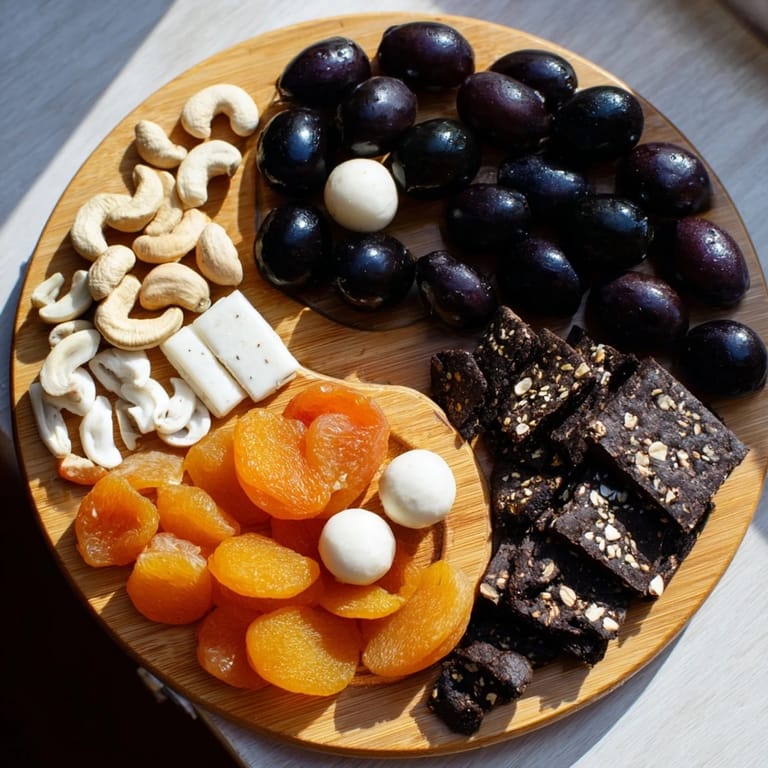
- Black olives, pitted: These are your dark foundation—choose ones that are meaty and brined deeply to anchor the visual drama and provide that necessary salty punch that makes people reach for the light side next
- Dark rye crackers: The texture matters here; look for ones substantial enough to hold toppings without crumbling, which keeps the board looking composed throughout service
- Aged balsamic-glazed mushrooms: If you can't find pre-made ones, quickly sauté sliced mushrooms in a touch of olive oil and a drizzle of balsamic vinegar—this adds umami depth that makes the dark side feel sophisticated
- Black grapes or blackberries: These bring sweetness to the dark side and create a visual jewel effect; the slight give when bitten contrasts beautifully with crisp crackers
- Dark chocolate squares: Choose 70% cacao or darker—the bitter notes are essential for balance and they should feel like a dessert surprise guests discover while eating
- White cheese: Goat cheese brings tang, brie offers creamy richness, and fresh mozzarella provides clean simplicity; choose based on your guests' preferences and how bold you want the light side to taste
- Rice crackers or water crackers: Keep these crisp right until serving; they're the neutral canvas that lets the cheese and nuts shine without competing
- Raw cashews or blanched almonds: These provide the crunch and richness the light side needs—raw varieties taste fresher and their pale color is essential for the visual contrast
- Dried apricots or white grapes: The apricots offer chewy sweetness and natural golden color, while white grapes provide a fresh, juicy note that feels lighter
- Honey: Just a light drizzle over the light side brings everything together and adds a subtle sweetness that guests will taste but won't quite identify
Tired of Takeout? 🥡
Get 10 meals you can make faster than delivery arrives. Seriously.
One email. No spam. Unsubscribe anytime.
Instructions
- Set your stage:
- Place your large round board or platter in front of you and take a moment to appreciate the blank canvas. This is your artistic moment. If it helps you feel more confident, lightly trace an S-shaped curve down the center using a small bowl or circular cutter as your guide—this gentle marking keeps everything balanced even if you're doing this intuitively.
- Build the dark side with intention:
- Start with the black olives, nestling them into one half with their pits removed so guests can eat freely. Add your dark rye crackers next, arranging them like stepping stones. Then layer in the balsamic mushrooms (their glossy finish will catch light beautifully), followed by the black grapes or blackberries tucked into gaps, and finally scatter the dark chocolate squares where they'll be discovered as delightful surprises. Step back frequently to make sure the arrangement feels balanced and full.
- Mirror beauty on the light side:
- Now create visual harmony on the opposite half with your white cheese—slice it into pieces or leave small cubes for texture variation. Add the rice crackers, spacing them so they're accessible but don't overwhelm the cheese. Tuck in the cashews or almonds, letting them cluster slightly for richness, then distribute the dried apricots or white grapes, creating warm and cool spots across the half. The honey drizzle comes last, just a few threads across the cheese to catch light and add shimmer.
- Add the philosophical touch:
- Take a single olive and place it in the center point of one S-curve, and place a single cashew or piece of white cheese in the center of the other curve. These tiny dots complete the yin-yang symbol and show your guests you understood the assignment. They'll appreciate this detail.
- Serve with presence:
- Bring the board to the table while the arrangement is fresh and perfect. Stand nearby for just a moment so people see it before diving in, and if you're the type, mention that each side is designed to taste better in combination—it shifts how people experience the board.
 Pin it
 There was a moment at a dinner I hosted when an older guest—someone who usually sits quietly—reached across and took one of the dark chocolate squares, then immediately grabbed a piece of goat cheese, and said 'oh, now I understand.' That's when this board stopped being about Instagram and became about connection. It made me realize that beautiful food is just an invitation for people to pay attention and taste more carefully.
The Art of Visual Balance
The yin and yang board works because it plays with contrast—not just in color but in flavor, texture, and feeling. The dark side feels rich and deep with its balsamic notes and bitter chocolate, while the light side feels fresh and bright with its creamy cheese and sweet fruit. This isn't accidental. When you arrange these ingredients consciously, you're actually teaching people's palates to understand balance. I've learned that the best boards aren't just pretty—they're thoughtfully composed so that moving from dark to light feels like a complete journey within a single bite.
Customization and Improvisation
Once you understand the principle of dark-light balance, you can improvise endlessly. Swap the specific cheeses for ones your friends love. Replace dark rye crackers with seeded grain ones if you prefer. In summer, I use fresh blackberries instead of dried grapes on the dark side, and in winter, I might add candied nuts or pomegranate arils for pop. The structure stays the same—your intuition fills in the details. I've even made versions with roasted vegetables on one side and raw on the other, or added cured meats to the dark side for a charcuterie twist. The magic isn't in specific ingredients, it's in respecting the visual principle and knowing your guests will taste better when food is presented this way.
When and How to Serve
This board shines as an elegant appetizer when you want to set a sophisticated tone without disappearing into the kitchen. I've served it at cocktail parties, small dinner gatherings, and even casual wine nights. The beauty of a no-cook board is that you can have it ready before anyone arrives, which means you get to be present with your guests instead of stressed. I've discovered that boards like this are best served with something to drink—sparkling white wine, a crisp rosé, or even sparkling water with fresh herbs—because the variety of textures and flavors on one board means people need something to cleanse between bites.
- Assemble no more than 30 minutes before serving to keep crackers crisp and presentation fresh
- If you're making this ahead, keep dark and light ingredients in separate containers and arrange just before guests arrive
- Consider the season and adjust your ingredients—lighter fruits in summer, warmer nuts in winter
 Pin it
 Every time I make this board, I'm reminded that food is conversation, and sometimes the most meaningful meals are the ones where people slow down and notice what they're eating. This little yin and yang teaches that lesson without saying a word.
Recipe Q&A
- → How do I create the yin and yang division on the board?
Use a small bowl or circular cutter as a guide to lightly mark an S-shaped curve down the center of the round board, dividing the platter into two contrasting sides.
- → Can I substitute the cheese or crackers used?
Yes, cheeses and crackers can be swapped according to personal preference or dietary restrictions without compromising the balance of flavors.
- → What nuts work best for the light side?
Raw cashews or blanched almonds complement the light side well, providing crunch and mild flavor contrast.
- → Is it necessary to include the dark chocolate squares?
Dark chocolate adds a rich, slightly bitter note that enhances the dark side's complexity, but it can be omitted if preferred.
- → What beverages pair well with this platter?
Sparking white wine or a light red wine pairs beautifully, enhancing the variety of tastes featured in the balanced arrangement.