 Pin it
 I discovered the magic of a cheese platter the night my neighbor casually mentioned she'd arranged one for a dinner party and people kept drifting back to it all evening, even after the main course. That stuck with me, so I started experimenting with simple arrangements, but everything felt a bit flat until I realized I could make it into something that told a story. The idea of a sundial came to me while sitting outside on a summer afternoon, watching shadows move across the table, and suddenly cheese and balsamic glaze felt like the perfect medium to capture that same sense of time standing still.
The first time I made this for people, I was honestly nervous about whether the sundial concept would work or just seem pretentious. But when my friend picked up a piece of cheese and traced the balsamic line with her finger, asking how I'd thought of it, I realized that creating something beautiful to share—even something simple—changes the entire mood of a gathering in ways food alone never quite does.
Ingredients
- Aged hard cheese (Parmigiano-Reggiano, aged Gouda, or Manchego): A thick wedge of about 150 g becomes the visual anchor; the harder and more crystalline the cheese, the better it catches light and holds the dramatic balsamic shadow.
- High-quality balsamic glaze: Use 3 tbsp of the real thing—cheap vinegar will taste thin and won't have that glossy, almost syrupy appearance that makes the shadow effect work.
- Roasted almonds, walnuts, pecans, and hazelnuts: A third cup of each creates enough variety that no two clusters feel identical; the mix of textures and subtle flavor differences keeps people reaching back.
- Dried cranberries (optional): 2 tbsp scattered through some nut clusters adds a jewel-like pop of color that breaks up the monotony of golden and brown tones.
- Fresh grapes, figs, or edible flowers (optional): These are your final flourish, added only if you want to lean into the artistic side even more.
Tired of Takeout? 🥡
Get 10 meals you can make faster than delivery arrives. Seriously.
One email. No spam. Unsubscribe anytime.
Instructions
- Set up your canvas:
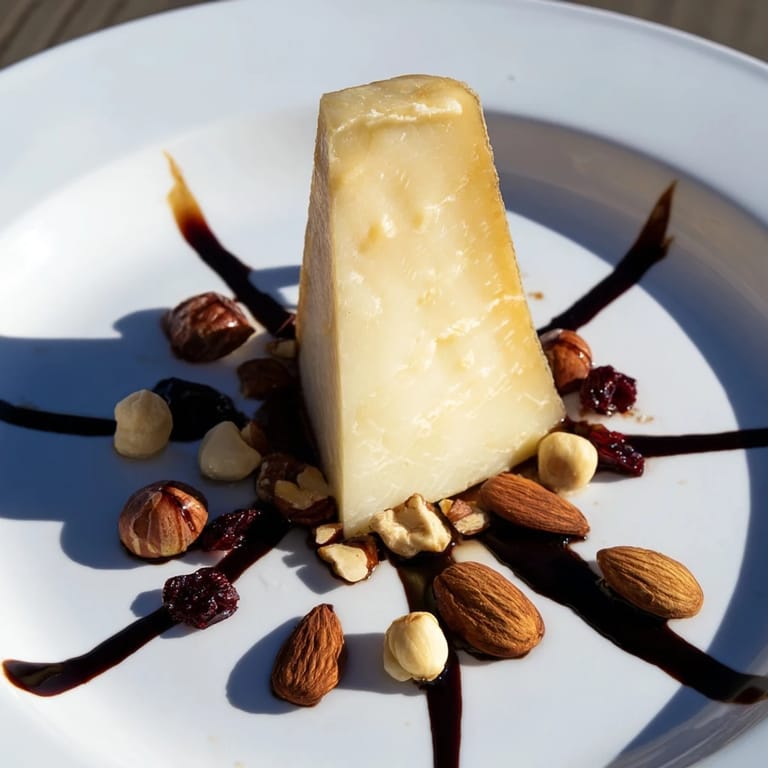
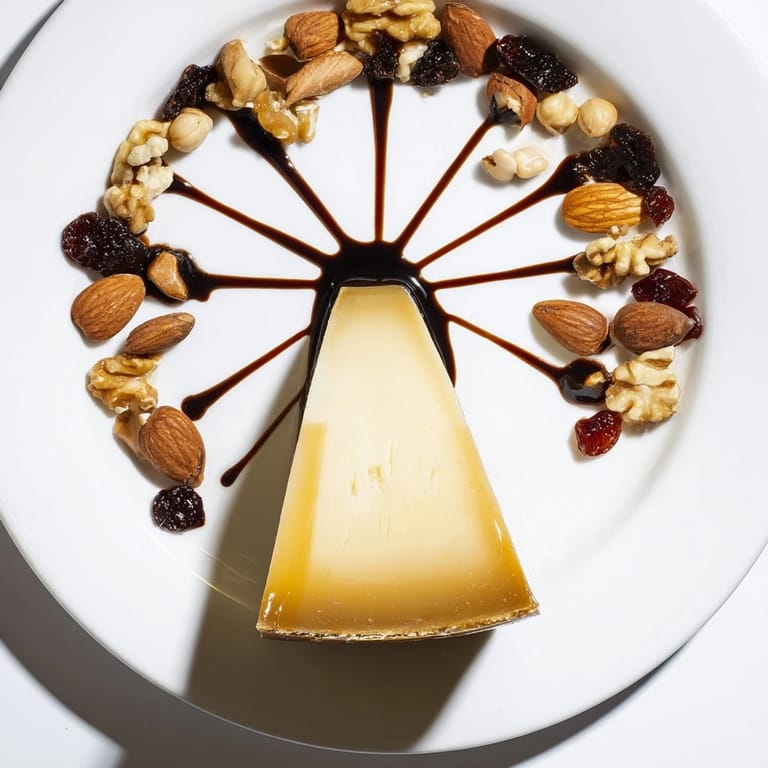
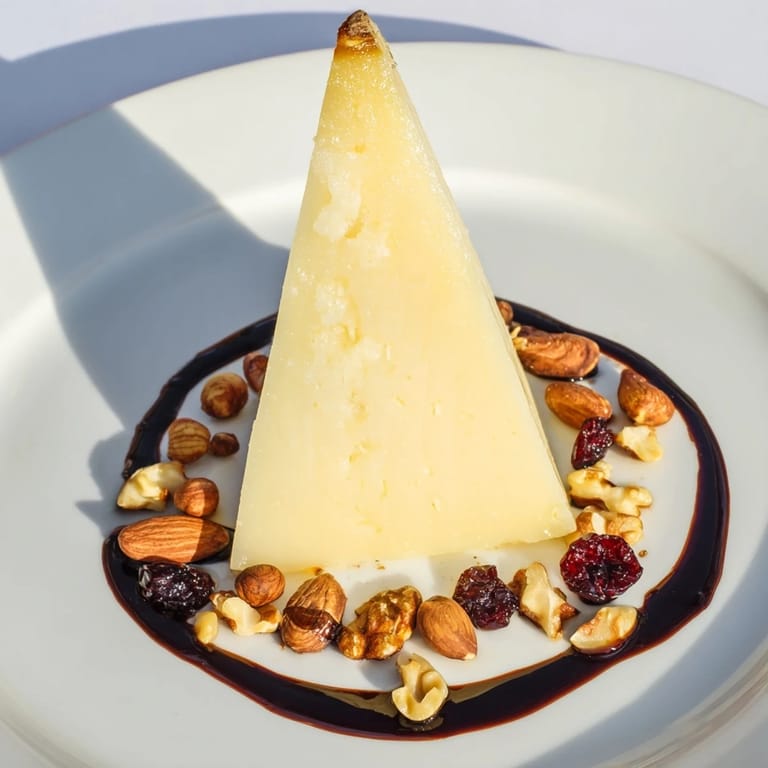
- Place a large round serving platter in front of you and position the cheese wedge upright in the very center, with the pointed end facing outward like a sundial's gnomon casting shadow. This positioning is everything—the platter becomes your clock face the moment the cheese sits just right.
- Paint the shadow:
- Using a small spoon, carefully drizzle a thick, deliberate line of balsamic glaze extending outward from the cheese wedge, letting it pool slightly and shine like a shadow frozen in time. You want it bold enough to see clearly but still refined enough to feel intentional.
- Arrange the hours:
- Distribute twelve small clusters of mixed nuts evenly in a circle around the cheese, spacing them like numbers on a clock face. Work slowly here, tweaking the spacing until it feels balanced; there's no rush, and small adjustments make the whole thing feel less random.
- Add the jewels:
- Tuck dried cranberries into some of the nut clusters for visual intrigue, creating little pockets of unexpected color that catch the eye.
- Final garnish:
- If using fresh grapes, figs, or edible flowers, scatter them in the negative space between clusters—these are optional but they're what transform a clever platter into something people actually want to photograph.
- Serve with grace:
- Set out small cocktail picks or forks so people can easily share bites without disrupting your careful arrangement.
 Pin it
 There's something quietly powerful about stepping back from a table and seeing people actually pause—not just to eat, but to notice something you've created. That moment when someone catches the sundial concept and smiles, or when they realize this is about more than just cheese, reminds me why I keep cooking for people.
The Art of Arrangement
Cheese platters are one of the last places where pure visual intention still matters. In a world of plated restaurant food and Instagram aesthetics, there's something refreshingly honest about sitting down and thinking through how colors, shapes, and negative space work together. The sundial concept works because it's simple enough to execute in fifteen minutes but clever enough that people notice you were thinking about them.
Choosing Your Cheese and Nuts
The magic of this platter lives in the contrast between the dense, crystalline bite of aged cheese and the varied crunch of different nuts. Aged Parmigiano-Reggiano has this salty, slightly sweet depth that plays beautifully against toasted almonds and candied hints in pecans. If you're sourcing ingredients, taste before you buy—one really good wedge matters more than trying to stretch your budget with something that'll taste flat. The nuts should smell fragrant and taste fresh; stale nuts will pull down the entire arrangement no matter how pretty it looks.
Making It Your Own
The sundial framework is forgiving enough that you can adapt it to whatever you have on hand. Use different nuts if hazelnuts aren't available, swap the balsamic for a dark honey drizzle if that's what you prefer, or add thin slices of cured meat between the nut clusters for a more substantial appetizer. I've seen versions with pomegranate seeds instead of cranberries, and others with candied walnuts that transformed the whole mood. The point isn't to follow the recipe exactly—it's to understand the structure and let your own kitchen instincts guide the details.
- Make this a few hours ahead and keep it covered in a cool place; the presentation holds up beautifully and you'll have one less thing to worry about during entertaining.
- If you're serving this at a wine and cheese gathering, pair it with dry white wine or a light Italian red like Chianti that won't overpower the subtle flavors.
- A vegan hard cheese works perfectly here if you're accommodating different diets—the visual impact doesn't change and most guests won't even notice.
 Pin it
 Every time someone leans in to look at this platter before taking a bite, you'll remember why serving food is really just about inviting people into a moment you've thought through. That's worth the fifteen minutes every time.
Recipe Q&A
- → What types of cheese work best for the sundial?
Firm, aged hard cheeses such as Parmigiano-Reggiano, aged Gouda, or Manchego offer structure and rich flavor ideal for the sundial center.
- → Can the nut clusters be customized?
Yes, a variety of roasted or spiced nuts can be used to add different textures and flavors to the nut clusters.
- → How is the balsamic glaze used?
The balsamic glaze is carefully drizzled in a thick line extending from the cheese wedge to create the visual effect of a sundial’s shadow.
- → Are there optional garnishes to enhance presentation?
Fresh grapes, figs, edible flowers, or microgreens can add color and elegance to the platter.
- → What pairings complement this centerpiece?
Dry white wines or light Italian reds such as Chianti complement the flavors and textures of the platter beautifully.