 Pin it
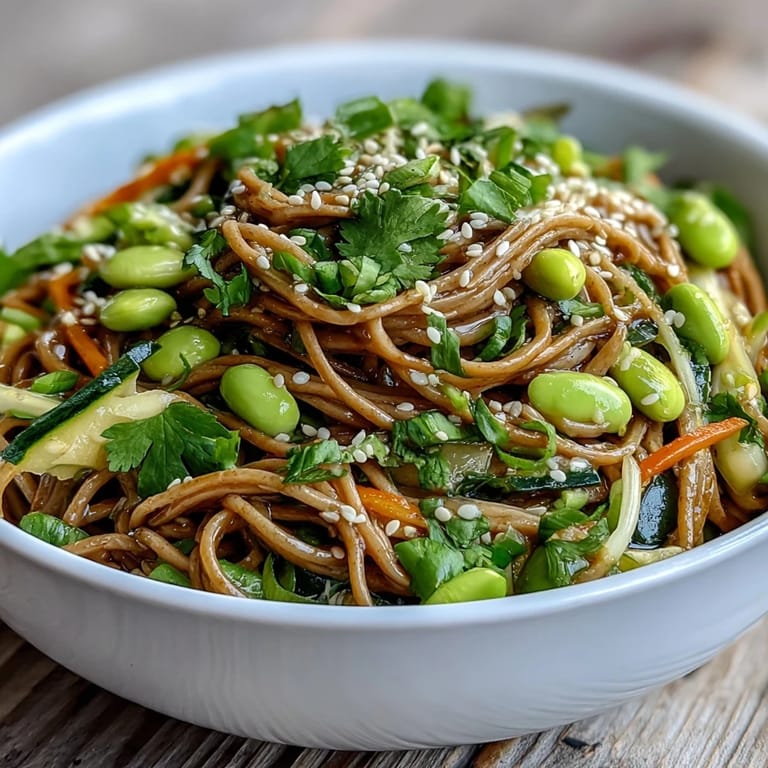
 My colleague dropped a container of soba noodles on my desk one summer afternoon, insisting I needed to try this bowl she'd been making all week. I was skeptical—how could something so simple be worth the fuss? But that first bite, with the chewy noodles cold against my tongue and that sesame dressing cutting through everything with a whisper of ginger, changed my mind entirely. It became my go-to lunch, the thing I'd prepare on Sundays when the heat made cooking feel impossible. Now it's the dish I crave when I want something that feels both indulgent and light.
I remember bringing this to a potluck where everyone seemed to be stressed about their contributions, and someone took one bite and just exhaled. They said it tasted like what they needed, not what they felt obligated to eat. That's stuck with me—this bowl has this way of feeling like care in vegetable form.
Ingredients
- 250 g dried soba noodles: Look for 100% buckwheat if you're avoiding gluten, though the blend versions cook beautifully too—just rinse them cold or they'll stick together stubbornly.
- 1 cup shelled edamame: Frozen works just fine and actually saves you the trouble of shelling; they thaw slightly as the noodles cook.
- 1 medium cucumber, julienned: A vegetable peeler creates ribbons faster than a knife if you're short on time, and they have a lovely texture.
- 2 medium carrots, peeled and julienned: Raw carrots stay crisp and add a natural sweetness that balances the salty dressing beautifully.
- 2 scallions, thinly sliced: These brighten everything up with a mild onion bite—don't skip them even if you think you don't like raw onions.
- 2 tbsp toasted sesame seeds: Toasted makes all the difference; raw ones disappear into the background, but toasted ones announce themselves with nutty warmth.
- 1/4 cup fresh cilantro or mint leaves: Optional but genuinely transformative—mint gives it a cool, garden-fresh quality that surprises people.
- 3 tbsp soy sauce: The backbone of the dressing; use tamari if gluten is a concern, and don't be tempted to reduce it.
- 2 tbsp rice vinegar: This adds brightness without harshness—regular vinegar tastes too aggressive by comparison.
- 1 tbsp toasted sesame oil: A little goes a long way; regular sesame oil tastes sharper, so the toasted version is worth seeking out.
- 1 tbsp tahini or smooth peanut butter: Tahini keeps it sesame-forward, but peanut butter works if that's what you have—it shifts the flavor slightly earthier.
- 1 tbsp honey or maple syrup: Just enough to round out the dressing without making it sweet; maple syrup adds a whisper of complexity.
- 1 tsp grated fresh ginger: Freshly grated makes a real difference—jarred ginger tastes tired by comparison.
- 1 small garlic clove, minced: One clove is enough; I learned this by overseasoning an entire batch and spending the next day tasting only garlic.
- 1 tbsp water: Use this to adjust the dressing to your preferred thickness—it should pour smoothly but coat the noodles.
Tired of Takeout? 🥡
Get 10 meals you can make faster than delivery arrives. Seriously.
One email. No spam. Unsubscribe anytime.
Instructions
- Bring the water to a boil and cook the soba:
- Follow your package instructions exactly because cooking times vary wildly depending on the brand. Drain them into a colander and immediately rinse under cold water, stirring gently with your fingers until they feel completely cool and separated.
- Blanch the edamame while you wait:
- Drop them into the same boiling water for 2–3 minutes just to warm them through and bring out their sweetness. Drain and set aside; they'll cool as you prepare everything else.
- Whisk the dressing into silky submission:
- Combine soy sauce, rice vinegar, sesame oil, tahini, honey, ginger, and garlic in a small bowl and whisk until completely smooth. Add water a teaspoon at a time until it reaches a consistency that feels pourable but still coats a spoon.
- Slice and julienne your vegetables with intention:
- Cut the cucumber and carrots into thin, even pieces—this takes five minutes but makes the final bowl feel restaurant-quality. Slice the scallions thinly so they disperse throughout rather than clumping together.
- Toss the noodles with half the dressing:
- This ensures every strand gets coated rather than just sitting in a puddle at the bottom of the bowl. It also prevents them from clumping as they cool further.
- Assemble each bowl like you're creating something worth looking at:
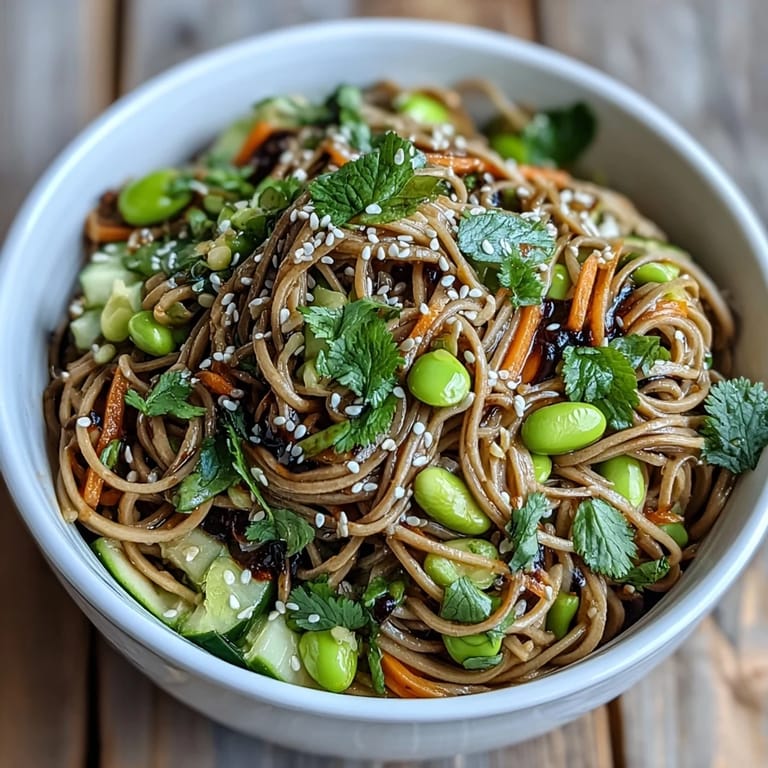
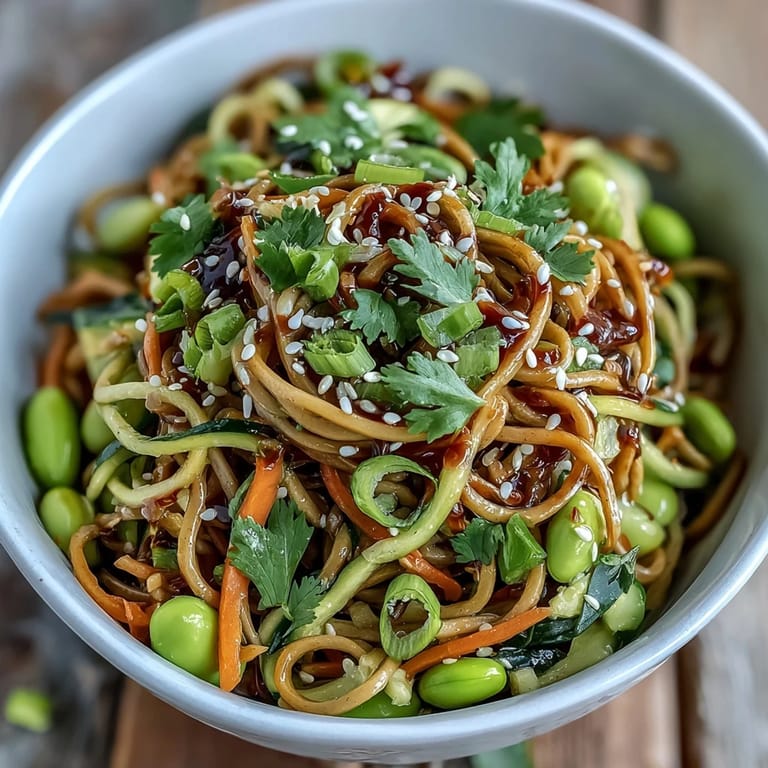
- Divide the dressed noodles among four bowls, then arrange edamame, cucumber, carrots, and scallions on top in scattered clusters. Drizzle the remaining dressing over everything and finish with sesame seeds and herbs.
- Serve immediately:
- This is best eaten fresh when the noodles still have a slight chew and the vegetables are crisp, though leftovers keep beautifully in the refrigerator for the next day.
 Pin it
 There's something about eating this bowl outside on a warm evening that makes everything feel simpler. The cool noodles, the crunch of vegetables, that warm sesame hug—it's the kind of meal that doesn't leave you feeling heavy but somehow completely satisfied.
Making It Your Own
This bowl is genuinely forgiving when it comes to substitutions. I've swapped in snap peas for cucumbers, added shredded beets for color, and thrown in roasted mushrooms when I wanted something more substantial. The dressing stays the same, which means you can play around with the vegetables without losing what makes this bowl special. One time I added grilled tofu and suddenly had a protein-packed dinner instead of a side dish, which opened up a whole new category of possibilities.
Storage and Make-Ahead Strategy
The noodles and vegetables keep separately in the refrigerator for up to three days, which means you can assemble this bowl fresh any morning without much effort. The dressing keeps for about a week in a jar, so I often make a double batch at the beginning of the week. The one thing that doesn't hold up well is the sesame seeds and herbs scattered on top—add those right before eating or they'll soften and lose their charm.
Serving Ideas and Pairing Thoughts
This bowl works equally well as a light lunch, a side dish alongside grilled fish, or the main event at a casual dinner. I've served it at potlucks, packed it for picnics, and eaten it straight from the bowl at my kitchen counter without apology. If you're looking for something to drink alongside it, chilled green tea echoes the Asian flavors, or a crisp white wine softens the savory sesame richness.
- For extra protein, top with grilled tofu, a soft-boiled egg, or leftover shredded chicken.
- Substitute or add snap peas, bell peppers, radishes, shredded beets, or roasted mushrooms depending on what's in your crisper drawer.
- Make it gluten-free by using 100% buckwheat soba noodles and tamari instead of regular soy sauce.
 Pin it
 This bowl reminds me that sometimes the most nourishing meals are the ones that ask the least of you. Make this when you need something quick, something healthy, something that tastes like you actually tried.
Recipe Q&A
- → Can I make this dish ahead of time?
Yes, you can prepare the noodles and vegetables up to 24 hours in advance. Store them separately in airtight containers in the refrigerator. Keep the dressing in a small jar and toss everything together just before serving to maintain the best texture.
- → What vegetables work best in soba bowls?
Julienned cucumber and carrots provide excellent crunch, but you can easily add bell peppers, snap peas, radishes, or shredded cabbage. The key is cutting vegetables into thin, uniform pieces so they blend well with the noodles.
- → How do I prevent soba noodles from sticking together?
After cooking, drain the noodles and rinse them thoroughly under cold water. This removes excess starch and stops the cooking process. Toss them immediately with a small amount of the dressing or sesame oil to keep them separated until serving.
- → Can I make the sesame dressing spicier?
Absolutely. Add sriracha, chili garlic sauce, or finely chopped fresh chili peppers to the dressing. Start with half a teaspoon and adjust to your preferred heat level. The spicy version pairs beautifully with the nutty buckwheat flavor.
- → Is this suitable for meal prep?
Perfect for meal prep. Portion the dressed noodles and vegetables into individual containers, keeping the garnish separate. The flavors actually improve overnight as the ingredients marinate together. Just add fresh herbs and sesame seeds before eating.