 Pin it
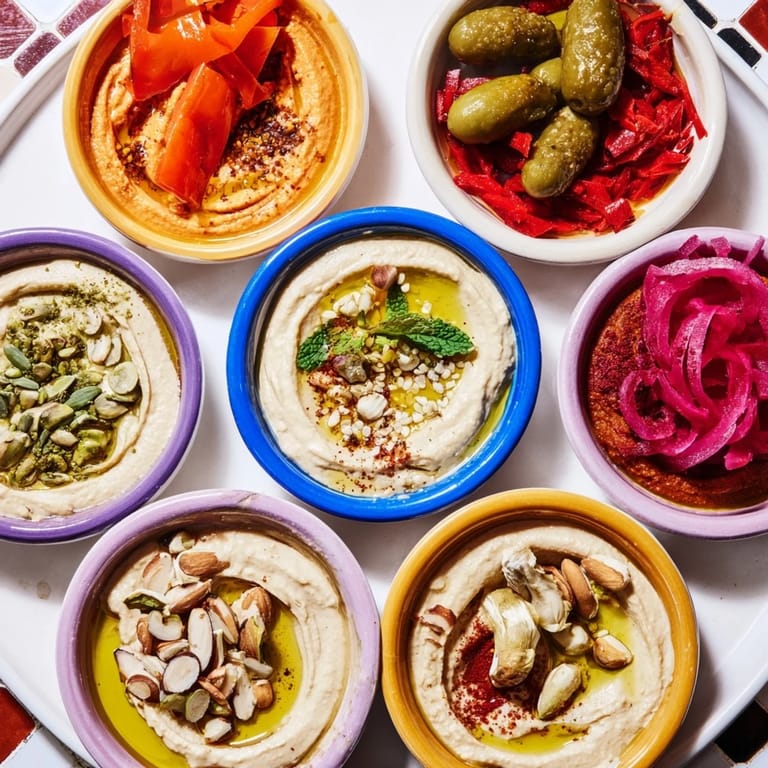
 I'll never forget the first time I discovered a Moroccan tile mosaic platter at a small riad in Marrakech. I was wandering through the medina when the smell of warm spices and preserved lemons pulled me into a hidden courtyard. The owner's daughter was arranging colorful bowls of dips and marinated vegetables on an enormous wooden board, and I watched, mesmerized, as she created what looked like edible art. That moment changed how I think about entertaining—it's not about one perfect dish, it's about creating a canvas of flavors that invites people to explore, taste, and share. Now, whenever I recreate this platter at home, I feel that same sense of wonder and possibility.
I made this platter for my sister's birthday dinner last spring, and I watched her face light up when she saw it. She walked around the table three times before sitting down, just taking in all the colors and textures. By the end of the night, the dips were nearly gone, the olives had disappeared, and my guests were still discovering new flavor combinations they'd never tried before. That's when I knew this recipe wasn't just about food—it was about creating moments where people slow down and truly taste what they're eating.
Ingredients
- Classic hummus: This creamy base is more than a dip—it's neutral enough to let other flavors shine but rich enough to feel substantial. I learned to add a pinch more tahini than most recipes call for; it creates that silky texture that makes people ask for your recipe.
- Baba ganoush: Roasted eggplant brings an earthy, almost smoky depth that anchors the platter. The key is charring the eggplant well—don't be shy with the flame.
- Muhammara (red pepper and walnut dip): This one surprised me the first time I made it. The walnuts add a subtle bitterness that balances the sweetness of roasted peppers beautifully.
- Labneh or Greek yogurt with zaatar: The creamy tang is essential—it cuts through the richness of everything else and refreshes your palate between bites. Drizzle it generously with good olive oil.
- Roasted red peppers: Buy the jarred kind if you're pressed for time; there's no shame in it, and they're genuinely good quality.
- Marinated artichoke hearts: These add a slightly tangy, briny note that feels sophisticated and prevents the platter from becoming too heavy.
- Moroccan carrot salad: Shredded carrots tossed with lemon juice, cumin, and fresh parsley—this is your bright, crunchy element that wakes up the palate.
- Preserved lemon slices: If you've never used these, they're a game-changer. They're intensely aromatic and bring an almost floral quality to the platter that makes people curious.
- Mixed Moroccan olives: Choose a variety of colors and sizes if you can—green, purple, black—each has a different flavor profile and texture.
- Quick-pickled red onions: These are deceptively important. They add sharpness and visual drama, and they're so easy to make that there's no reason to skip them.
- Cornichons or baby gherkins: These tiny pickles are adorable and they add a crisp, refreshing crunch that cuts through rich dips perfectly.
- Roasted almonds and pistachios: Unsalted is key here—you want people to taste the nut, not just salt. They add texture and substance.
- Toasted sesame seeds: Toast these yourself if you have time. The difference between fresh-toasted and pre-toasted is the difference between a good platter and one that tastes like it took effort.
- Baguette and mini pita breads: Toast the bread while you're assembling everything else. Warm bread is always better than room temperature.
- Pomegranate seeds, fresh mint, and cilantro: These are your final flourish—they add color, freshness, and a living quality to the platter that makes it feel like it was just made.
- Sumac: A pinch of this tart spice scattered across the top brings everything into focus. It's not a dominant flavor, just a whisper that says you know what you're doing.
- Extra virgin olive oil: Use your best bottle for the final drizzle. This is the detail that transforms a good platter into one people remember.
Tired of Takeout? 🥡
Get 10 meals you can make faster than delivery arrives. Seriously.
One email. No spam. Unsubscribe anytime.
Instructions
- Prepare your dips and spreads:
- Make or gather all your dips first—hummus, baba ganoush, muhammara, and labneh. If you're making them from scratch, do this a day ahead if you can; the flavors deepen and meld overnight. Spoon each into its own small colorful bowl or ramekin. This isn't just practical; it's the foundation of your mosaic. Take a moment to appreciate how each dip has its own personality and color.
- Arrange your supporting players:
- Place marinated vegetables, pickles, olives, nuts, and seeds in their own separate bowls. This step might feel tedious, but it's actually meditative—you're organizing your flavors, creating rhythm and balance on the board before you even place it down.
- Prepare your breads:
- Slice your baguette on a slight diagonal—thinner slices feel more elegant. Brush lightly with olive oil and toast in a 375°F oven for about 5 minutes until golden and just crispy. Warm your mini pita breads in the same oven or wrap them in a damp kitchen towel and let them steam gently. Warm bread changes everything about this experience.
- Begin your mosaic:
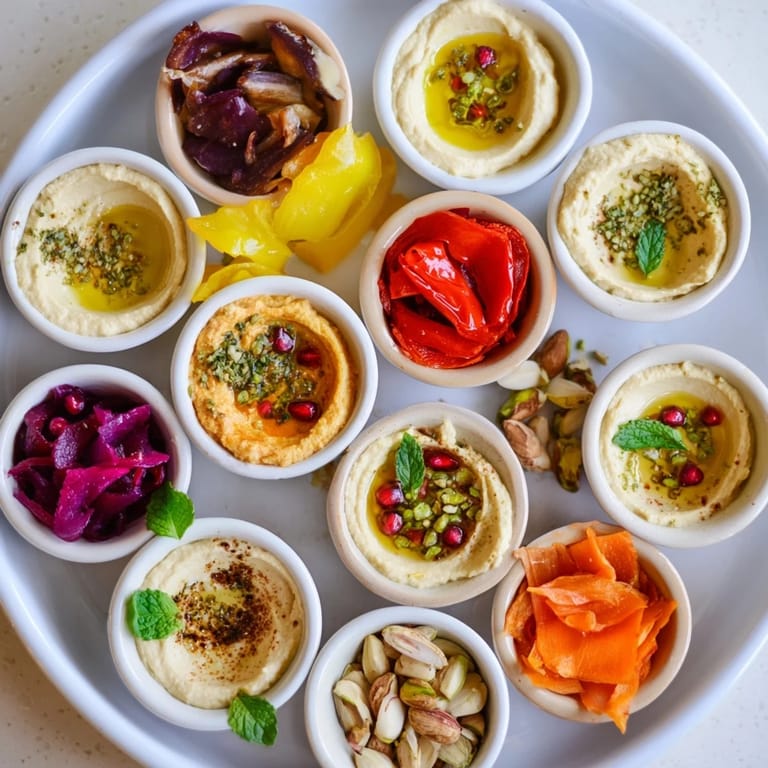
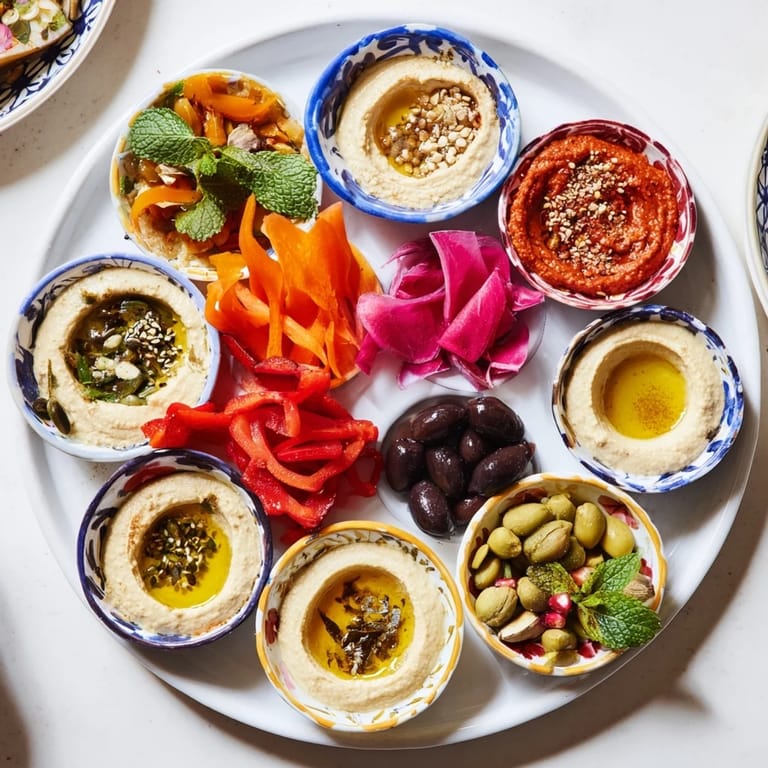
- Find your largest serving board or tray. Start by placing your largest bowls (the dips) first, arranging them in a loose pattern that feels balanced to your eye. Don't overthink this—trust your instinct about what looks good. Leave strategic gaps between bowls.
- Fill the negative space:
- Now comes the fun part. Fill in the gaps with piles and clusters of vegetables, olives, nuts, and pickles. Think of yourself as an artist. Create little mountains of pistachios, arrange olive clusters, lean artichoke hearts against the bowls. Vary the heights and textures so your eye travels around the board.
- Add the living garnishes:
- Scatter pomegranate seeds first—they're jewels on a crown. Then sprinkle fresh mint and cilantro leaves across the board, tucking them into gaps and resting them against bowls. This is when the platter comes alive.
- The final touch:
- Drizzle extra virgin olive oil generously over the dips and across some of the vegetables. Dust lightly with sumac. Arrange toasted bread slices around the edges or standing upright in a glass or bread holder. Step back and look at what you've created.
- Serve with intention:
- Bring the platter to the table and encourage your guests to explore. Give them small plates and tell them there's no right way to eat this—mix and match, be adventurous, discover their own favorite combinations.
 Pin it
 Last summer, my friend Sarah brought this platter to a dinner party at my house, and I watched my skeptical teenager—the one who usually refuses to eat anything unfamiliar—carefully craft his perfect bite: a piece of warm pita, a dab of baba ganoush, a preserved lemon slice, and a few pomegranate seeds. He closed his eyes while he ate it. That's when I understood that this platter isn't just about feeding people; it's about giving them permission to be curious and adventurous with food in a low-pressure way.
The Art of Building Flavor Combinations
This platter teaches you something important about flavor balance if you pay attention. Notice how the acidity of the pickled onions and preserved lemons brightens everything they touch. Watch how the nutty earthiness of the baba ganoush becomes even more complex when you pair it with the slightly sweet muhammara. The creamy dips act as canvases for the vegetables to shine, and the bread is the vehicle that lets you taste multiple flavors at once. As you assemble and serve this, you're really creating a flavor education for anyone who eats it. They're learning how to think about food in a more sophisticated way, even if they don't realize it.
Making It Your Own
Here's what I've discovered: this platter is beautifully forgiving and endlessly customizable. When blood oranges are in season, I add thin slices—they add a bright, unexpected citrus note. In winter, I include dried apricots and cranberries for sweetness and color. When I want to make it feel more substantial, I add crumbled feta or grilled halloumi. Some people think a recipe should be rigid, but this one is more like a framework for your own creativity. The only real rule is that you need balance—bright and rich, creamy and crunchy, familiar and surprising. Get that balance right, and everything else falls into place.
The Magic of Presentation
There's a reason Moroccan cuisine has always used small bowls and beautiful platters as serving vessels—presentation isn't superficial, it's part of the experience. When food is beautiful, people slow down. They look before they taste. They become more intentional about their choices. That's why I spend time on the visual arrangement of this platter. The colors matter, the textures matter, the gaps matter. A platter that looks like thought went into it tastes better, even if the ingredients are identical to one that was thrown together haphazardly. This is kitchen wisdom that applies far beyond this single recipe.
- Use small colorful bowls if you have them—clear glass, ceramic, terra cotta all add visual interest
- Keep the arrangement loose and organic; too symmetrical feels sterile and misses the point of a mosaic
- Always taste your dips and vegetables at room temperature before guests arrive to make sure the seasoning is perfect
 Pin it
 This platter has taught me that sometimes the most memorable meals aren't the ones with a single perfect main course. They're the ones where people get to be creators, where they build their own experience and discover flavors they didn't know existed. That's a gift you can give the people you love.
Recipe Q&A
- → What ingredients create the vibrant colors in this platter?
The colorful dips like muhammara and baba ganoush, along with marinated roasted red peppers, preserved lemons, pomegranate seeds, and fresh herbs, combine to create the visual appeal.
- → Can this platter be made gluten-free?
Yes, by serving with gluten-free crackers instead of traditional bread, the platter remains gluten-free.
- → How can I make a vegan version of this platter?
Simply replace labneh with plant-based yogurt alternatives and ensure any dips do not contain dairy or honey.
- → What nuts and seeds are included in the platter?
The platter features roasted almonds, shelled pistachios, and toasted sesame seeds for added crunch and flavor.
- → How should the platter be arranged for serving?
Arrange small bowls of dips, marinated vegetables, olives, and nuts tightly on a large tray to mimic a colorful mosaic pattern, garnished with herbs and pomegranate seeds.
- → Are there any recommended pairings for this platter?
Moroccan mint tea or a crisp white wine are excellent beverage pairings to complement the flavors.