 Pin it
 I'll never forget the moment I decided to turn a simple vegetable platter into something magical. It was a summer garden party at my neighbor's house, and I wanted to bring something that would make people smile the moment they walked in. I remembered seeing monarch butterflies dancing through her garden just weeks before, and that image sparked an idea—what if I could recreate those beautiful wings on a platter using the vibrant colors of fresh vegetables? That afternoon in my kitchen, arranging oranges and blacks into graceful wing shapes, I realized I wasn't just making an appetizer. I was capturing a moment of nature's artistry on a plate.
The first time I made this butterfly platter, my eight-year-old daughter helped me arrange the olives and grapes. She was so delighted by the transformation—watching random vegetables become a creature with wings—that she asked if we could make "butterfly platters for every party forever." That's when I knew this wasn't just a recipe; it was a memory in the making. Her little hands placing each black grape, her focused concentration, the joy on her face when we added the final touches—that's what this dish is really about.
Ingredients
- Sweet Potato (1 large, thinly sliced and roasted): This is your bold orange foundation. Roasting caramelizes the edges and brings out natural sweetness. Slice them thin—about a quarter-inch—so they're tender enough to grab easily but still hold their shape beautifully.
- Carrot (1 large, peeled and sliced into thin rounds): The bright, almost neon orange of fresh carrots is non-negotiable here. They add that cheerful pop of color and a satisfying crunch that makes the platter interactive.
- Orange Bell Pepper (1, deseeded and sliced into strips): Unlike carrots, bell peppers stay raw and offer that sweet, juicy bite. Strip them lengthwise so they're elegant and easy to grab.
- Cheddar Cheese (1 cup, cubed): Sharp cheddar works better than mild here—it has character and stands up to the bold vegetables. Cut into half-inch cubes so they nestle nicely between the other elements.
- Black Olives (1 cup, pitted and halved): These are your wing edge. Use kalamata or Castelvetrano olives depending on whether you want deep drama or a lighter touch. Pitting them yourself ensures better flavor than pre-pitted.
- Black Grapes (1 cup, halved): Halving them creates little half-moons that fit perfectly into the wing pattern. They add a glossy, jewel-like quality and a hint of sweetness.
- Black Sesame or Black Rice Crackers (1/2 cup): These break up the monotony and add texture. Black sesame especially brings an earthy, toasted flavor that complements everything else.
- Balsamic Glaze (1/4 cup, for garnish): A light drizzle after arrangement adds sophistication and helps define the wing patterns. Don't overdo it—a few strategic marks are more elegant than drowning the platter.
- Cucumber (1, sliced lengthwise into sticks): This forms the butterfly's body. The pale green against the vibrant oranges and blacks creates perfect contrast and a cool, refreshing element.
- Cream Cheese (1/4 cup, softened): Think of this as your edible glue and your detail work. It adheres elements to the platter and creates those authentic white spots on monarch wings. Soften it slightly so it's pipeable but not runny.
- Fresh Dill or Microgreens (optional, for antennae): This is the flourish that transforms the design from simple to whimsical. A small tuft at the top becomes antenna that catch the light.
Tired of Takeout? 🥡
Get 10 meals you can make faster than delivery arrives. Seriously.
One email. No spam. Unsubscribe anytime.
Instructions
- Prepare Your Canvas:
- Start by roasting your sweet potato slices at 400°F for about 15 minutes until they're tender and slightly caramelized at the edges. While they cool, slice your carrot into thin rounds, cut your bell pepper into strips, and cube your cheese. Halve your olives and grapes. This prep work is calming—I like to put on music and take my time. Everything should be ready and waiting before you touch the platter.
- Create the Body:
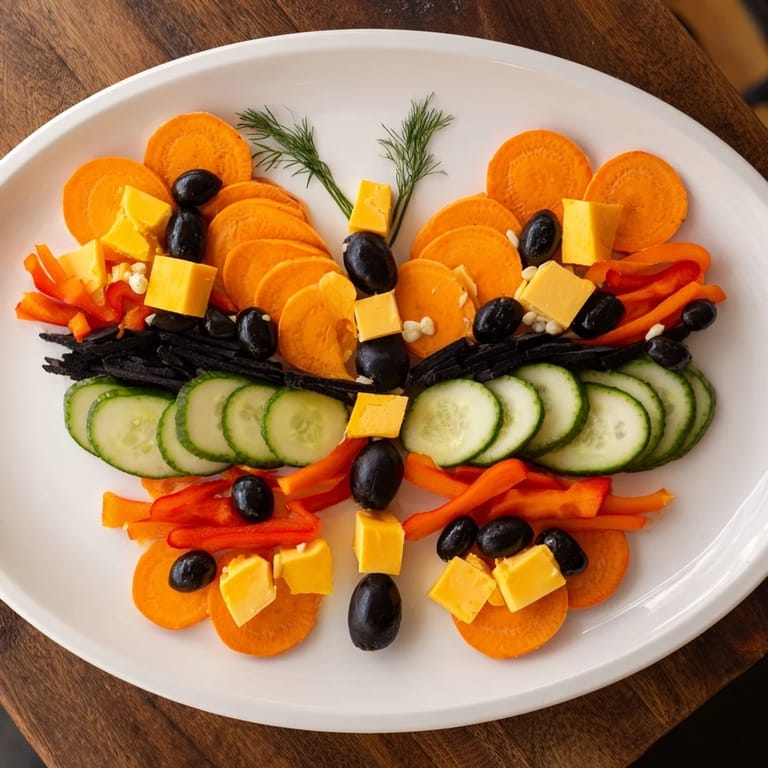
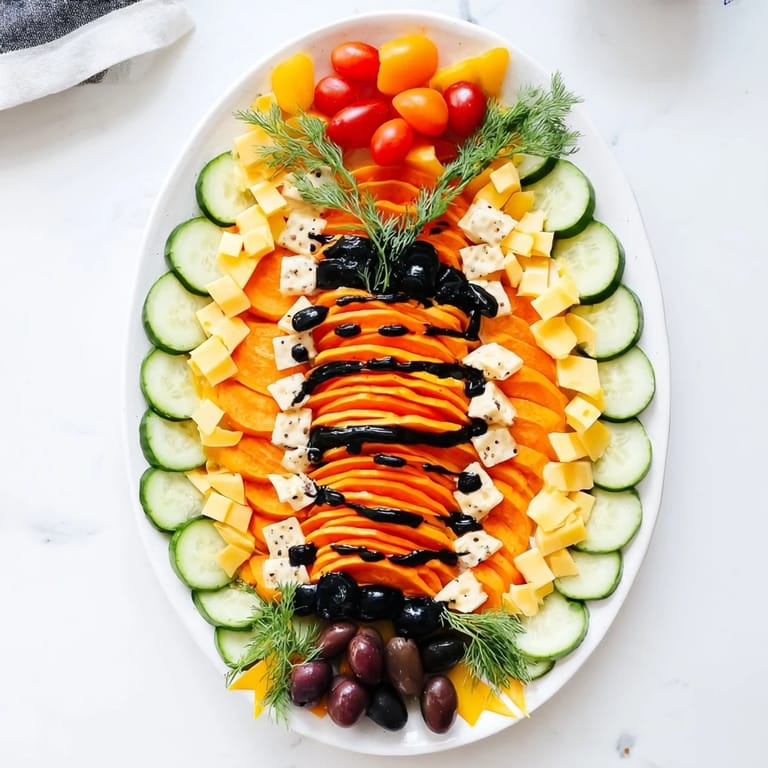
- Place your large platter in front of you—oval or rectangular works best. Lay cucumber sticks down the center lengthwise, creating a clear centerline. These sticks are your butterfly's thorax and abdomen. Don't be shy about the amount; they should be clearly visible as a deliberate path.
- Build the Upper Wings:
- On one side of the cucumber body, begin arranging your orange elements in a fanned, symmetrical pattern. Think of how a monarch's wings spread: larger sections toward the top, tapering as you move toward the body. Roasted sweet potato can form the main section, with carrot slices and bell pepper strips filling in. Intersperse cheddar cubes as you go. There's no one right way—trust your eye and your sense of balance.
- Mirror the Lower Wings:
- Repeat the exact same arrangement on the opposite side of the cucumber body. This symmetry is what makes it a butterfly and not just a pile of vegetables. Step back frequently and adjust. Rearranging is part of the process, and it's genuinely meditative.
- Add the Black Details:
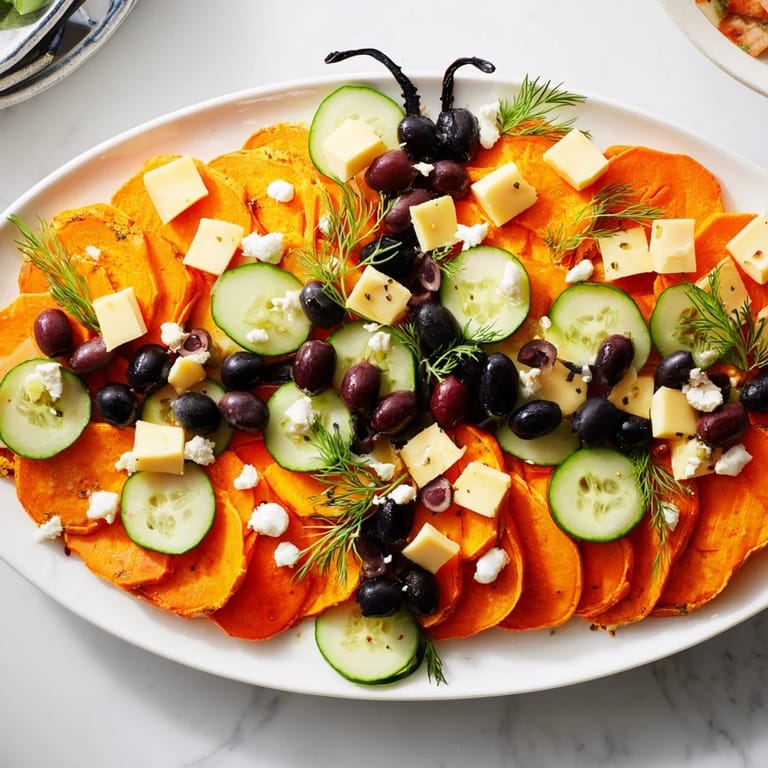
- Now fill the spaces between your orange sections with your black elements. Place olives and grapes to create the signature black edge patterns of a monarch wing. Use crackers to add texture. Think of this like painting shadows—you're creating definition and depth. The black should frame the orange without overwhelming it.
- The Signature Spots:
- Take a small spoon and dot tiny amounts of softened cream cheese along the black edges and scattered across the wing sections. This is where patience pays off. Small, intentional dots look sophisticated; random globs look accidental. These white spots are unmistakably monarch.
- The Final Glaze:
- With a steady hand, drizzle balsamic glaze very sparingly over the platter. A few deliberate lines are more striking than coverage. The dark glaze emphasizes patterns and adds a finishing touch of elegance.
- Add Antennae:
- Top the cucumber body with a small cluster of fresh dill or microgreens. These are your butterfly's antennae, and they bring the whole design home. A single delicate touch transforms the entire piece.
- Serve with Intention:
- Place the platter on your table where it's clearly visible when guests arrive. Encourage them to appreciate it before diving in. Tell them it's a butterfly if they're confused—once they see it, they can't unsee it. Watching people discover the design themselves is half the pleasure.
 Pin it
 What moved me most about this recipe wasn't the compliments on its beauty—though there were plenty. It was watching a group of adults at a dinner party lean in, study the design like they were looking at art, and then laugh delightedly when they understood what they were seeing. One woman told me it reminded her of taking her kids on a nature walk to see monarchs. Another guest asked if they could photograph it before eating because it felt too pretty to destroy. In that moment, I realized that food isn't just fuel or even flavor. Sometimes it's a bridge between people and the natural world, a reason to pause and marvel at something beautiful.
Making It Your Own
This recipe is a canvas, not a rulebook. I've swapped the sweet potato for roasted butternut squash when I wanted a deeper orange, and used orange cherry tomatoes halved lengthwise for a brighter, tangier note. Some seasons I add thin shards of purple carrot or roasted beet slices to introduce jewel-tone contrast—it takes the design from striking to absolutely breathtaking. The beauty of a composed platter is that you can adjust based on what's fresh at your market or what your guests can eat. If someone's avoiding dairy, just skip the cheddar and cream cheese and let the vegetables sing. Gluten-free crackers are genuinely indistinguishable from regular ones here, so anyone with restrictions can participate fully.
Timing and Temperature
One thing I learned after making this several times is that temperature control matters more than you'd think. Your roasted sweet potato should cool completely before arranging so it doesn't wilt everything around it. Your cream cheese should be soft enough to pipe but not so warm that it liquefies. Room-temperature vegetables taste better and hold their structure than cold ones straight from the refrigerator. If you're making this for a party that stretches over an hour or more, assemble it as close to serving time as possible, but have all your components prepped and waiting. The last thing you want is to be frantically slicing carrots while guests are arriving.
Pairing and Presentation
This platter sits somewhere between appetizer and showpiece, which means pairing it with the right beverages and setting elevates the whole experience. A crisp white wine—Sauvignon Blanc or Albariño—cuts through the richness of the cheese and complements the fresh vegetables beautifully. Sparkling water with lemon or lime is perfect if you're hosting a non-alcoholic event and still want something celebratory. Serve it on your loveliest platter, ideally one with some height or dimension rather than something flat and plain. The platter is part of the presentation. Clear the area around it so it's the focal point when people enter the room. Let it sit at room temperature rather than on ice; vegetables are happiest that way and they photograph beautifully in natural light.
- If your event is outdoors, assemble the platter indoors and carry it out just before serving to prevent the vegetables from wilting in direct sun
- Guests will want to build their own bites, so arrange components in a way that makes grabbing easy—nothing should require awkward reaching or dismantling
- Have small plates and napkins nearby; this is a hands-on eating experience and people appreciate being able to dab their fingers
 Pin it
 Making a butterfly platter is about more than creating an appetizer—it's about inviting people to slow down and marvel at something beautiful before they eat it. Every time I make one, I'm reminded that the best meals feed more than just the body.
Recipe Q&A
- → What ingredients create the orange sections of the wings?
Sweet potato slices, carrots, orange bell pepper strips, and cheddar cheese cubes form the vibrant orange elements on the wings.
- → How are the black wing edges formed?
Black olives, black grapes, and black sesame or rice crackers are arranged to mimic the black edges and spots of monarch butterfly wings.
- → What is the purpose of the cucumber in this platter?
Sliced cucumber sticks create the butterfly’s central body line, providing structure and contrast to the wing elements.
- → How is the authentic spotting on the wings achieved?
Small dots of cream cheese are placed along the black edges to simulate the white spots seen on monarch butterfly wings.
- → Can this platter accommodate dietary preferences?
This platter is vegetarian and can be made gluten-free by selecting appropriate crackers. Dairy is present from cheddar and cream cheese.
- → Are there suggested variations for the orange elements?
Alternatives like roasted butternut squash or orange cherry tomatoes can be used for added flair and color variation.