 Pin it
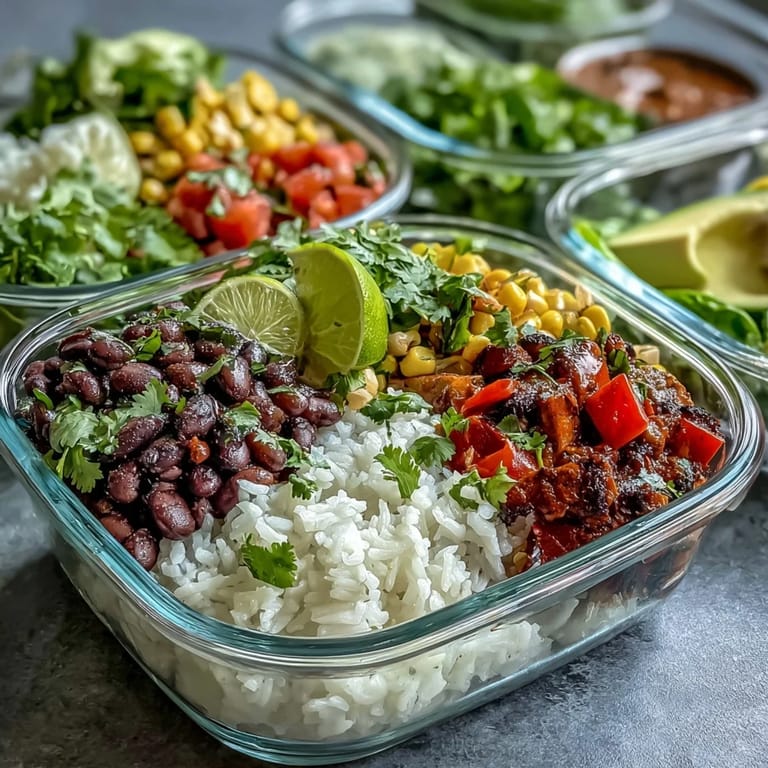
 Sunday afternoons in my kitchen smell like cilantro and lime when I'm prepping these burrito bowls. What started as a desperate attempt to eat healthier during the week turned into my secret weapon for actually sticking to meal prep—everything stays fresh because I keep the components separate until the moment I'm ready to eat. My roommate used to laugh at my color-coded containers, but now she's asking me to make extra batches for her.
I made these for the first time when a friend was coming to stay for a week and I wanted to prove I could feed us both without ordering takeout every night. Watching her face light up when she realized each component was already portioned and ready to mix—that's when I knew this method actually worked. Now whenever someone mentions being stuck in a lunch rut, this is what I suggest.
Ingredients
- Rice (2 cups cooked): White rice cooks faster and tastes mild, brown rice adds nuttiness and fiber, quinoa works beautifully if you're skipping gluten—I usually cook it the night before so it cools completely.
- Black or pinto beans (1 can): Drain and rinse them thoroughly to cut the sodium and reduce that metallic canned taste nobody talks about.
- Protein—chicken, ground meat, or tofu (1 lb equivalent): Pick what you'll actually eat for four days straight; I learned this the hard way by prepping ground beef I got tired of by day two.
- Red bell pepper (1, diced): Stays crisp longer than other peppers and the sweetness balances the spices perfectly.
- Corn kernels (1 cup): Frozen corn works just as well as fresh and honestly tastes better in these bowls.
- Cherry tomatoes (1 cup, halved): These hold up better than regular tomatoes; store them separately or they'll make everything damp.
- Red onion (1/2, finely diced): The sharpness cuts through the richness of cheese and sour cream.
- Shredded lettuce or romaine (1 cup): Keep it completely dry before storing or it turns into mush by day three.
- Cheese blend (1 cup shredded): Store in its own small container so you can grab exactly how much you want each day.
- Salsa or pico de gallo (1/2 cup): Make it fresh or use jarred—either way, keep it separate until assembly.
- Sour cream or Greek yogurt (1/2 cup): Greek yogurt lasts longer and adds protein without the guilt.
- Avocado (1): Slice this the morning you're eating it or it'll turn brown; I learned to prep it last and store it in a separate tiny container with plastic wrap touching the surface.
- Fresh cilantro (1/4 cup chopped): This wilts quickly, so chop it fresh on assembly day if you can.
- Olive oil, cumin, chili powder, smoked paprika (1 tbsp oil, 1 tsp each spice): These seasonings are non-negotiable—they're what make this taste like actual food instead of health food.
Tired of Takeout? 🥡
Get 10 meals you can make faster than delivery arrives. Seriously.
One email. No spam. Unsubscribe anytime.
Instructions
- Cook your grain:
- Follow the package directions for rice or quinoa, then spread it on a plate to cool completely before storing. Cold rice is actually better for meal prep because it won't steam your other ingredients.
- Season and cook your protein:
- If you're using chicken, season the breasts with cumin, chili powder, smoked paprika, salt, and pepper, then sear them in a hot skillet with olive oil until the internal temperature hits 165°F—about six minutes per side. For ground meat, brown it in the skillet, breaking it apart as it cooks, then drain any excess fat and season it generously. If you're going the tofu route, press it between paper towels for a few minutes to remove moisture, cube it, toss with oil and seasonings, then pan-fry until the edges are golden and crispy.
- Warm the beans with intention:
- Heat them briefly in a skillet with a splash of olive oil and a pinch of cumin and chili powder so they taste seasoned, not like they came straight from a can. Two to three minutes is all you need.
- Prepare all your vegetables:
- Dice the bell pepper, halve the cherry tomatoes, finely chop the red onion, and shred your lettuce. The smaller and more uniform your cuts, the more evenly everything distributes in your containers.
- Assemble your meal prep containers strategically:
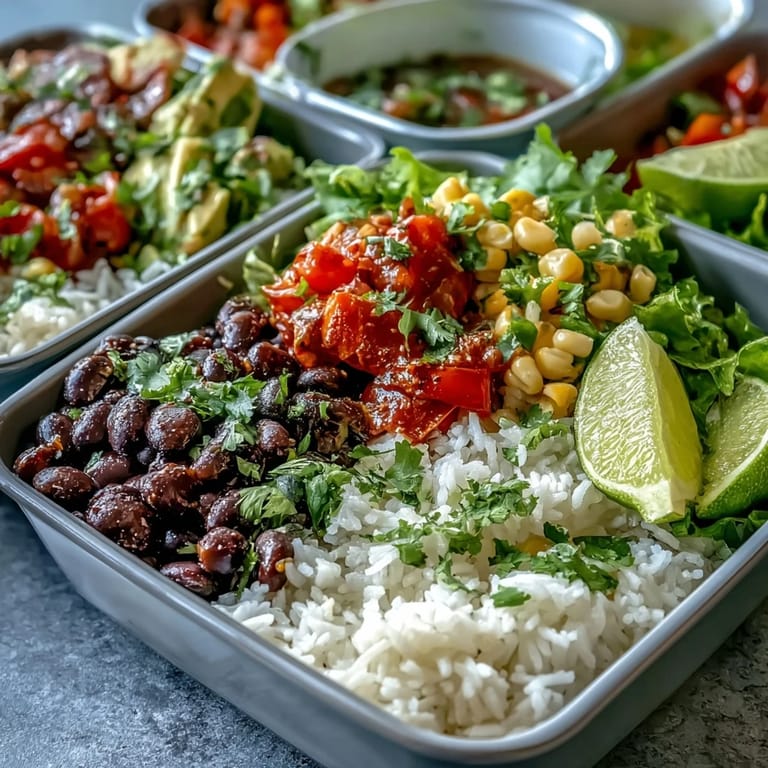
- Layer rice on the bottom of each airtight container, then add beans, then your cooked protein, then the heartier vegetables like bell pepper and corn. Keep the lettuce, tomatoes, avocado, and all toppings in separate small containers so nothing gets soggy. Store these in the fridge for up to four days.
- Assemble and eat:
- When you're ready for lunch, reheat the base components if you want, then pile in your fresh vegetables and toppings. The warm and cold contrast is actually what makes these bowls taste so good.
 Pin it
 These bowls became my answer to a question nobody asked me: how do you eat well when you're exhausted by Wednesday and frozen pizza is calling your name? There's something quietly powerful about opening your fridge and seeing four meals already waiting, containers lined up like little promises to your future self.
Building Flavor Without Monotony
The genius of this bowl is that it tastes completely different depending on what you add and in what proportion. Monday you might go heavy on the cilantro and lime juice, Tuesday could be sour cream and salsa focused, and by Friday you're experimenting with hot sauce. The base is neutral enough that your mood controls the experience, not the food itself.
Storage Strategies That Actually Work
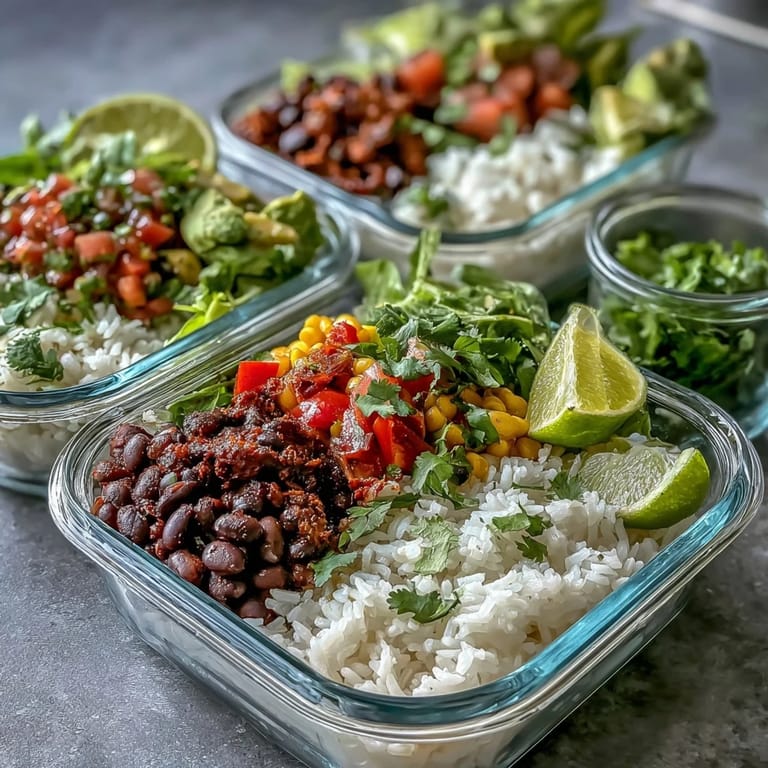
I've learned that airtight containers are genuinely worth the investment—cheap plastic ones let moisture in and your rice tastes like the inside of a lunchbox by day three. Glass containers with good seals keep everything fresher longer. The real trick is never stacking wet ingredients on top of dry ones; let gravity and condensation be your enemies, not your allies.
Protein Variations and Why They Matter
Choosing your protein is personal, and honestly, it changes how the entire bowl tastes and feels to eat. Chicken is lean and mild, ground meat adds richness, and tofu becomes surprisingly satisfying when you season it properly and get it crispy. I've rotated through all three and they're equally good—it just depends on what your body is craving that week.
- Season your tofu aggressively or it'll taste like nothing; it's a blank canvas that needs your help to shine.
- Ground meat tastes better if you brown it properly without crowding the pan—let each piece make contact with the heat.
- Chicken stays juicier if you don't cook it past 165°F internally; one degree more and you're eating rubber.
 Pin it
 These bowls have become my favorite way to prove that eating well doesn't require cooking every single day. There's something deeply satisfying about reaching for tomorrow's lunch and knowing exactly what you're getting.
Recipe Q&A
- → How long do burrito bowl components stay fresh in the refrigerator?
Properly stored in airtight containers, the rice, beans, and cooked protein stay fresh for 4-5 days. Fresh vegetables like lettuce and tomatoes are best used within 3-4 days, while toppings like cheese and salsa last up to a week. For optimal texture, store components separately and combine just before eating.
- → Can I freeze burrito bowl components for longer storage?
Yes, the rice, seasoned beans, and cooked proteins freeze beautifully for up to 3 months. Let them cool completely before transferring to freezer-safe containers. Fresh vegetables and toppings like lettuce, tomatoes, and avocado don't freeze well—prepare these fresh when reheating your bowls.
- → What's the best way to reheat burrito bowls without drying them out?
Sprinkle a tablespoon of water over the rice and beans before microwaving, covering loosely to trap steam. Heat in 30-second intervals, stirring between each. For protein, reheat gently in a skillet with a splash of water or broth to maintain moisture. Let cool slightly before adding fresh vegetables and cold toppings.
- → How can I add more flavor to the base components?
Infuse your cooking water with garlic, bay leaves, or a squeeze of lime for rice. Sauté beans with minced garlic and a dash of hot sauce. Marinate proteins longer—up to 24 hours—for deeper flavor penetration. A pinch of oregano and a squeeze of fresh lime juice over the finished bowl brightens all the components.
- → What vegetables work best for meal prep burrito bowls?
Hardy vegetables like bell peppers, red onions, corn, and roasted sweet potatoes hold up beautifully for days. Softer vegetables like cherry tomatoes and cucumber are best added fresh. Avoid pre-cutting avocados—store them whole and slice just before serving to prevent browning.
- → How do I make burrito bowls spicier or milder?
Adjust heat levels through your protein seasoning—add cayenne pepper or diced jalapeños while cooking. Serve with hot sauce on the side for custom heat. For milder bowls, reduce chili powder to half and omit paprika. Mild toppings like sour cream or Greek yogurt help balance any spice.