 Pin it
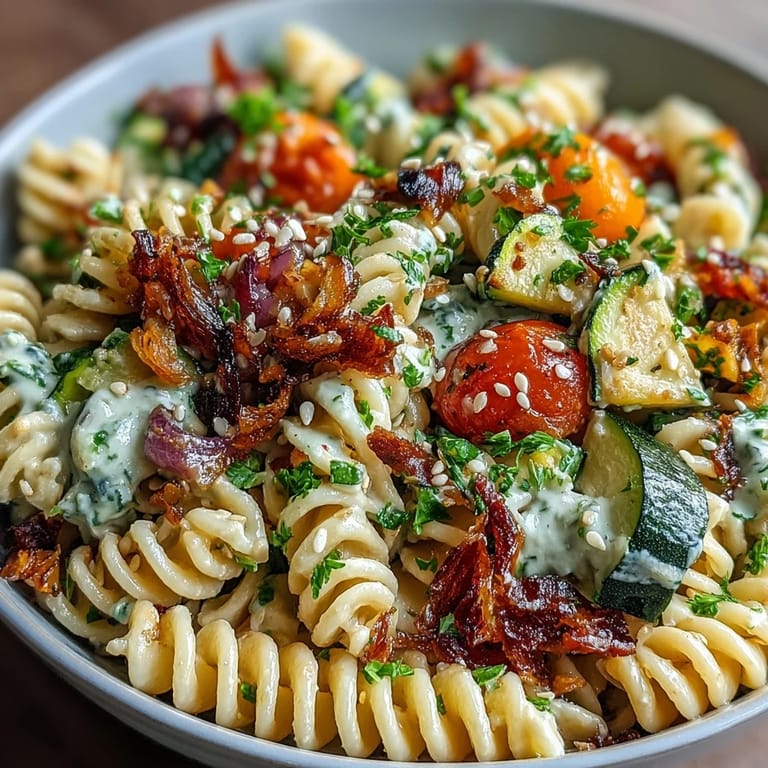
 There's something quietly satisfying about a bowl that works as hard as you do. I stumbled onto chickpea pasta almost by accident, reaching for it one afternoon when my usual pantry staple was out, and discovered it had this nutty, almost earthy flavor that made everything taste more intentional. That first time I paired it with roasted vegetables and a tahini sauce I'd thrown together on impulse, I realized I'd found something I'd been craving without knowing it—a meal that feels indulgent but actually nourishes you, one forkful at a time.
I made this for my friend Maya on a Thursday evening when she mentioned feeling run down, and watching her face light up when she tasted it reminded me that good food is partly nourishment and partly an act of care. She went back for seconds and asked if I could teach her how to make it, which meant we ended up cooking together in my kitchen with jazz playing too loud and flour somehow everywhere despite there being no flour involved.
Ingredients
- Chickpea pasta (340 g / 12 oz): This is the backbone of the bowl—it's heartier than regular pasta and packed with protein, so it doesn't leave you hungry two hours later.
- Zucchini (1 medium, diced): Roasting brings out its subtle sweetness and gives it a tender-crisp texture that holds up beautifully in the bowl.
- Red bell pepper (1, chopped): The brightness cuts through the richness of the tahini sauce, and the color makes everything feel more alive.
- Red onion (1 small, sliced): Don't skip this—it adds a gentle sharpness that ties all the flavors together.
- Cherry tomatoes (1 cup, halved): They burst when roasted and create little pockets of intense flavor throughout the bowl.
- Olive oil (2 tablespoons): Use good oil here since you taste it directly; cheap oil makes a noticeable difference.
- Dried oregano and smoked paprika: These transform ordinary vegetables into something that tastes like you've been cooking all day.
- Tahini (60 g / 1/4 cup): This is where the magic happens—it becomes a silky, luxurious sauce that coats every strand of pasta.
- Lemon juice (2 tablespoons): This brightens the tahini and keeps the sauce from feeling heavy.
- Maple syrup or agave (1 tablespoon): Just enough to balance the tartness and add subtle depth without making it sweet.
- Warm water: Essential for getting the tahini to the right consistency—it should pour like silk, not sit like cement.
- Garlic (1 clove, minced): A single clove is all you need to give the sauce personality without overpowering it.
- Fresh parsley and toasted sesame seeds: The garnish isn't just decoration; parsley adds freshness and sesame seeds give you a little crunch and nuttiness.
Tired of Takeout? 🥡
Get 10 meals you can make faster than delivery arrives. Seriously.
One email. No spam. Unsubscribe anytime.
Instructions
- Set your oven and prep your vegetables:
- Preheat to 220°C (425°F) while you line a baking sheet with parchment paper. This is the moment where everything gets organized, so take your time cutting everything into roughly similar sizes—it helps them cook evenly and look intentional in the final bowl.
- Season and spread:
- Toss your zucchini, bell pepper, onion, and tomatoes with olive oil and all your spices in a large bowl, then spread them out on the sheet in a single layer. The oil should shimmer and the seasonings should smell warm and inviting when you breathe in.
- Roast until caramelized:
- Slide the tray into the oven and set a timer for 20 to 25 minutes, stirring everything around halfway through so it browns evenly. You'll know it's ready when the edges are lightly charred and the vegetables are tender enough to easily pierce with a fork.
- Cook the pasta:
- While the vegetables roast, get a pot of salted water boiling and cook the chickpea pasta according to package directions, usually 8 to 10 minutes. Drain it well and set it aside in a separate bowl—you want it to be ready when the vegetables are done.
- Whisk the tahini sauce:
- In a small bowl, combine tahini, lemon juice, maple syrup, warm water, minced garlic, and a pinch of salt, then whisk vigorously until everything comes together into a smooth, creamy sauce. If it looks too thick, add a splash more warm water—it should flow like heavy cream.
- Bring it together:
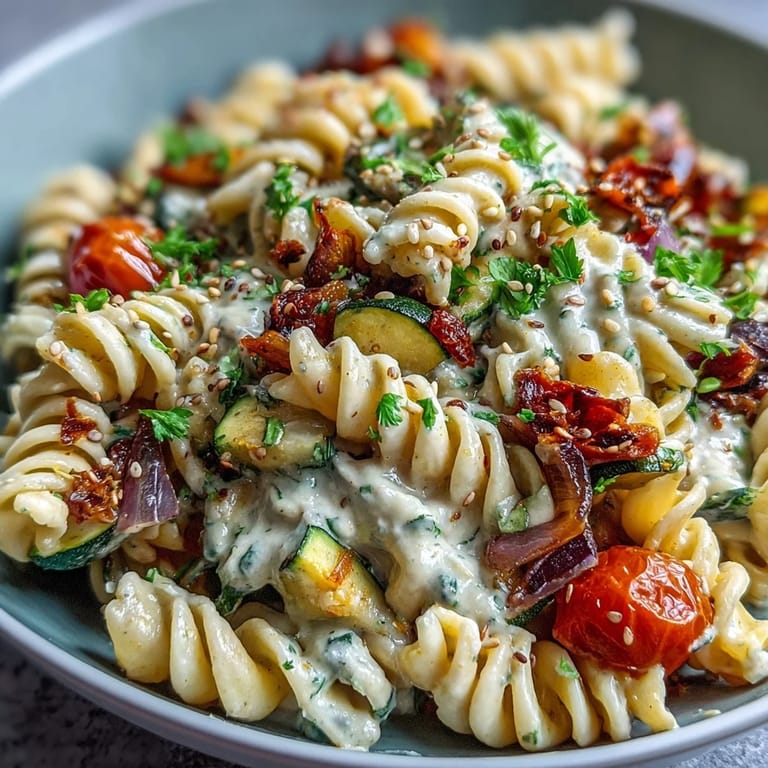
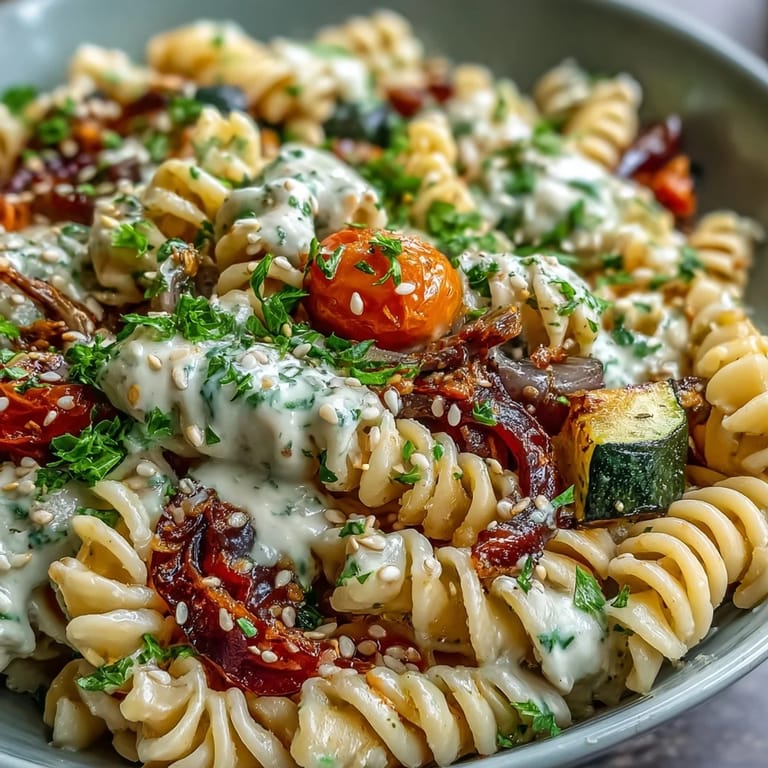
- In a large mixing bowl, combine the cooked pasta and roasted vegetables, then drizzle the tahini sauce over everything and toss gently until every strand and vegetable piece is coated. The sauce will seem thin at first but will coat beautifully as you toss.
- Serve and garnish:
- Divide the bowl into serving portions, then scatter fresh parsley and toasted sesame seeds over the top. You can serve it warm straight from the pan or let it cool to room temperature—it's equally delicious either way.
 Pin it
 My colleague brought this bowl to a potluck where everyone was comparing their containers, and somehow it became the one everyone wanted the recipe for—not because it was fancy, but because it tasted like someone actually wanted to feed them something good. That's the thing about this bowl that keeps me coming back to it.
Why This Bowl Works Year-Round
In summer, I load it with fresh zucchini and cherry tomatoes that actually taste like something, and the cool tahini sauce feels refreshing. When fall arrives, I swap in roasted eggplant and add some grilled tofu for extra substance, and by winter I'm throwing in whatever roasted root vegetables I have on hand—carrots, parsnips, even Brussels sprouts if I'm feeling it. The bones of the recipe stay the same, but it never feels repetitive because the vegetables change with what looks good at the market.
The Tahini Sauce Secret
This sauce is genuinely worth understanding, because once you nail it, you'll start putting it on everything—grain bowls, roasted vegetables, even scrambled tofu if you're vegan. The magic is in the balance: lemon juice keeps it bright, maple syrup rounds out the flavor so it doesn't taste bitter, and warm water is key to getting it silky instead of stiff. Start with less water than you think you need, because you can always add more, but you can't take it out.
Making It Your Own
The beauty of a bowl like this is that it's a template, not a rule book, so you can build it around whatever vegetables are calling to you. Think of it as a conversation with your ingredients rather than a rigid instruction, and you'll find yourself creating versions that feel entirely your own.
- Swap in broccoli, carrots, or cauliflower if that's what's in your fridge, adjusting the roasting time as needed.
- Add cooked chickpeas or grilled tofu cubes to push the protein even higher if you're making this a post-workout meal.
- Drizzle everything with tahini sauce generously and don't worry about it—you want every bite to have that creamy richness.
 Pin it
 This bowl has become my answer to the question of what to cook when I want something that feels nourishing without feeling like a chore. It's the kind of meal that tastes like you've been cooking all day, even though you haven't.
Recipe Q&A
- → Is chickpea pasta gluten-free?
Most chickpea pasta brands are naturally gluten-free as they're made solely from chickpea flour. However, always verify packaging to ensure no cross-contamination during processing.
- → Can I make the tahini sauce ahead of time?
Absolutely. The tahini sauce stores well in the refrigerator for up to 5 days. It may thicken when cold, so whisk in a splash of warm water before serving.
- → What vegetables work best for roasting?
Zucchini, bell peppers, red onion, and cherry tomatoes are excellent choices. You can also use eggplant, broccoli, cauliflower, carrots, or Brussels sprouts depending on the season.
- → How do I store leftovers?
Store components separately in airtight containers for up to 4 days. Keep the sauce separate and toss everything together when reheating to prevent sogginess.
- → Can I add more protein?
Yes. Try adding cooked chickpeas, grilled tofu cubes, roasted tempeh, or even shredded chicken if not following a vegan diet. Hemp seeds also make a great protein-rich topping.