 Pin it
 I stumbled onto the idea for this dessert on a Tuesday afternoon when I was staring at my pantry, utterly uninspired. I had cream cheese that needed using, a bar of dark chocolate, some shortbread, and a jar of salted caramel. Instead of making one predictable thing, I thought: what if I made four things and served them all together? The moment I arranged those sixteen squares on a plate, something clicked—it felt like edible architecture, playful and deliberately composed.
I made this for friends who'd driven across town on a gloomy Saturday, and halfway through dessert, someone said, "Wait, how are you doing this?" That moment—the confusion dissolving into delight as they understood the pattern—made me realize it wasn't just about taste. It was about the small surprise of discovery, the way a thoughtfully arranged plate can shift how people experience food.
Ingredients
- Crisp shortbread cookies or graham crackers, crushed (80 g): The foundation that holds everything—if you crush them too fine they disappear, too coarse and they won't bind with butter.
- Unsalted butter, melted (30 g): Just enough to make the crumbs hold together without making the base oily.
- Cream cheese, softened (80 g): Must be genuinely soft before you beat it or you'll end up with little lumps that ruin the smooth texture.
- Powdered sugar (30 g): Adds sweetness without the graininess of granulated sugar in a delicate layer.
- Vanilla extract (1 tsp): A quiet backbone that ties the soft layer together.
- Dark chocolate, chopped (100 g): The quality matters here—something around 60 to 70 percent cocoa works best.
- Heavy cream (60 ml): Heated gently, it emulsifies with the chocolate to create that glossy ganache.
- Salted caramel sauce (80 g): Either homemade or store-bought, this layer brings bittersweet balance.
- Flaky sea salt, for garnish: A pinch over the caramel layer brings everything into sharp focus.
- Small raspberries (16, optional): A fresh, delicate crown for the crunchy squares if you want them.
Tired of Takeout? 🥡
Get 10 meals you can make faster than delivery arrives. Seriously.
One email. No spam. Unsubscribe anytime.
Instructions
- Build the crunchy base:
- Pulse your cookies or crackers until they're mostly crumbs with a few small pieces for texture. Toss with melted butter until it looks like damp sand, then press firmly into a parchment-lined 8x8 pan so it's level and compact. Refrigerate for 15 minutes—this sets it so it doesn't crumble when you slice.
- Whip the soft layer:
- Beat your softened cream cheese until it's pillowy and pale, about 2 minutes. Add powdered sugar and vanilla, then beat again until completely smooth and no streaks remain.
- Create the chocolate ganache:
- Heat heavy cream until it just starts to steam and small bubbles appear at the edges—not a rolling boil. Pour it over chopped chocolate in a bowl, wait 2 minutes for the residual heat to soften the chocolate, then stir slowly until it's glossy and completely combined. Let it cool for a few minutes so it's spreadable, not pourable.
- Prepare the salty layer:
- If you're making caramel from scratch, do it now and let it cool slightly. If using store-bought, you're already there—just have it ready.
- Mark your grid:
- Take the chilled base out of the fridge and use a ruler and sharp knife to lightly score a 4x4 grid directly onto the surface, creating 16 equal squares. Don't cut all the way through—just mark where your lines should be.
- Fill the checkerboard:
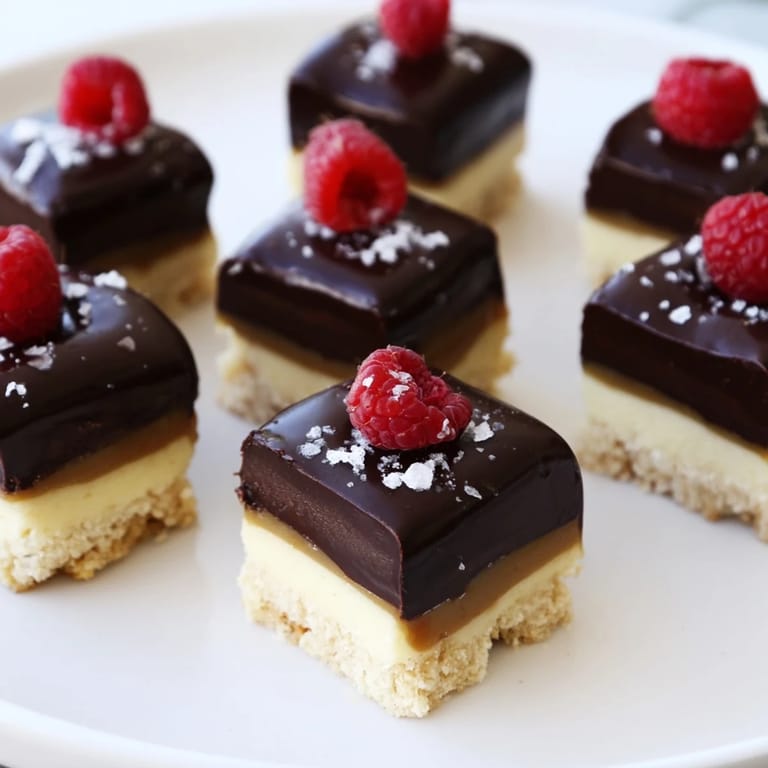
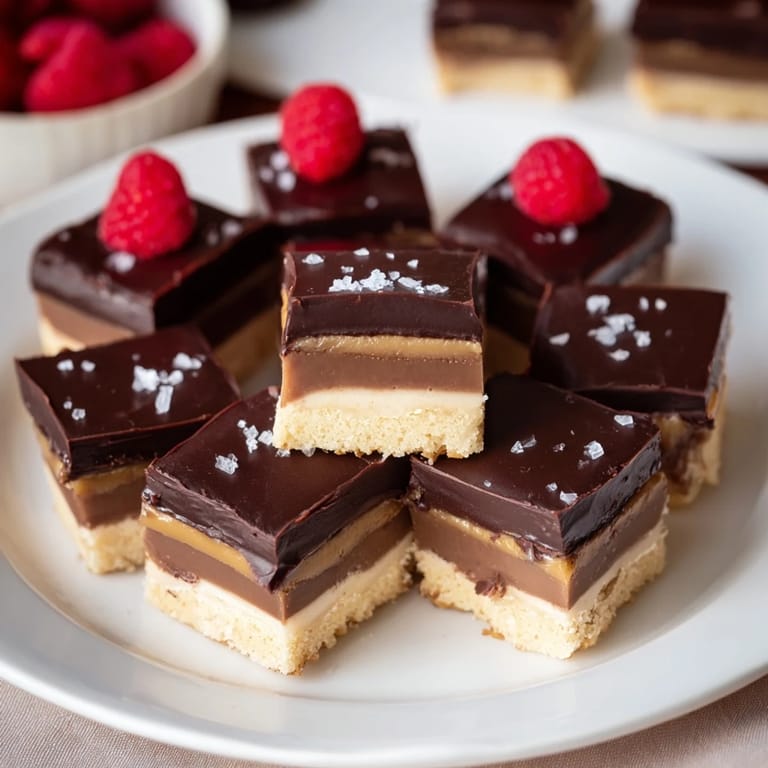
- Arrange your four fillings so that no two of the same type are adjacent, like a chess board. Use a small spatula or the back of a spoon to fill 4 squares with cream cheese mixture, 4 with chocolate ganache, 4 with salted caramel and a sprinkle of flaky salt, and leave 4 as the plain crunchy base, topped with raspberries if you're using them.
- Set everything in place:
- Refrigerate the assembled dessert for 30 minutes until all the layers are firm and won't shift when you cut.
- Slice and serve:
- Using a sharp, clean knife, carefully cut along your marked grid lines, wiping the blade between cuts if needed. Serve each square slightly chilled so the textures stay distinct and the flavors don't blur together.
 Pin it
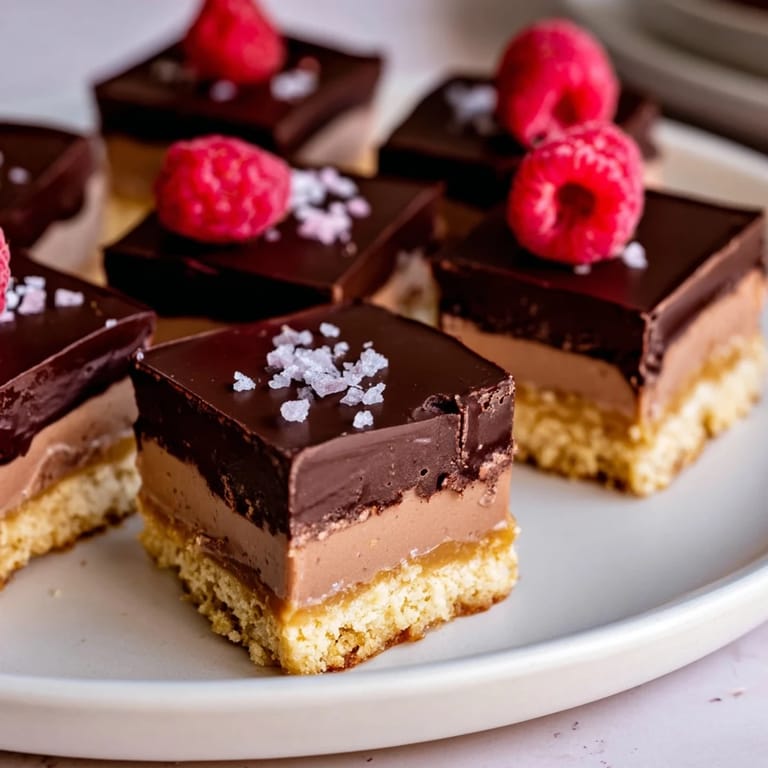
 My sister came home from college that winter, and I served this for dessert without explaining it. She cut into the first square, tasted the shortbread, then the next one with chocolate, then caramel, and I watched her face shift from confusion to understanding to pure delight. That's when I knew I'd made something worth making again.
Why This Works as a Dessert
Most desserts are built vertically—you taste them in layers from top to bottom. This one breaks that rule. Every bite is its own experience, complete and standalone, which means there's no bad last bite or overwhelming sweetness. You get to choose what you want in each moment, and that small freedom makes eating it feel less like following instructions and more like playing.
Texture as Flavor
I used to think that once you'd tasted something, you'd understood it. But chewing through contrasting textures in quick succession actually changes how your palate perceives flavor. The crunch of shortbread sharpens the sweetness of the ganache, which then makes the caramel feel less cloying. It's not magic—it's just architecture doing the work that sugar alone can't.
Make It Your Own
The beauty of this dessert is that it's forgiving enough to experiment with. I've made versions where I swapped in mascarpone for a richer feel, or mixed lemon zest into the cream cheese for brightness. You can use white chocolate instead of dark, substitute crushed nuts for half the cookies, or pair it with different wines depending on the season and who's at your table.
- For a nutty version, use half toasted hazelnuts or almonds mixed with your cookie crumbs.
- Try pairing with Moscato d'Asti in summer or a sweet Riesling when it's cold.
- Make the whole thing a day ahead—it actually sets better and slices cleaner the next day.
 Pin it
 This dessert taught me that sometimes the most memorable things come from playing around with what's already in your kitchen. It's become one of those dishes I return to when I want to feel like I've done something thoughtful without burning myself out in the process.
Recipe Q&A
- → How do I achieve the perfect texture contrast?
Layer each component carefully: a firm, crunchy base, smooth cream cheese, silky ganache, and rich caramel. Chilling each layer helps maintain distinct textures.
- → Can I prepare this dessert in advance?
Yes, assembling and chilling the layered squares ahead allows flavors to meld and ensures a neat checkerboard appearance.
- → What substitutions work well for the crunchy base?
Try mixing half crushed cookies with toasted nuts for added crunch and a nutty flavor variation.
- → Is there an alternative to the dark chocolate ganache?
White chocolate can be used for the ganache, offering a sweeter contrast while keeping the smooth texture.
- → How to create the checkerboard pattern precisely?
Use a ruler and a sharp knife to lightly score the chilled base into a 4x4 grid before layering each texture into designated squares.